by Daniel Hathaway

by Daniel Hathaway

by Daniel Hathaway

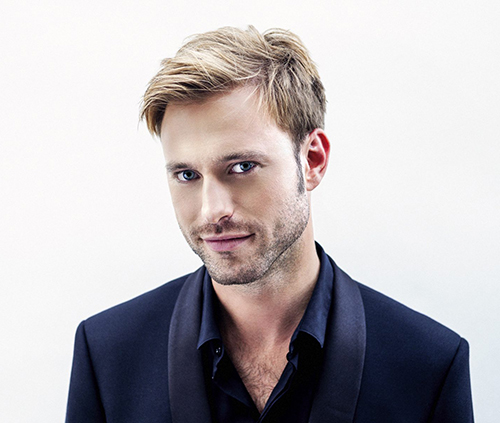
Appl, who began his singing career as a treble in the Regensburger Domspatzen — the “Sparrows” of the famous Bavarian cathedral choir of boys and men — spent his early adult years in finance and business administration. Then he became Dietrich Fischer-Dieskau’s last student, and his life changed.
Since then, Appl has etched out distinguished international credentials in opera and concert music, but he has specialized in Lieder, a subject he now teaches at the Guildhall School in London. It’s music dear to his heart, but he knows it’s often a hard sell in the 21st century. “When I decided to do a lot of song recitals, I knew this would not be an easy step,” he said. [Read more…]
by Daniel Hathaway

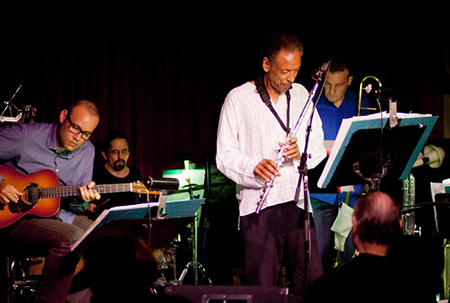
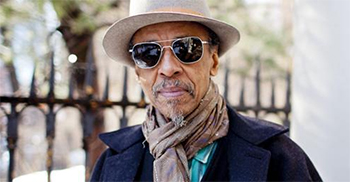
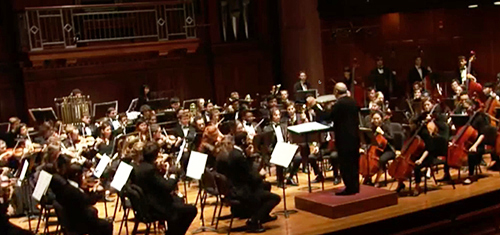
Launching the series, composer and multi-instrumentalist Henry Threadgill will bring his Zooid ensemble to the Museum’s Performing Arts Series on Friday, January 11 at 7:30 pm in Gartner Auditorium to join Tim Weiss’s Oberlin Contemporary Music Ensemble in the world premiere of Threadgill’s Pathways, a partly improvisatory, partly pre-determined work.
Threadgill, now 74, won a Pulitzer Prize in 2016 for his recording In for a Penny, In for a Pound, which the awards jury described as a “highly original work, in which notated music and improvisation mesh in a sonic tapestry that seems the very expression of modern American life.”
Although he has been been characterized as a jazz musician, Threadgill objects to being hedged in by that branding. [Read more…]
by Daniel Hathaway

Thus begins James Russell Lowell’s The Vision of Sir Launfal (1867), a poetic description of an organist improvising at the keyboard — an act of instantaneous musical creation that had all but disappeared except from organ lofts, usually French, by the dawning of the 20th century.
Improvisation is now on the rise again, not only through the fingers of organists. “It’s now infecting other musicians as well,” Todd Wilson said in a recent telephone conversation. “Chamber music groups, orchestras, everybody’s doing it.”
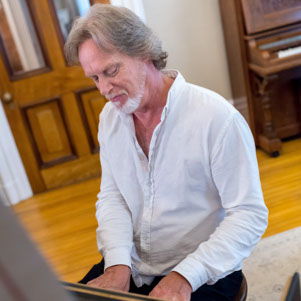
Wilson, who is music director at Cleveland’s Trinity Cathedral, professor of organ at the Cleveland Institute of Music, curator of Severance Hall’s E.M. Skinner organ, and a well-known concert organist, is an enthusiastic improviser whose talents are expressed not only during church services. [Read more…]
by Daniel Hathaway

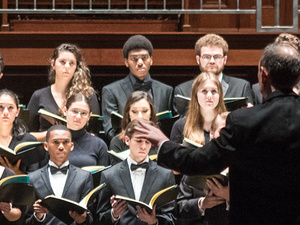
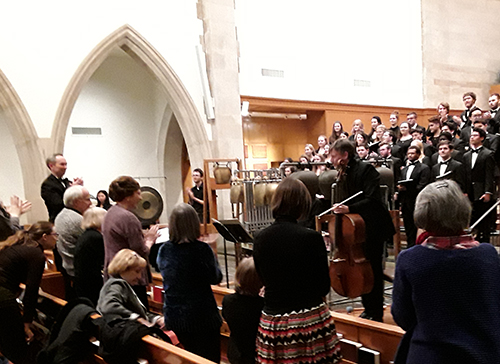
Ristow’s choir will be spending most of this month — during Oberlin’s Winter Term, when classes give way to special projects — rehearsing for the New York engagement, but also revisiting a particularly challenging set of pieces they already presented on campus during the fall semester.
He’ll take faculty cellist Darrett Adkins, the Choir, and Sofia Gubaidulina’s Canticle of the Sun to the Cleveland Cello Society’s annual “i Cellisti” extravaganza at St. Paul’s Church in Cleveland Heights on Friday, January 11 at 7:30 pm. And he and his singers will repeat a program they gave for the Oberlin Board of Trustees on the FIRST•Music series at First Lutheran Church in Lorain on Sunday, January 13 at 3:00 pm. [Read more…]
by Daniel Hathaway

Organist Todd Wilson mostly plays recitals and services in churches, but his alter ego is equally at home as a theater organist — accompanying silent movies in Severance Hall, Stambaugh Auditorium, and other venues. He’ll demonstrate those skills in Gamble Auditorium at Baldwin Wallace on Saturday, January 12 at 7:00 pm when he improvises scores to Charlie Chaplin’s The Kid and Laurel & Hardy’s Big Business as part of BW’s Kulas Keyboard Series. Want to find out how he does it? Wilson will reveal some of his secrets in two workshops. Details and tickets here. [Read more…]
by Daniel Hathaway

The concerts, at Holy Trinity Lutheran in Akron on December 21 at 7:30 pm, at Lakewood Congregational on December 22 at 8:00 pm, and Our Lady of Peace on December 23 at 4:00 pm, will be anchored by Charpentier’s unique Midnight Mass on French Noëls. “There are eleven French Noëls incorporated into the Mass either in instrumental interludes or in ingenious interpolations throughout the text,” Milnes said in a telephone conversation. “Almost every main motive is derived from a carol tune. It’s hard for us in our Anglo-German culture to imagine a mass built on Silent Night or Joy to the World.”
Will all those tunes be as familiar to the audience as the carols he mentioned? “Maybe one or two of them have made their way into our holiday traditions, maybe not,” Milnes said. “I have the benefit of working a lot in Québec, so I get to experience more directly how that population relates to the tradition. But these carols are still far less known, far less performed, and far less familiar than their German or English counterparts, even in the Baroque community.” [Read more…]
by Daniel Hathaway


Some of the following recordings are being reviewed here for the first time, while reviews of others are reposted from editions of ClevelandClassical.com since our last CD roundup in December of 2017.
by Daniel Hathaway