

by Daniel Hathaway
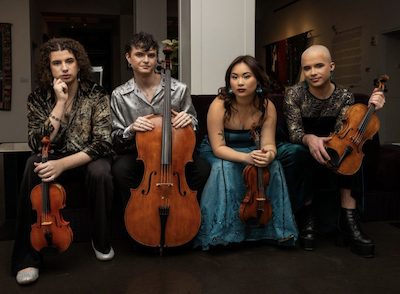 Fresh from winning the grand prize at the prestigious Banff Competition on the last day of August, the Poiesis Quartet (Sarah Ying Ma & Max Ball, violins, Jasper de Boor, viola, and Drew Dansby, cello) took a late October victory lap at the Oberlin Conservatory, returning to their place of birth as an ensemble to give master classes and solo with the Oberlin Orchestra.
Judging from the turnout in Finney Chapel on Friday, it might not have been a prizewinning idea to schedule a major orchestra concert on a college campus on Halloween, but there was nothing slim about the sound that the stage full of musicians produced. Brilliantly scored works by Carlos Simon, John Adams, Angélica Negrón, and Zhou Tian, were conducted with precision by Rafael Jiménez.

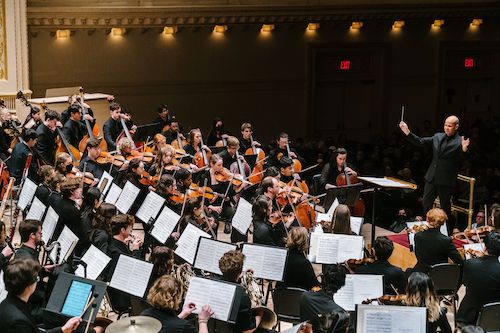 From a brooding opening, through a turbulent depiction of reality, to a rousing journey for freedom that surely lodged itself into the audience’s collective memory for a long time to come, the orchestral and choral forces of Oberlin College and Conservatory traced a compelling emotional arc with their program at Carnegie Hall’s Stern Auditorium on January 20.
 The path to finding an artistic voice might start in music school, but it doesn’t end when you graduate — or even if you become the professor. That process of self-discovery is what connects the five otherwise contrasting pieces on
 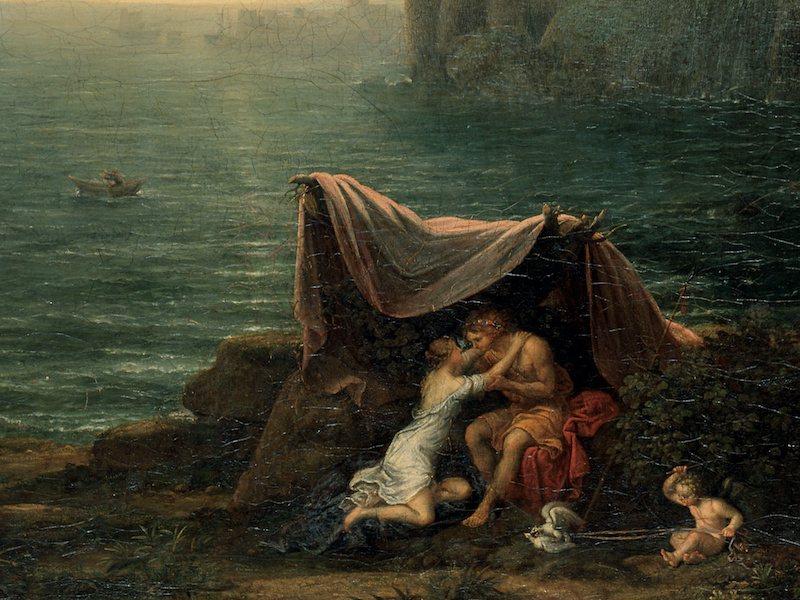 In Book XIII of Ovid’s epic poem
 A
A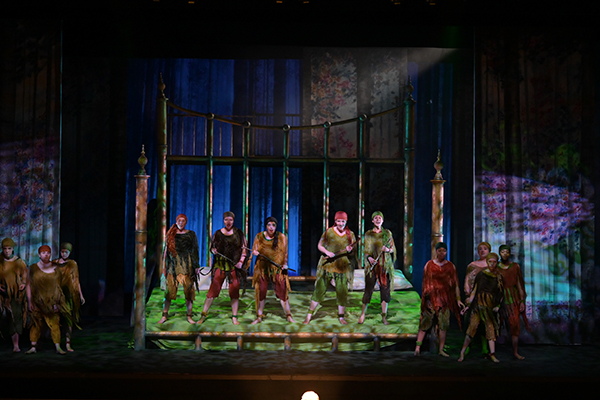
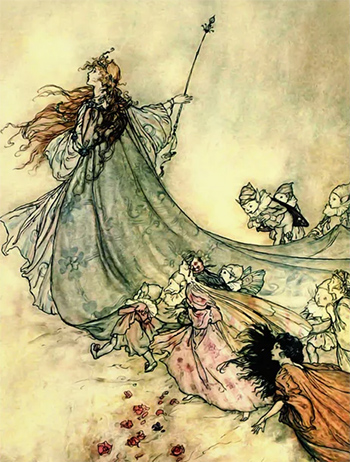 When Oberon and Tytania, the King and Queen of the Fairies, have a public marital spat, Oberon sets his sights on revenge with the help of his mischievous servant Puck. Chaos ensues for everyone involved: the fairies, the royalty, and the rag-tag theater troupe. And like any good fairy tale, everything gets worked out in the end. It all makes you wonder — is this someone’s dream?
 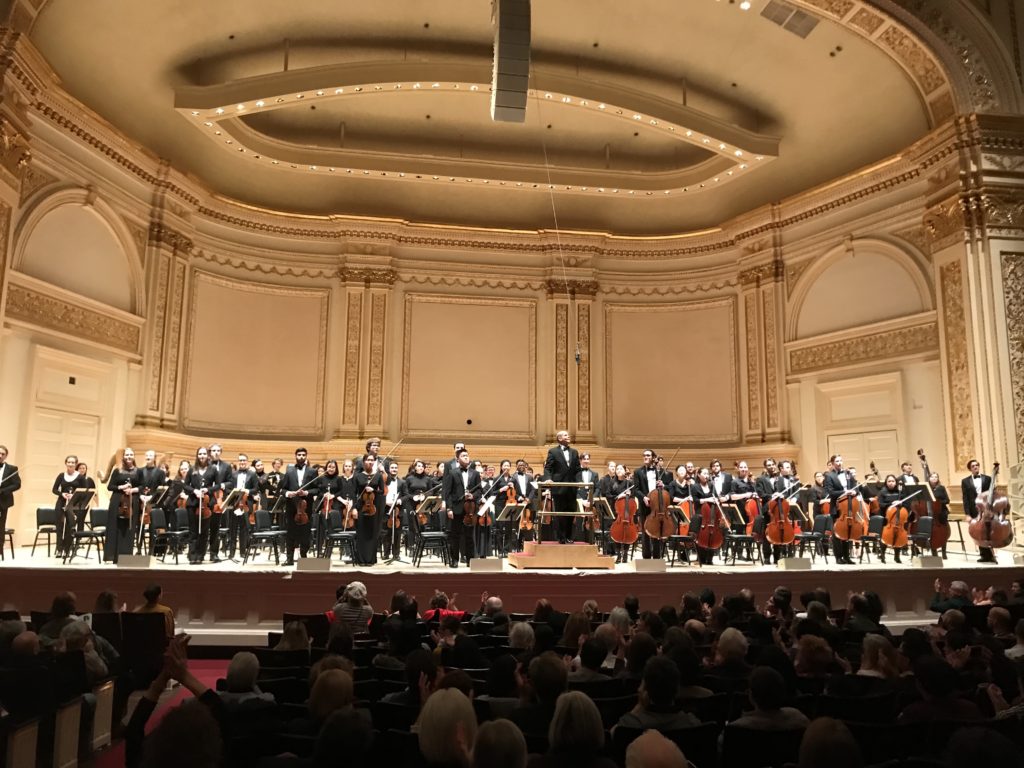 The audience may have been more restrained than the appreciatively foot-stomping listeners who typically pack into Finney Chapel back home — but not by much. The crowd in New York’s Carnegie Hall gave two ensembles from Oberlin College and Conservatory a warm reception on January 19, with loud cheers and even some shoutouts to the players onstage. All well-deserved.