by Nicholas Stevens
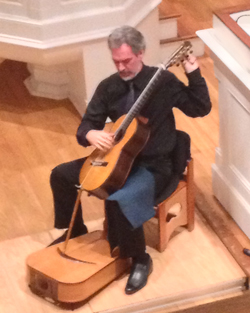 Let’s clarify this right away: Paul Galbraith, the Scottish guitarist, plays a custom-built, 8-stringed instrument that sets him apart in the classical guitar world. Called the “Brahms guitar” after the first piece Galbraith transcribed for it — that composer’s Variations on an Original Theme for piano — it allows the player to tackle a wide range of transcribed repertoire thanks to its two extra strings: a bass A, and a high A. He plays the instrument upright, cello-style, its end pin inserted into a resonating box. [Read more…]
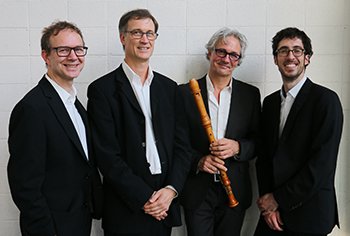 Is there any feat of performance greater than transfixing and moving an audience while remaining warm, welcoming, humble, and human? In a concert last week in Oberlin College and Conservatory’s Fairchild Chapel, the Flanders Recorder Quartet — performing in Northeast Ohio for the final time, as part of their 30th anniversary and farewell tour — offered a perfect blend of profundity, virtuosity, and tasteful tomfoolery as a parting gift to area audiences.
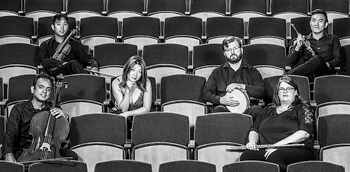
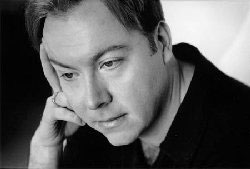 In a recent concert by the Cleveland Institute of Music’s New Music Ensemble, Keith Fitch — CIM’s composition department chair, and the ensemble’s director — demonstrated his penchant for effective curation. His own new composition,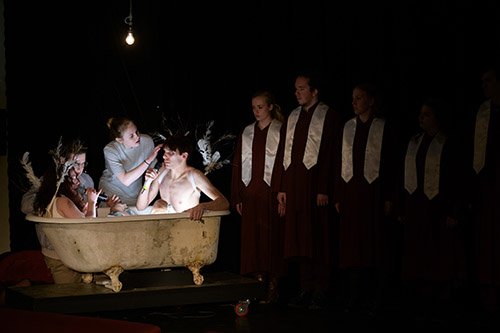
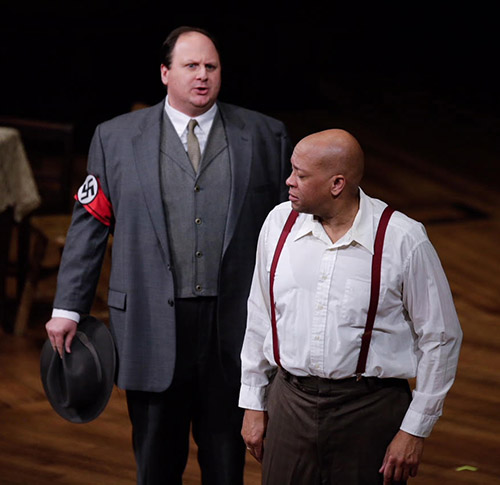
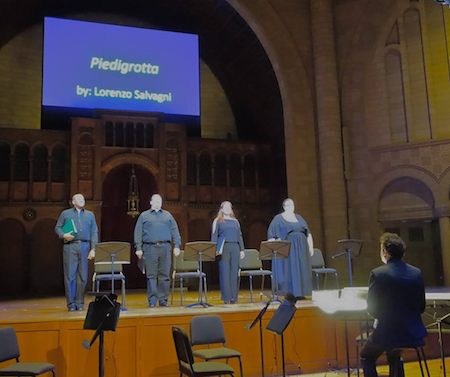 In an age when the word “opera,” to most, means the historical canon — that body of works that recirculate through the world’s houses each year — it bears repeating as often as possible that new efforts in the genre have flourished of late. Thanks to the combined efforts of the Cleveland Opera Theater, the Maltz Performing Arts Center at the Temple-Tifereth Israel, the Cleveland Composers’ Guild, and the Baldwin Wallace and Oberlin Conservatories of Music, Northeast Ohio audiences recently had a chance to hear scenes from three new works-in-progress by area composers and librettists.