
by Daniel Hathaway
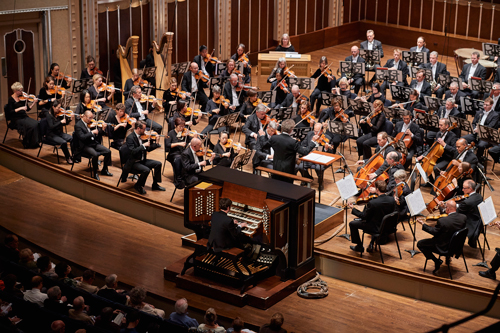 The Norton Memorial Organ in Severance Hall — one of E.M. Skinner’s finest concert hall instruments — enjoyed a rare moment in the spotlight at The Cleveland Orchestra’s opening concert on September 29, led by music director Franz Welser-Möst. In the hands (and under the feet) of Paul Jacobs, it played a starring role both in Aaron Copland’s Organ Symphony, and in a thrilling encore that brought the large audience spontaneously to its own feet. [Read more…]
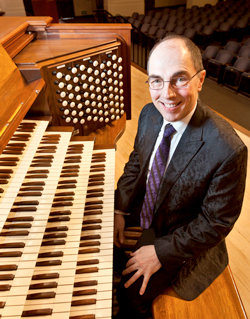 Eastman School of Music organ professor David Higgs inaugurated the restored 1926 E.M. Skinner organ in Youngstown’s Stambaugh Auditorium on September 18, 2011, when he appeared as soloist in the Poulenc Concerto and in the Saint-Saëns ‘Organ’ Symphony with the Youngstown Symphony Orchestra. This Sunday, April 12 at 4:00 pm, Higgs will return to Youngstown to play an eclectic recital on what has come to be recognized as one of the most distinguished organ restorations in the country, a project undertaken by the A. Thompson-Allen Company of New Haven, Connecticut.
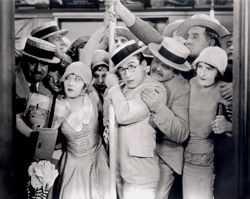 Last Sunday afternoon’s screening of Harold Lloyd’s silent film comedy Speedy delighted the Stambaugh Auditorium audience in Youngstown and offered improvised organ accompaniment by Todd Wilson. This type of improvisation was common in the 1920’s and even helped the late, noted musicologist Donald Grout pay for his higher education.
 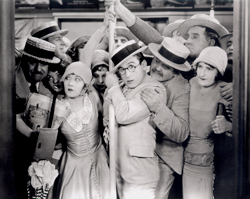 Well-known concert organist Todd Wilson will explore another side of his art this month when he improvises musical scores to two silent film classics at Stambaugh Auditorium in Youngstown and Severance Hall in Cleveland. Speedy, Harold Lloyd’s 1928 Paramount film, which chronicles the attempts of Harold “Speedy” Swift to save the last horse-drawn streetcar in New York (with a cameo appearance by Babe Ruth) will be screened at Stambaugh on Sunday, October 19 at 4:00 pm. Then the 1925 silent version of Phantom of the Opera, starring Lon Chaney, will be shown at Severance Hall on Tuesday, October 28 at 7:30 pm. Phantom is part of this season’s Cleveland Orchestra’s Celebrity Series, but Wilson will be the only musician on stage for the occasion.
  American organist Jonathan Ryan will open this season’s organ series on the E.M. Skinner instrument in Youngstown’s Stambaugh Auditorium on Sunday, September 28 at 4:00 pm.