


by Daniel Hathaway & Mike Telin
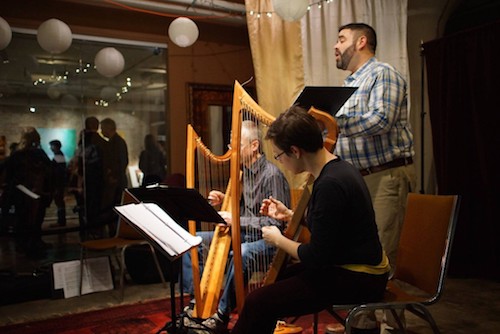 Debra Nagy and her colleagues of Les Délices usually dedicate themselves to bringing the music of 17th- and 18th-century France alive for modern ears. But this weekend, the period instrument ensemble will push the clock back to the 14th century — not an era of powdered wigs and salons, but a time of knights, crusades, courtly love, and increasing secularization.
“This is our third venture into Medieval music,” Nagy said over coffee in a Hingetown café. “We visited the 14th-century avant-garde a couple of years ago, and last year we collaborated with Boston’s Blue Heron on Machaut’s Remede de Fortune. This program, ‘Intoxication,’ is a Les Délices project, but with many of the same wonderful collaborators. Scott Metcalfe is back. Charlie Weaver was the lute player and Jason McStoots the tenor for the Machaut programs. We’re also working with Elena Mullins, a former student of mine who received her doctorate at Case and now directs the early music singers. She’s a beautiful singer and communicator with a real passion for this kind of music.”
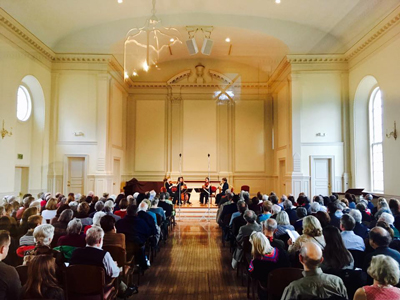
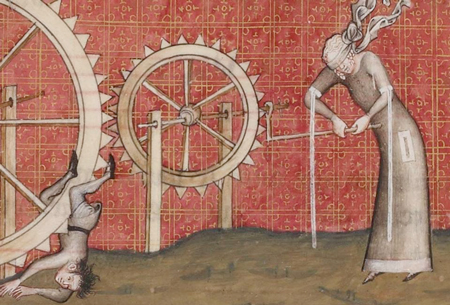
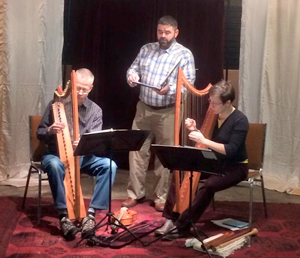 The fourteenth century was a strange time in the history of Europe, as those who have read Barbara W. Tuchman’s 1978 book, A Distant Mirror, already know. Amid all its tumult, that period also became a fertile era for musical experimentation, a subject Les Délices explored in two concerts last weekend presented in collaboration with the Boston ensemble Blue Heron.
 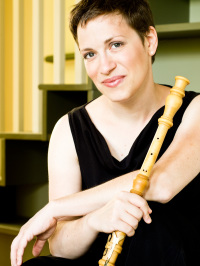 Fourteenth century avant-garde? “It’s one of the most exciting moments in music history for me,” Les Délices founder and artistic director Debra Nagy said during an enlightening telephone conversation. “To our ears, the music may not sound modern, yet in many respects it is some of the most rhythmically complex music that we have until the 20th century.”
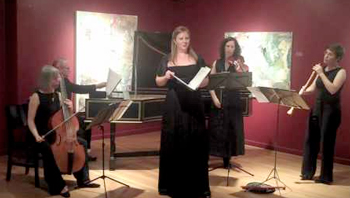
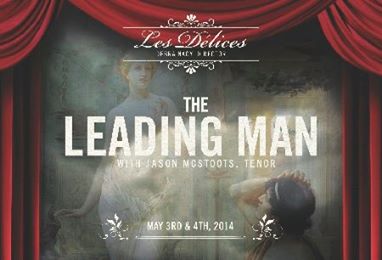 Through a combination of scheduling conflicts and the sin of sloth, I had never heard a performance by the highly regarded Cleveland Baroque ensemble Les Délices until Sunday afternoon May 4, in the Herr Chapel at Plymouth Church, Shaker Heights. Les Délices are artists in residence at the church, so this was home base, although they regularly perform in other venues around town. The evening before they had presented this program, “The Leading Man,” at the William Busta Gallery. These concerts ended their 2014/15 series, and the Sunday afternoon concert was, with a couple of niggling reservations – more about them later – an unalloyed pleasure.
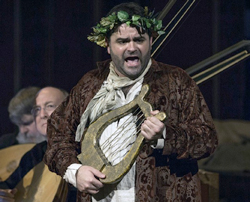 Inspired by one of the 18th century’s most famous tenors, Pierre Jélyotte, Les Délices’s new program The Leading Man includes operatic excerpts of musical heroism, absurdist comedy, and ravishing beautythat were central to Jélyotte’s repertoire. In her program notes, Les Délices’s founder and director Debra Nagy writes: “Jelyotte appears to have cultivated nothing but admirers. [His] contemporaries remarked on his range, volume, and the velveteen beauty of his tone. … He had only to sing, and those who listened were intoxicated. All the women went mad.”