

by Kevin McLaughlin
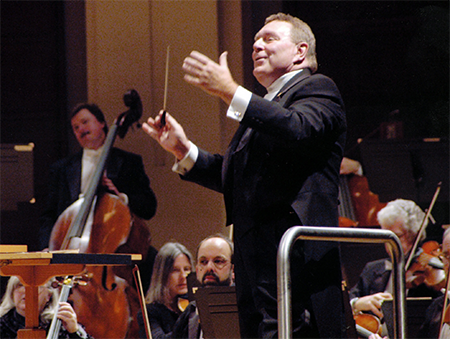 The late Gerhardt Zimmermann was remembered with affection by family and friends in a concert given by the Canton Symphony Orchestra at Umstaddt Hall on Sunday, September 10.
Former conducting students and colleagues took turns at the podium, and soloists whose careers Zimmermann had touched also took part in a program of works by Mahler, Brahms, Mozart, and Tchaikovsky, among others.
Possibly the most shining example of Zimmermann’s legacy is the orchestra that he developed and led for 43 years. In an age of peripatetic conductors and short-lived musical directorships, the Canton Symphony Orchestra, an ensemble of ninety mostly young professionals, has remained remarkably excellent and intact over the years.
 Poor Victor Herbert, the Irish-born, German-trained cellist, conductor, and composer, has gotten the short end of the music history stick. In the late nineteenth- and early twentieth-century he was one of the most acclaimed American musical figures, both as a performer and as a composer of concert works — as well as a successful grand opera (Natoma, 1911) which starred soprano Mary Garden and a young Irish tenor making his operatic debut, John McCormick.
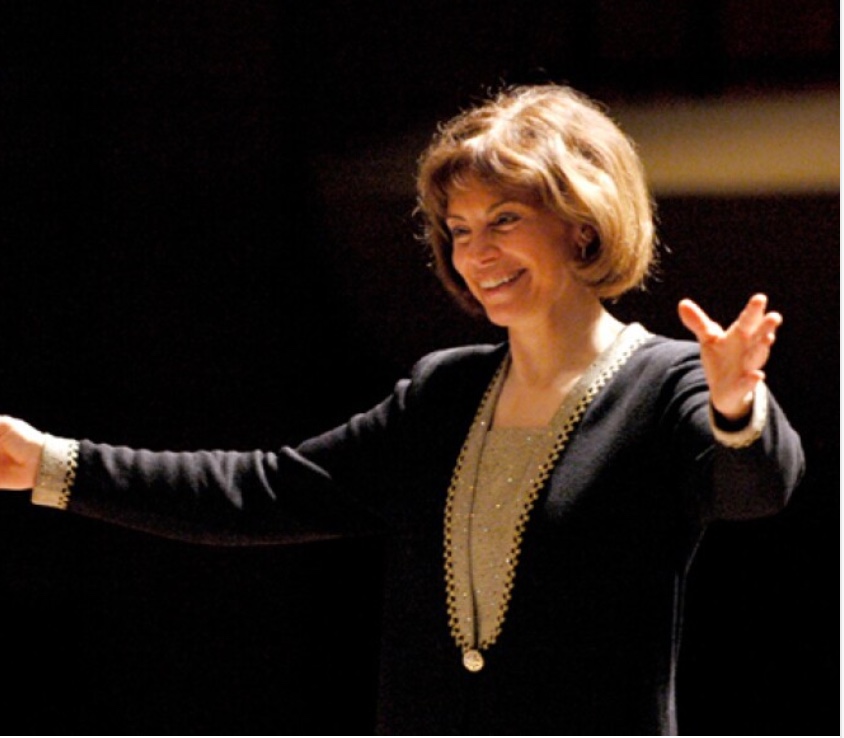
 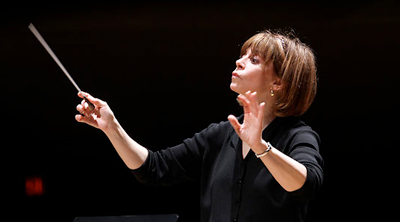 It was a fine evening for wind players at the Akron Symphony concert on Saturday, November 14 at E.J. Thomas Hall. Their distinguished playing lent many-hued colors to Johannes Brahms’s Symphony No. 2 in D, as well as to the second suite from Albert Roussel’s ballet Bacchus and Ariadne. And the program, under the direction of guest conductor JoAnn Falletta, featured the artistry of guest soloist Todd Levy in Aaron Copland’s Clarinet Concerto.
 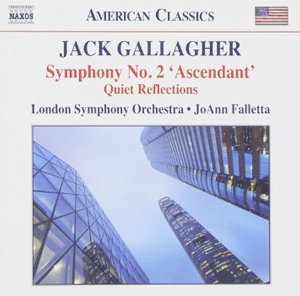 Jack Gallagher’s second symphony, now recorded by JoAnn Falletta and the London Symphony Orchestra in Blackheath Hall and released on the Naxos label, is a signal achievement. The composer, who is professor of music at The College of Wooster, has crafted a resplendent, hour-long work that scarcely flags in energy, never wants for inventive themes, and uses all the resources of the modern symphony orchestra with skill and ingenuity.