
by Daniel Hathaway
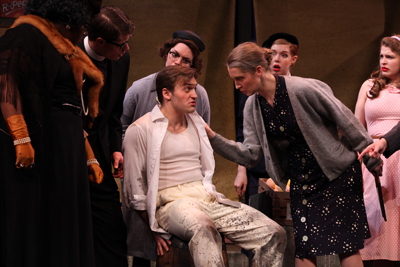
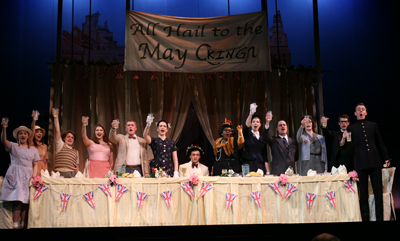
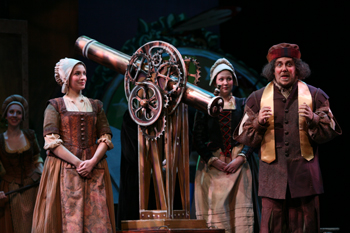
 At once historical and metaphorical in its subject, Benjamin Britten’s The Rape of Lucretia delivers a lot in a compact package. The eight singers of Oberlin Opera Theater and fifteen instrumentalists of the Oberlin Contemporary Music Ensemble delivered an outstanding performance of the British composer’s 1946 chamber opera last Wednesday evening in Hall Auditorium — one that left the audience with a lot to think about. [Read more…]
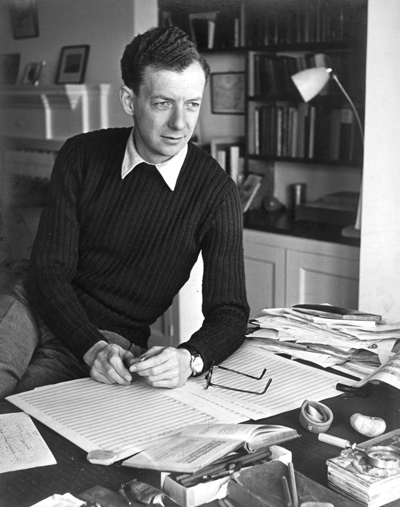 There are a lot of things to consider when choosing an opera that will fit the voices of undergraduate singers. Oberlin Opera Theater director Jonathon Field had both practical and philosophical considerations in mind when he decided to produce Benjamin Britten’s The Rape of Lucretia, which opens for a four-performance run in Hall Auditorium on the Oberlin College campus on Wednesday, November 11.
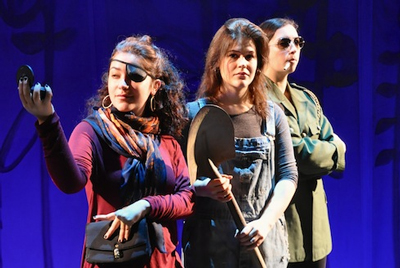 “I could not make this opera stranger than it already is,” Oberlin Opera Theater director Jonathon Field told ClevelandClassical in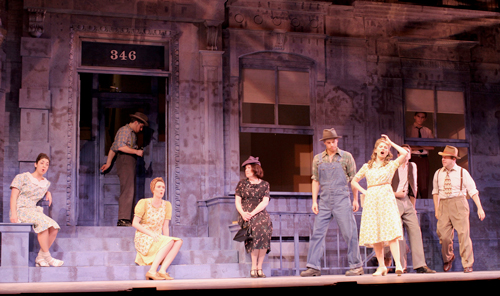
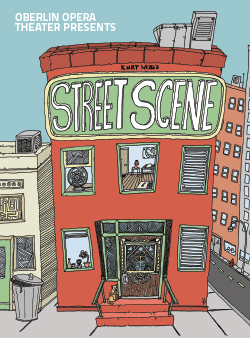 German-American composer Kurt Weill had one foot in opera and the other on Broadway when he wrote Street Scene in 1946 with lyrics by Langston Hughes and book by Elmer Rice, based on Rice’s play of the same name. Oberlin Opera Theater director Jonathon Field chose what Weill alternately called his “Broadway Opera” or his “American Opera” for their fall production.