


by Mike Telin
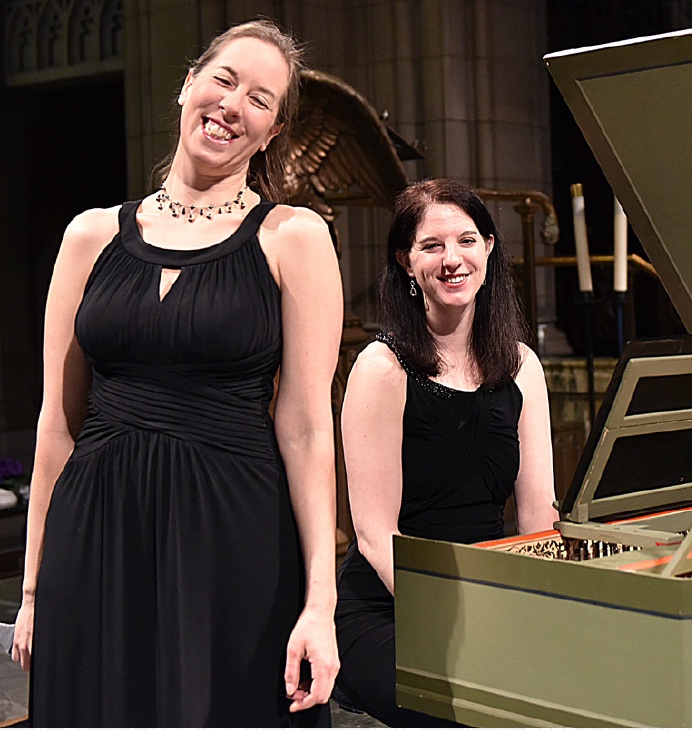 Curating thoughtfully-programmed, politically-inspired concerts has become a calling card for the innovative, Cleveland-based ensemble Burning River Baroque.
In the past year, soprano Malina Rauschenfels and harpsichordist Paula Maust have presented “Suppressed Voices: Music of the Banished” which featured music by Johann Rosenmüller — a German who escaped to Italy after being imprisoned for homosexuality — and Peter Philips, who was imprisoned as a Catholic in Anglican England, then later fled to the Spanish Netherlands. “Destructive Desires” examined works by Couperin, Rameau, Jacquet de la Guerre, Caccini, Eccles, and Courbois under the light of the #MeToo era.
On Wednesday, March 20 at Glo, Rauschenfels and Maust will be joined by Sarah Lynn, baroque flute, and Glenna Curren, baroque cello, in a concert titled “The Other Side of the Story.” The program, which draws on ancient mythology, literature, and Biblical passages, highlights characters whose viewpoints are underrepresented.
Presented by Fresh Perspectives, the evening includes a 6:45 pm pre-concert talk with host Devin Hinzo and musician Zach Manzi. [Read more…]
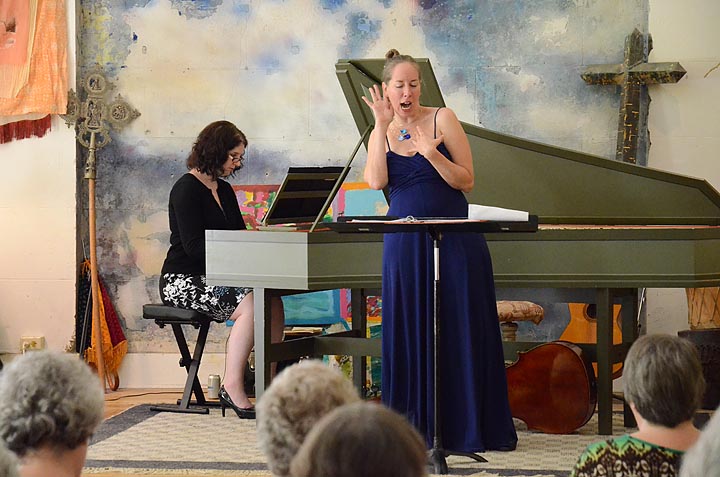 Burning River Baroque’s October 20 performance at St. Alban’s Church in Cleveland Heights was a case study in thoughtfully-programmed, politically-inspired concerts. Titled “Destructive Desires” and framed by informed program notes and remarks, the performance invoked the ongoing #MeToo movement. Soprano and Baroque cellist Malina Rauschenfels and harpsichordist Paula Maust also spoke about their own thoughts and experiences, bringing the feminist slogan “The Personal Is Political” to life.
 Everyone agrees, it’s a deeply troubling time. Where we disagree: which parts are troubling, and how to respond to those troubles — a question artists continue to grapple with.
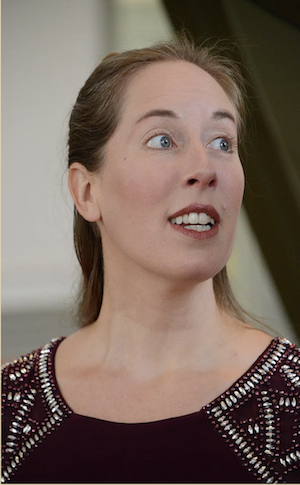 Ask about something musically outside the box, and Malina Rauschenfels has probably done it. Yes, she’s played a work for cello with two bows. Yes, she’s performed as a dancing violinist. And yes, of course she’s premiered an upside-down flute duet — her own composition.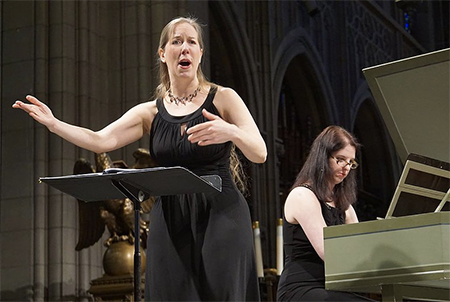
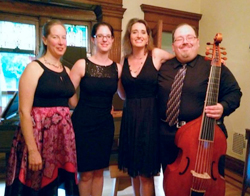
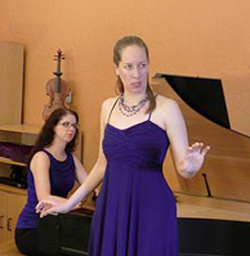
 On Friday, October 17, Burning River Baroque — Peter Lekx, violin, Malina Rauschenfels, soprano and cello & Paula Maust, organ — presented the first of three performances of sacred German baroque music in an especially appropriate venue. Trinity Lutheran Church, a 19th century Gothic edifice in Ohio City, was built by a German congregation and houses a distinguished 1955 Rudolph von Beckerath neo-baroque organ.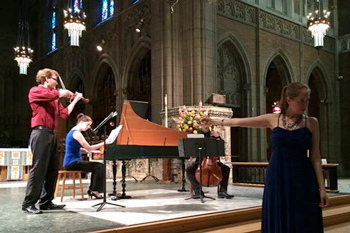
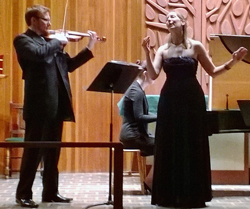 “We have a penchant for the dramatic,” Burning River Baroque artistic director and violinist Peter Lekx said in a recent Skype conference call. “This program found itself when we discovered Nicola Porpora’s cantata, Destatevi, destatevi o pastore. It just screamed Burning River Baroque.”