
by Daniel Hathaway

by Daniel Hathaway

by Daniel Hathaway

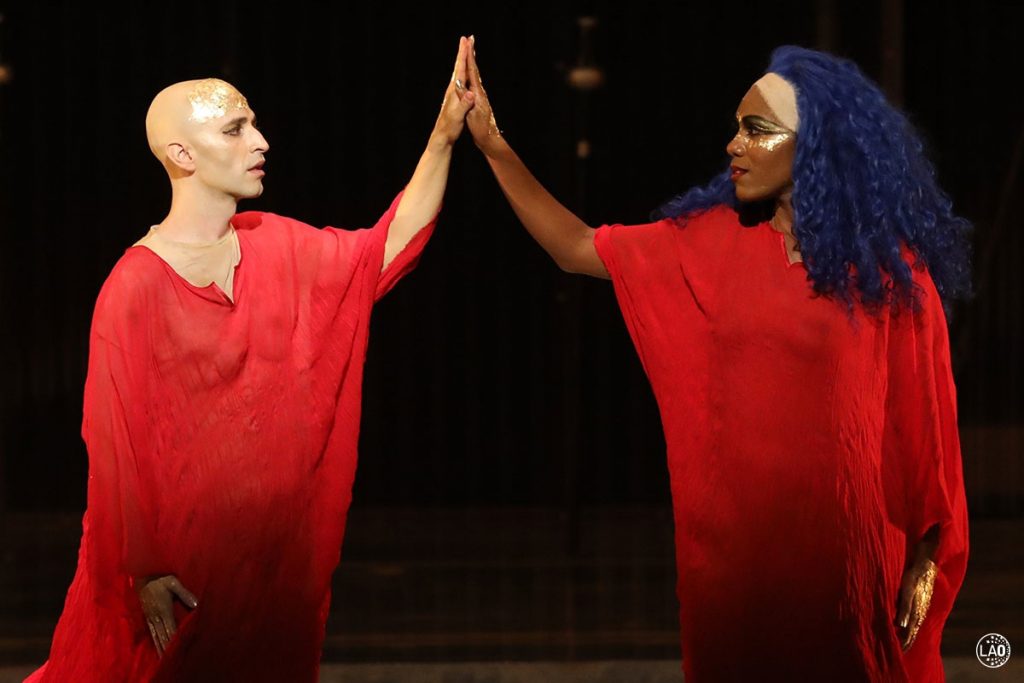
Countertenor Anthony Roth Costanzo is the next guest artist to appear on the Virtual Donald P. Pipino Performing Arts Series at Youngstown State University this week. The Metropolitan Opera headliner and Musical America 2019 Vocalist of the Year, Costanza has said, “Music written before 1750 or after 1950. That’s my Life,” and has demonstrated that in his CD, ARC, where he brings music by Handel and Philip Glass into the same vocal arena, and through his title role in Glass’s Akhnaten at the Met.
Costanzo will deliver a presentation on Wednesday, March 3 at 7:00 pm and give a master class on Thursday, March 4 at 4:00 pm, both events to be streamed without charge on the Cliffe College YouTube channel.
In advance of those events, you can get to know Costanza through his interview with Zsolt Bognár, recorded in May, 2017 as episode 43 of Living the Classical Life. “In a surprisingly lighthearted conversation about the world of countertenors, Anthony describes how he stumbled into singing and acting, what is unusual and powerful about falsetto singing, and what it feels like to be naked on stage, literally and figuratively.” He begins by fearlessly interacting with a group of sixth graders from the Bronx. Watch here.
ONLINE TODAY:
Feel like a day trip out of town? Take a little excursion to Dallas this afternoon, when Fabbio Luisi leads the downsized Dallas Symphony in Klaus Simon’s 1920 chamber ensemble version of Mahler’s Fourth Symphony. Click here at start time. Pay $10, and you can view it on-demand until May 31.
And CIM’s Music For Food Benefit Concert makes its third and final appearance, this time as a re-broadcast on The Violin Channel. Faculty members Jaime Laredo, Lynne Ramsey, Antonio Pompa Baldi, and Sharon Robinson join student musicians. Click here at 5:00 pm. Donations welcome.
TODAY’S ALMANAC:
On this date in 1824, Bohemian composer Bedřich Smetana was born in Litomyšl. Our reference to Smetana in a Diary entry last May brought this response from Chicago friend David Reithoffer:
I saw with interest in your recent pub that one of the Cleveland Orchestra’s “Mindful Music Moments” is excerpts from Má Vlast, and there’s a recording of The Moldau available as well.
This made me think of a wonderful moment I experienced last May in Prague. I was a guest of the Prague Marathon. I was advised ahead of time by the founder of the Berlin Marathon who was also present that at the start of the race I would hear the Moldau played over and over. I could hardly believe it, but it was true. I had tears in my eyes as the music swelled to the thousands of runners passing across the start line. I was positioned close, so here’s a 2 minute video I took that shows the start with the music immediately beginning. It takes a moment before you can hear the music well. Keep listening.
In the world of musical theater, subcategory political, Kurt Weill was born in Dessau, Germany on March 2, 1900, and Marc Blitzstein wasn’t far behind, entering the scene in Philadelphia on March 2, 1905
Weill, who was naturalized as a U.S. Citizen in 1943, collaborated early on with playwright Berthold Brecht, and wrote works that crossed the permeable border between opera and musical theater (his strangest collaboration just might have been with Odgen Nash for One Touch of Venus.)
Christoph von Dohnányi led a live performance of Brecht & Weill’s Seven Deadly Sins at the Salzburg Festival in 1992 with soprano Anja Silja. Listen here.
Locally, Oberlin Opera Theater devoted a whole week to Weill in 2014, centered around a production of Street Scene, and Baldwin Wallace Opera Theater and Cleveland Opera Theater created a joint production of Threepenny Opera at the Maltz Performing Arts Center in 2017.
Blitzstein gained national attention for his 1937 pro-union play, The Cradle Will Rock, which was shut down by the Works Progress Administration and hastily moved to a different theater. Leonard Bernstein revived it at Harvard in 1939 in that stripped-down format. Blitztein discusses his musical here.
And composer Bernard Rands was a newborn on this date in 1934 in Sheffield, England.
Last April, Oberlin Music released the album Rands at Oberlin, featuring the recorded premiere of the English horn concerto Rands wrote for Cleveland Orchestra English hornist (and Oberlin Oboe Professor) Robert Walters in celebration of the 150th anniversary of Oberlin Conservatory. Read an article and watch a video here.
Rands’ music was also featured in a concert by the Contemporary Youth Orchestra in December, 2014, and in an album by Edwin London and the Cleveland Chamber Symphony.
Finally, are any of our readers aware of Finnish composer Leif Segerstam, born in Vaasa on this date in 1944, and author — at last count — of 342 symphonies, some 100 of which have received performances? News to us, but it makes you want to look him up. Here’s No. 288, played by the Turku Philharmonic.
by Mike Telin
by Mike Telin

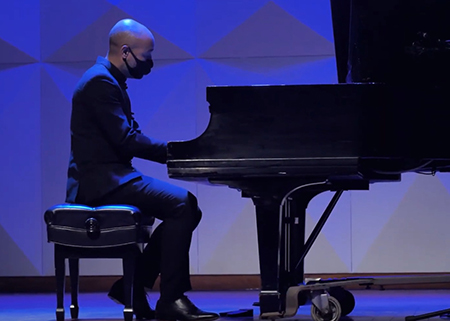
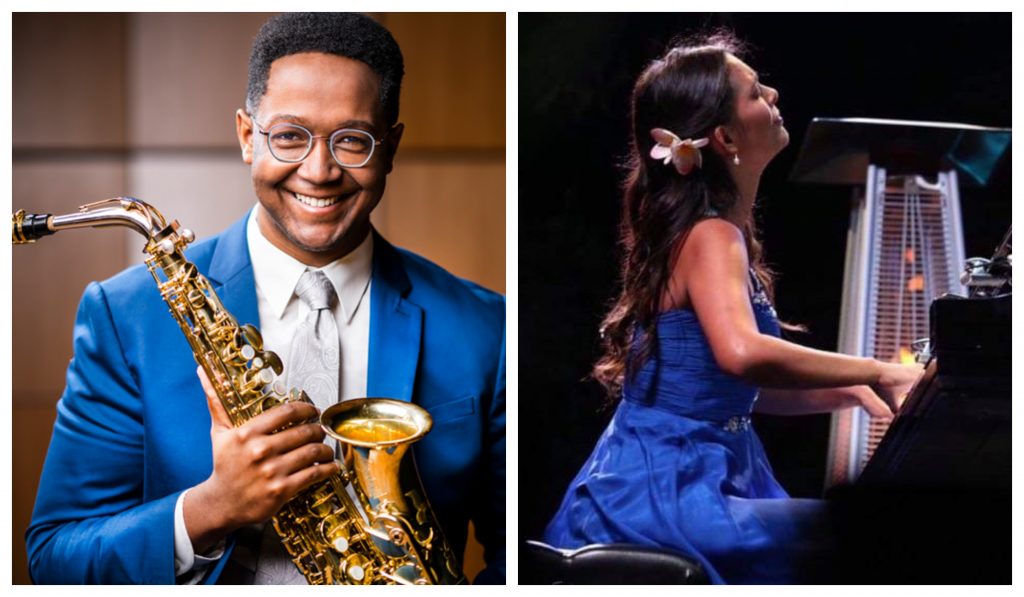
On February 21, the Tri-C Classical Piano Series showcased the Columbus, Ohio native during a virtual concert celebrating Black History Month. The performance was pre-recorded in the auditorium at Tri-C Metro Campus.
by Jarrett Hoffman
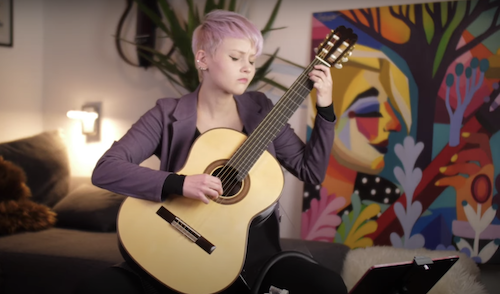
On Saturday, the Cleveland Classical Guitar Society unveiled the latest concert video in its International Series. Australian guitarist Stephanie Jones introduces herself to Cleveland from her home in Munich in an excellent recital that’s still available on YouTube for at least a month.
One of the first impressions from the video is Jones’ gift as a communicator, both in words and in music. Her spoken introductions are engaging and casual. She doesn’t aim to provide a verbal program note — instead, she mixes bits of history and explanations of technique with personal insights, and always keeps it short.
by Jarrett Hoffman
ON THE WEB TODAY:
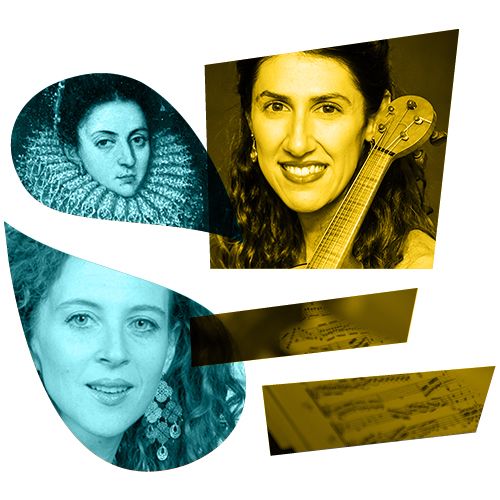
Les Délices continues its SalonEra series with “Jewish Diaspora.” Daphna Mor (recorders, voice, ney) will share how she has incorporated Jewish liturgical music into her performing life and will demonstrate the art of piyut, an oral tradition around ancient Hebrew liturgical texts set to different tunes. And performer/musicologist Elizabeth Weinfield will discuss her research into Leonora Duarte, locating that Jewish converso composer within the broader history of the Jewish Diaspora following the Spanish Inquisition.
The program begins at 7:30 pm and will remain available for 48 hours. It’s free, but a $10 donation is suggested to support the artists — register here.
The focus of that episode is obviously Jewish culture and history. But given the star trio of Mor, Weinfield, and host Debra Nagy, as well as the potent 17th-century music of Duarte, it’s also not a bad way to kick off…
WOMEN’S HISTORY MONTH:
Perhaps the best place to start in recommending events this month is CityMusic Cleveland, which has devoted its entire 2020-21 season — titled “Celebrating Women’s Rights to Vote and Create” — to commemorating the centenary of the 19th Amendment.
Included in the ensemble’s program booklets for every concert this season (here’s one from January) is an excellent overview of the history of women in music. That section concludes thus:
As with women’s suffrage, it has taken far too long for the creative voices of half the world’s population to be properly heard. The progress to overcome that prejudice has been remarkable, but the struggle for all human rights continues.
The writer points out that still, after decades, the Equal Rights Amendment — which states that “Equality of rights under the law shall not be denied or abridged by the United States or by any State on account of sex” — awaits action from Congress in order to be ratified to the Constitution.
CityMusic Cleveland’s recognition of the centenary of the 19th Amendment is therefore both a celebration of how much has been accomplished and how much still remains to be done.
The next program from CityMusic, “New Voices,” includes music by three living composers — Jessie Montgomery, Denise Ondishko, and Elena Ruehr — as well as the Romantic-era figure of Amy Beach. Violinists Susan Britton and Eunho Kim, violist Yael Senemaud-Cohen, and cellist Sophie Benn will share that music in a live stream on March 19, and in-person on March 20 at Shrine Church of St. Stanislaus, both at 7:00 pm.
That makes a nice pairing with Les Délices, which, fittingly as an early music group, will showcase composers from a different era of history. The SalonEra “Women in Music” (March 15 at 7:30) features the works of Maddalena Sirmen, Barbara Strozzi, Isabella Leonarda, Elisabeth Jacquet de la Guerre, and Clara Schumann, with the help of featured guests Byron Schenkman (harpsichord), Shelby Yamin (violin), and Michele Kennedy (soprano).
Moving to their main Concert Series, “Women of Genius” (premiering March 18 at 7:30) will center around female poets, performers, and composers of 17th- and 18th-century France “who not only made their voices heard but exerted a stronger cultural influence than many realize.” Soprano Clara Rottsolk joins the ensemble for this program that includes music by Julie Pinel and Elisabeth Jacquet de la Guerre.
Topping things off is another entry in the SalonEra series. Women’s history is not the main theme of “Medieval Visions” (March 29), but a large part of that program will focus on Christine de Pizan, who championed equal rights for women and challenged misogyny in her writing, “envisioning a feminist utopia” in her famous text The Book of The City of Ladies — written in 1405.
And in the non-musical category, womenshistorymonth.gov can connect you to several online exhibitions on the role of women in American history, courtesy of the Smithsonian Institution, National Museum of American History, National Park Service, Library of Congress, the National Archives, and other institutions.
IN THE NEWS:
Two artists with Cleveland connections were recently featured in The New York Times. First, among that publication’s classical streaming picks for the month of March is the Young Concert Artists (YCA) debut recital on March 10 by saxophonist and composer Steven Banks. The former Baldwin Wallace Conservatory professor recently previewed his YCA program in an appearance on the Rocky River Chamber Music Society series (read our review here).
And in an article about pianist Mahani Teave — “likely the only professional classical performer” from Rapa Nui, Chile, also known as Easter Island — writer Thomas May makes a passing reference to Northeast Ohio, noting that Teave studied in Berlin and in Cleveland. In fact, she left quite a mark on the area, winning the 2004 Concerto Competition at the Cleveland Institute of Music as a master’s student of Sergei Babayan, and gaining a number of local fans based on both her personality and her playing. That begs the question: who’s booking her to come back and perform?
TODAY’S ALMANAC:
Italian organist and composer Girolamo Frescobaldi died on March 1, 1643, but otherwise, this date in history brings several birthdays to recognize. The most famous names are probably Polish composer Frédéric Chopin (1810), Cuban composer Leo Brouwer (1939), and British composer/pianist Thomas Adès (1971). We’ll focus instead on two American composers: Cleveland-born Elliott Sharp (born in 1951) and Los Angeles-born Laura Karpman (1959).
Sharp has made a name for himself in the avant-garde and experimental scenes of New York City since the late 1970s. The 2014 Guggenheim Fellow has released over 85 recordings in a variety of genres, from contemporary classical to jazz, orchestral, noise, and electronic music. Click here to watch him perform his own partly improvised solo guitar work Momentum Anomaly, which features a number of fascinating sounds just a couple of minutes in.
Karpman, a five-time Emmy-winner, has written music for the concert hall as well as for television, film, video games, and theater. Perhaps her most famous work is Ask Your Mama, a multimedia opera featuring Langston Hughes’ cycle of poems of the same name. It also makes powerful use of Hughes’ own voice. The opera was released as a recording that went on to win two Grammy Awards in 2016, and can be listened to through a playlist on YouTube.
A champion for women in music, in 2014 Karpman co-founded the Alliance for Women Film Composers, and two years later became the first American woman composer to be inducted into the music branch of the Academy of Motion Pictures Arts and Sciences. She is currently serving as the first female governor of that branch.