


by Mike Telin
 TODAY’S EVENTS:
At 7:00 pm The Cleveland Orchestra debuts In Focus Episode 13, “Dance & Drama.” Franz Welser-Möst leads Edvard Grieg’s Holberg’s Time: Suite in Olden Style and Erich Korngold’s Symphonic Serenade. Free to subscribers and patrons who donate $300 or more to the Orchestra, premium subscriptions available. View here and on-demand. There’re plenty of concerts happening in the area the weekend — check our concert listings page for details.
The Crafting Change symposium continues today at 3:00 pm with “How to Teach in a Pandemic: A Case Study” Chicago-based new media artist Chris Collins is fascinated by digital technologies as a cultural force…which means he probably learned more from his COVID year than the rest of us did. He’ll discuss the ways he re-envisioned the spring 2021 class he taught at the School of the Art Institute of Chicago: what worked, what didn’t, and what we all might take away from the experience. The fascinating series continues through June 18. Click here for details.
IN THE NEWS:
The Cleveland International Piano Competition has announced that tickets for both in-person and virtual options are now on sale. Click here for details.
APOLLO’S FIRE ANNOUNCES NEW SEASON:
Cleveland’s Baroque orchestra will present seven local programs in 2021-2022, including a Messiah cycle led by guest conductor Nicholas McGegan, and a May performance at Severance Hall celebrating the ensemble’s 30th anniversary season. View the announcement here.
TODAY’S ALMANAC:
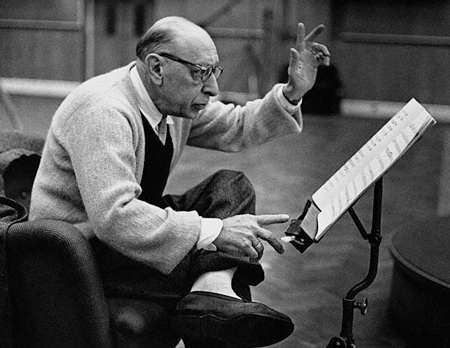
On this day in 1882 Igor Stravinsky (pictured at top) made his world debut in Oranienbaum, Russia. One year ago, Daniel Hathaway celebrated the composer’s birth by recounting the composer’s debut as guest conductor with The Cleveland Orchestra in February of 1925 conducting his Fireworks, Chant du Rossignol and Firebird Suite.
Hathaway reported that conductor Nikolai Sokoloff found Stravinsky to be “something of a showman and not entirely endearing,” adding, “He was, in short, a pain in the neck.” (Rosenberg, The Cleveland Orchestra Story, p. 87). Stravinsky was more complimentary about his experience: “I have never seen an orchestra in which there was finer discipline and a greater responsiveness than right here in your Cleveland Orchestra.” Here’s a live performance of Le chant du rossignol by Pierre Boulez and The Cleveland Orchestra from November, 1970.
Today we should revisit the controversy that surrounded the premiere of Le Sacre du printemps.
In his book, First Nights, Harvard professor Thomas Forrest Kelly begins his description of the premiere of Stravinsky’s Le Sacre du printemps on May 29, 1913 at the Théâtre des Champs-Elysées in Paris with reflections by its ballet master and a famous composer who happened to be in the audience.
I think the whole thing has been done by four idiots: First, M. Stravinsky who wrote the music. Second, M. Roerich who designed the scenery and costumes. Third, Mr. Nijinsky who composed the dances. Fourth, M. Diaghilev who wasted money on it. —Enrico Cecchetti
The choreography is ridiculous, the music sheer cacophony. There is some originality, however, and a certain amount of talent. But taken together, it might be the work of a madman. —Giacomo Puccini
Stravinsky’s score for Sacre was revolutionary in 1913 and still sounds fresh and inventive today. Similarly, Nijinsky’s choreography represented a complete disconnect with classical ballet when it was first unveiled a hundred years ago — and may have been largely responsible for the rowdiness of its first night audience. In an article for Dance Research Journal, Millicent Hodson traced the origins of Nijinsky’s concept from visual images of pre-Christian Russian idols. She quotes from an essay by Jacques Rivière written several months after the premiere. The body, he says,
...moves only as a whole, it forms a totality and its manner of speaking is to leap suddenly with arms and legs outspread, or to move to the side with knees bent and the head on the shoulder…If one can, for once, stop confusing grace with symmetry and the arabesque, he will find it on every page of Le Sacre du printemps, in the sight of profiles of faces posed upon full-front shoulders, in the elbows glued to the body, in the horizontal forearms, the rigid and open hands, in the trembling which descends like a wave from the head of the dancers to their feet, in the obscure, sparse, and preoccupied march of the adolescents in the second act.
Prior to Joffrey Ballet’s August 2013 Blossom Festival performance of Robert Joffrey and Millicent Hodson’s 1987 recreation of Nijinski’s original choreography, artistic director Ashley Wheater told ClevelandClassical.com that he agrees about that first night reaction. “I don’t think it was the music that caused the stir, I think it was more the ballet,” he said in a phone conversation from Chicago. “And to be honest, I think a lot of people did not think it was a particularly good piece of choreography. I think also the shock of it was that the Ballet Russe had become so famous for producing beautiful works from Russia — so when people went to see the ballet Russe they were expecting to see a classical ballet company.
“What upset or angered people was that they were offered something that just turned them upside down. I think people said, I don’t like this and I don’t want to see this. But it was a breakthrough in many ways. Looking back on it, would dance and music be different today if Stravinsky hadn’t written Sacre? It’s hard to say, because to me the music has always been brilliant.”
Click here to watch Joffrey Ballet’s 1987 performance of the work with the Orchestra of the National Theater of Prague conducted by Allan Lewis.
 When faced with the uncertainty of what the restrictions governing indoor, in-person concerts might be this summer, the organizers at ChamberFest Cleveland made the bold decision to take the concerts outside and make them free.
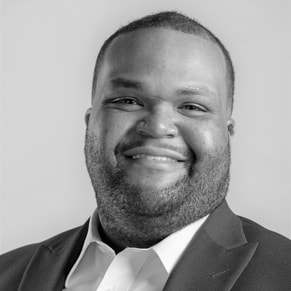 For Matthew Jones, the best part about performing is doing it with your longtime friends. Luckily, the vocalist was recently able to do just that when he recorded a concert in person with hornist Van Parker, percussionist Mell Csicsila, and composer/pianist Buck McDaniel. The four are frequent collaborators who know each other well both on- and off-stage.
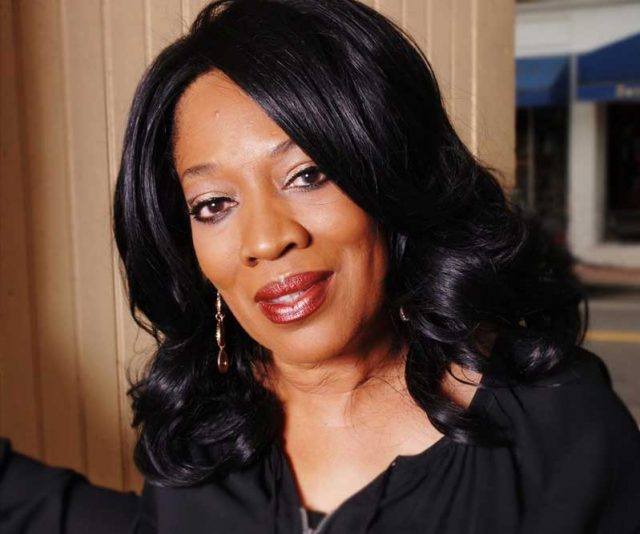 Scientists, activists, a writer, a visual artist, a jazz singer, and a former president all sparked inspiration in the mind of Jinjoo Cho as she developed this summer’s Music & Ideas Festival as part of ENCORE Chamber Music Institute.
 This Father’s Day, skip the awkward conversations with dad and instead sit down with him to enjoy an hour of music together, courtesy of ChamberFest Cleveland.
 After the postponement of their 2020 season, ChamberFest Cleveland made a triumphant return on June 6, as they kicked off the 2021 concert series aptly named ‘Together Again.’ Originally planned to be held at The Grove Amphitheater, the venue was changed to St. Paschal Baylon church, due to rain.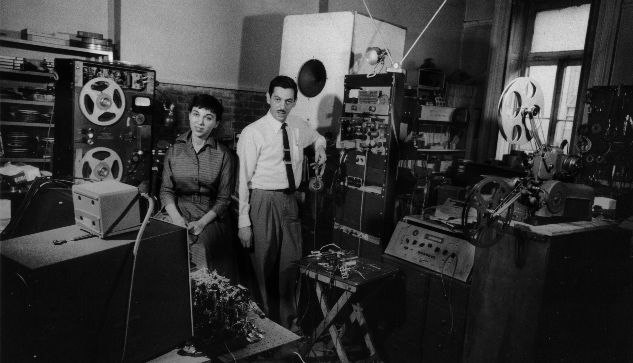
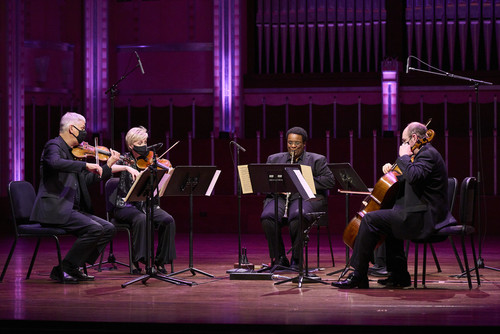 Much had changed in the 130-some years that separate Wolfgang Amadé Mozart’s Vienna from that of Alban Berg. The Cleveland Orchestra titled episode 11 of its In Focus digital series “Order and Disorder,” presumably to contrast Mozart’s well-behaved, Enlightenment-inspired Clarinet Quintet from 1789 with the societal chaos reflected musically in Berg’s Lyric Suite, three of the six movements from the composer’s 1925-1926 String Quartet that he arranged for full string orchestra in 1928.
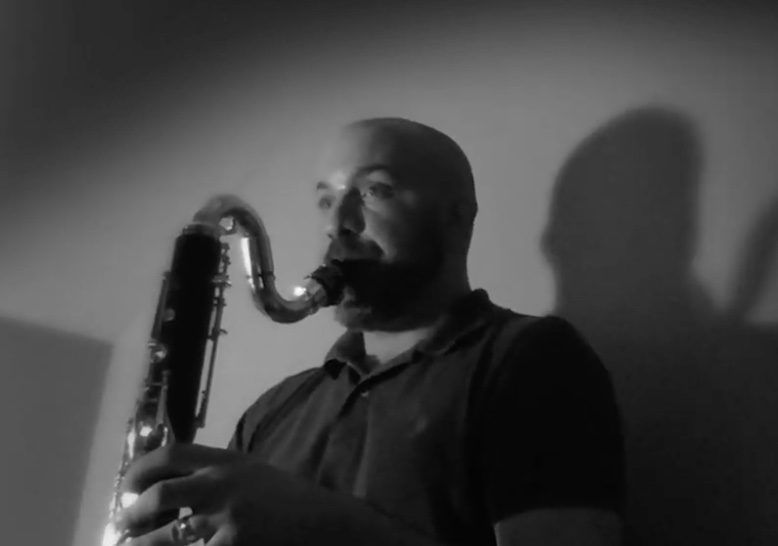 Although great strides have been made in audio technology, latency issues (lag in time due to internet connection) still prevent musicians from seamlessly passing musical lines from multiple locations in real-time. In their most recent collaboration, “New Sound Worlds,” Cleveland-based No Exit and St. Paul-based Zeitgeist bring life to a new work by Scott Miller during which members of both ensembles perform from their homes and studios. The concert is available on-demand
  TODAY’S ALMANAC — A QUIZ!