by Daniel Hathaway

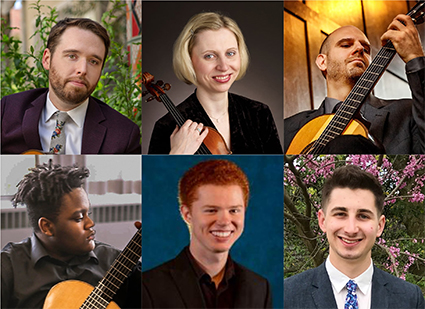
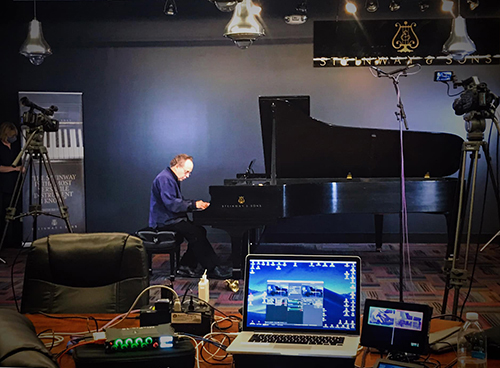
As organizations gingerly take steps to open up for business, it’s refreshing to have new content to listen to and write about after a solid six months of archival footage. [Read more…]
by Daniel Hathaway

As organizations gingerly take steps to open up for business, it’s refreshing to have new content to listen to and write about after a solid six months of archival footage. [Read more…]
by Daniel Hathaway
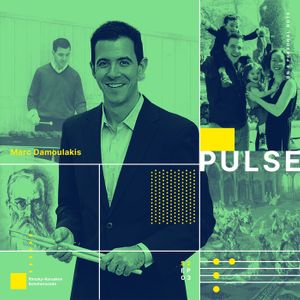
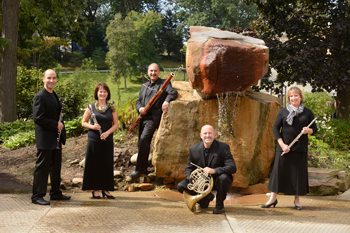
The Cleveland Orchestra has released the third podcast in its second “On A Personal Note” series (there will be ten episodes in total). “Pulse” features an interview with Principal Percussionist Marc Damoulakis, who talks about “feeling the rhythm from an early age and what it means to keep time for The Cleveland Orchestra.” Watch here.
Another Cleveland Orchestra principal, flutist Joshua Smith, plays a movement from a Mozart Concerto today on WCLV’s Lunchtime With The Cleveland Orchestra.
If you missed Les Délice’s SalonEra program “Recovering Roots” on Monday evening, the video is still available here.
And Puccini is the topic of the week on the MET Opera’s nightly streams. Does La Fanciulla del West qualify as a “Spaghetti Western?” Deborah Voigt stars in tonight’s rebroadcast of that title from January, 2011.
AND SPEAKING OF OPERA…
The New York Times’ Spain and Portugal correspondent reports that last Sunday’s Teatro Real performance in Madrid was cancelled after spectators spent more than an hour shouting and clapping to protest against what they said were insufficient social distancing measures in the opera house’s mezzanine levels.” Ironically, the opera was Verdi’s Un Ballo in Maschera (“The Masked Ball”). Read about it here.
Meanwhile, in London, The Guardian’s critic bicycled to the Alexandria Palace to witness Europe’s first drive-in opera, the English National Opera’s La Bohéme. “Despite the drolleries of set design and costume, sublimity triumphs. As Mimi lies dead and grief-stricken Rodolfo flees between parked cars, as if towards the garden centre (mate, it’s closed for the night), the production contrives to be deeply moving, despite the fact that the communal pleasure of being in a live audience is almost entirely lacking. A spattering of applause is drowned out by car horns.” Read the review here.
In other news from the opera world, the New York Times reported today that fired Metropolitan Opera conductor James Levine was paid $3.5 million in a settlement with the company that had not been previously disclosed.
In a related story, conductor Zubin Mehta, recovering from cancer surgery, told the Wiener Zeitung that he has invited both Levine and Placido Domingo to pursue “bold projects” at the Florentine opera house of which he’s honorary president. “We’ll leave the blacklists to American puritanism.”
TODAY’S ALMANAC:
On September 22, 1989, Russian-American composer Irving Berlin died at the age of 101 in New York City, having contributed some 1,500 songs to the mythical Great American Songbook over his 60-year career. One of the most celebrated was “God Bless America,” indelibly linked to the singer Kate Smith, but sung by Berlin himself on the Ed Sullivan Show on May 5, 1968. For just another taste of Berlin’s classic tunes, here’s a performance of Blue Skies by Cleveland’s TOPS Swing Band from the Trinity Cathedral Brownbag Concert on November 13, 2013.
Polish-American violinist Isaac Stern died in New York City on this date in 2001 at the age of 81. In addition to his distinguished career as a soloist, Stern organized a campaign to save New York’s Carnegie Hall from developers in the 1960s. The main auditorium is named in his honor.
Stern interviewed Christoph von Dohnányi in 2000 when The Cleveland Orchestra was invited to open the 110th season of the hall. And conductor Michael Stern reflected here on his father’s life in music as part of the centenary celebrations of the violinist’s birth.
Before coming to Cleveland, I taught at Groton School in Massachusetts, where Isaac Stern was a favorite of the second headmaster and his wife. The story goes that they tried on several occasions to set up a concert for the students, but Stern’s management always turned them down. The solution: a rumor would be circulated that Mr. Stern would be “practicing” at a certain hour in the auditorium, and as if by magic, the entire school showed up to listen.
by Daniel Hathaway
OUTSIDE THIS WEEKEND:

If indoors is your preference, Apollo’s Fire tells us that there are still a few seats available for its 3pm Baroque Bistro at the Music Box Supper Club (just drinks, no food), and at 4pm, baritone Michael Kelly and guitarist David Leisner will perform Schubert’s Die Schöne Müllerin in Leisner’s arrangement at Akron’s Holy Trinity Lutheran Church while Kevork Mourad creates live images. (You can attend the free event in person — health protocols in effect — or watch a live stream).
And if you missed Friday evening’s live stream from Trinity Cathedral, the video is available for on-demand viewing here. Donations to a COVID-19 relief fund for musicians are welcome.
THIS WEEKEND’S ALMANAC:
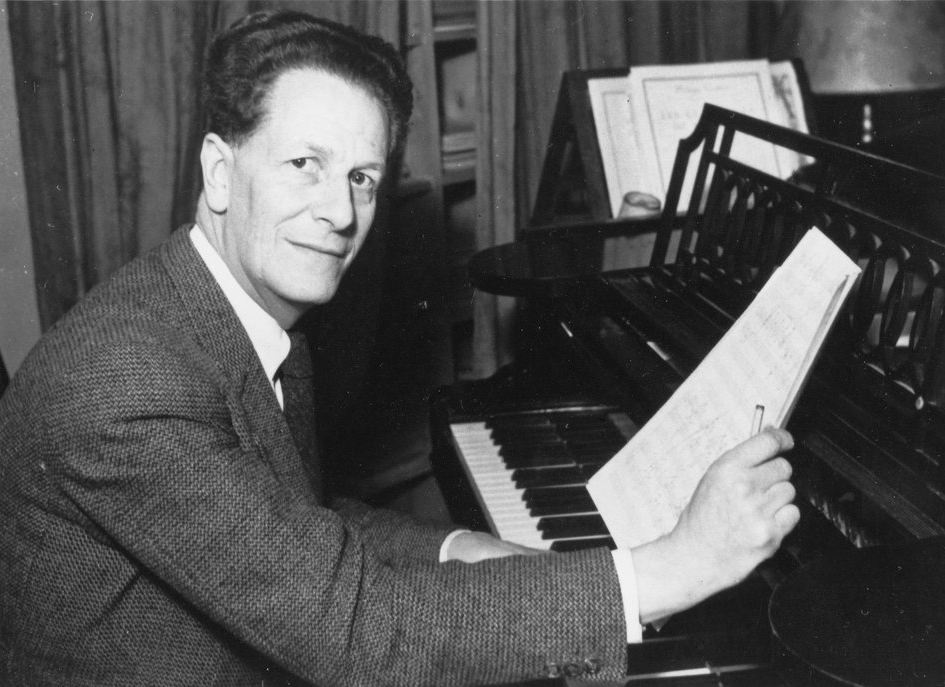
On September 19, 1972, French pianist Robert Casadesus died in Paris. Known especially for his interpretations of Mozart’s concertos, he recorded a number of them with George Szell and The Cleveland Orchestra (sometimes credited as “The Columbia Symphony” for contractual reasons). Listen here to nos. 21 and 24 in recordings remastered in 2018. Beginning in 1975 and for its first ten seasons, the Cleveland International Piano Competition was known as the Casadesus Competition.
In 1957, Finnish composer Jean Sibelius died in Jarvenpaa on September 20 at the age of 91, having composed most of the symphonies and tone poems that made him famous by the mid-1920s. The Cleveland Orchestra has played his works under all of its music directors, but we’ll feature restored live performances of his violin concerto with Christian Ferras in 1965, and of his Second Symphony in Tokyo in 1970, both led by George Szell — the Tokyo performance shortly before he died of cancer.
And French organist and composer Henri Mulet died on September 20, 1967 in Draguignan. Having served at the Basilica of Sacré-Coeur on Montmartre and a number of Parisian churches, in 1935, he burned his manuscripts and moved to Provence where he was organist of Draguignan Cathedral and lived in seclusion in a convent. His organ works are exemplars of the French Romantic style. Click here to watch the flamboyant Diane Bish perform his Carillon Sortie, and here to watch a performance of his Toccata: Tu es Petra from Byzantine Sketches — inspired by the architecture of Sacré-Coeur — played by English organist Gillian Weir.
Posting of this weekend’s Diary was delayed by a day-long internet outage on Spectrum.
by Daniel Hathaway

Cleveland Orchestra piccoloist Mary Kay Fink — and her fans — were looking forward to the premiere last April of a concerto commissioned for her from composer Oded Zehavi, an event that was upended by the novel coronavirus. The Orchestra has now released audio of a chamber version of the work performed by the Cleveland Chamber Collective on March 1 at Disciples Christian Church (we reviewed the concert here). The performance is part of a video that includes a conversation about the creative process with Zehavi, Fink, and Cleveland Orchestra Chief Artistic Officer Mark Williams. Watch and listen here.
HAPPENING TODAY:
The third COVID-19 Benefit Concert presented by Music & Art at Trinity Cathedral goes live online in real time at 7 pm. Music by the “Three Bs” — Boulanger, Britten and Brahms involves organist Nicole Keller, countertenor John McElliott, tenor JR Fralick, pianist Todd Wilson, violinist Andrew Sords and pianist Elizabeth DeMio. Hornist Richard King is featured in Strauss’ First Concerto on Lunchtime with The Cleveland Orchestra, guest carilloneur Patrick Macoska gives a free lunchtime recital in University Circle, and the MET Opera continues its Bel Canto Favorites Week with Bellini’s I Puritani (featuring Anna Netrebko — who is said to be recovering nicely from COVID-19 in a Russian hospital).
INTERESTING READ:
The Harvard Crimson offers its readers a current undergraduate’s view of how many symphony orchestras are missing opportunities to draw young people into the classical music fold. Read chemistry major Leigh M. Wilson’s “Who Belongs at the Orchestra” here.
TODAY’S ALMANAC:
On this date in 1818 (or perhaps on September 17), French composer Charles Gounod was born in Paris. Known today principally because of two of his twelve operas (Faust and Romeo et Juliette remain solidly in the repertory), he also wrote much religious music (he thought about becoming a priest). One of his most charming works is the Petite Symphonie for winds, viewable here in a 2017 performance by Camerata Pacifica at the Music Academy of the West in Santa Barbara, California.
And on September 18, 1943, Austrian cellist and composer David Popper was born in Prague. Watch a slightly fuzzy video of his Requiem for three cellos and piano from the Cleveland Institute of Music in 2010 featuring Kathryn Brown, piano, with Matt Allen, Melissa Kraut and Alex Cox, celli. And for cellists, CIM graduate Joshua Roman took on the regimen of recording one of his Etudes every week for 40 weeks, “wherever Joshua and his laptop happen to be.” Here, he takes on Etude No. 4.
by Daniel Hathaway

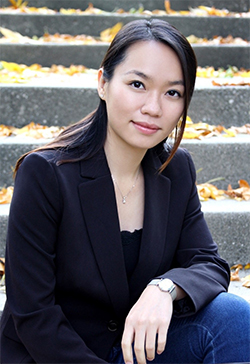
The Contemporary Youth Orchestra has announced the appointment of Chia-Hsuan Lin as interim music director. Born in Taiwan and trained as a percussionist, she earned a doctorate in conducting at Northwestern and currently serves as associate conductor of the Richmond Symphony. Read the press release here. She fills the position recently vacated by founder Liza Grossman, who led the organization for 25 years.
ROSS DISCUSSES WAGNER BOOK WITH MIDGETTE:
New Yorker music critic Alex Ross, author of The Rest Is Noise: Listening to the Twentieth Century, and Listen to This, has just had his third book published. He’ll discuss Wagnerism: Art and Politics in the Shadow of Music in a free online conversation with former Washington Post critic Anne Midgette this evening at 6:00 pm sponsored by the Wagner Society of Washington D.C. Register here (where you can also order the book). “Neither apologia nor condemnation, Wagnerism is a work of passionate discovery, urging us toward a more honest idea of how art acts in the world.”
TODAY ON THE WEB AND AIRWAVES:
Did we mention Wagner? WCLV includes the Prelude to Act 1 of Die Meistersinger as well as Brahms’ First Symphony on today’s Lunchtime with The Cleveland Orchestra. This afternoon, tune in to a virtual recital from the University of Akron and a convocation recital from Baldwin Wallace. This evening, Bop Stop and the Local 4 Music Fund of the Musicians’ Union present a live stream of a concert by pianist Jackie Warren, bassist Aidan Plank, and drummer Jim Rupp. And the MET Opera continues its 27th week of free streams from its archives with Rossini’s La Cenerentola during its Bel Canto Favorites week. Check the Concert Listings for details.
TODAY’S ALMANAC:
Going way back, on this date in 1179, the German abbess Hildegard von Bingen died at the monastery she had founded in Rupertsburg. Known as the “Sibyl of the Rhine,” the medieval polymath wrote a large body of chant, including one of the first morality plays, Ordo Virtutum. Click here to watch a full performance by the Polish women’s choir Flores Rosarum.
On September 17, 1803, Franz Xaver Sussmayr, student of Mozart and Salieri who was entrusted by Mozart’s widow with the unenviable task of completing his teacher’s Requiem, died in Vienna. That’s how we remember Sussmayr today, but in his own era, he was a well-regarded composer who wrote church music and opera, as well as a concerto for Mozart’s favorite clarinetist, Anton Stadler, left unfinished but later completed by Michael Freyhan. Give Sussmayr’s piece a listen here in a performance by Dieter Klökker and the English Chamber Orchestra.
American composer, pedagogue, and pianist Charles Tomlinson Griffes was born on this date in 1884 in Elmira, New York, and died of influenza in New York City during the 1918 pandemic. He became a leading American exponent of impressionism as exemplified in his orchestral works White Peacock, (a 1915 piano work he orchestrated in 1919), The Pleasure Dome of Kubla Khan, (1912, revised in 1916), and Poem for Flute and Orchestra (1918). Like Gustav Holst, he wrote music in his spare time while teaching at a private school. Listen to a 2012 performance of Kubla Khan with the Texas Festival Orchestra at the Round Top music Festival, led by Micahel Stern.
On September 17, 1931, RCA Victor made history by introducing the first 33-⅓ rpm long playing record in a demonstration at the Savoy Hotel in New York, years later to be upstaged by Columbia Records, who released an improved version in 1948.
And on this date in 1998, American composer and organist William Albright died unexpectedly at the age of 53 in Ann Arbor, Michigan, where he had taught at the University of Michigan since 1970. Influenced by his studies with Oliver Messiaen in Paris, Albright contributed to the 20th century canon of organ music with solo works as well as with his introduction to The King of Instruments, played here by Painesville-born organist Tom Trenney and narrated by Oberlin alumnus Michael Barone at First Plymouth Church in Lincoln, Nebraska in 2013.
Albright was also an enthusiastic performer of ragtime, having recorded many pieces by Scott Joplin and others. Here’s one of his own concert rags for the organ, Sweet Sixteenths, played by Frank Hoffmann at the Heiliggeistkirche in Frankfurt, Germany, in 2018.
by Daniel Hathaway

In fact, McElliott has had many opportunities to savor Benjamin Britten’s “Abraham and Isaac” together with his colleagues, tenor JR Fralick and pianist Todd Wilson. “We’ve performed it many times both at the Church of the Covenant and at Trinity Cathedral. At this point, it’s become an old friend.”
McElliott, Fralick, and Wilson will renew that friendship in the third of Music and Art at Trinity’s live streamed concerts this summer, an episode that will air in real time with no audience present on Friday, September 18 at 7:00 pm. The program, “Music by Three B’s,” will include Nadia Boulanger’s Three Improvisations, played by organist Nicole Keller, and Brahms’ Violin Sonata in A, performed by Andrew Sords with pianist Elizabeth DeMio. The event is free, but donations are welcome toward a COVID-19 musicians relief fund.
Britten wrote his five Canticles between 1947 and 1974. Though the titles suggest liturgical works, they’re more like little cantatas for various combinations of voices and instruments. Three of them were crafted as memorials, and all five reflect the composer’s knack for setting fine examples of English literature to highly expressive music. [Read more…]
by Daniel Hathaway
With not a lot going on locally today, let’s mark some anniversaries with tributes by musicians both local and global.
On September 15, 1890, Swiss composer Frank Martin was born in Geneva (he died in the Netherlands in 1974, where he spent much of his career). Martin developed a lean compositional style influenced by Schoenberg’s 12-tone theories, but never abandoned tonality altogether. George Szell programmed his Cello Concerto with Pierre Fournier and The Cleveland Orchestra in October, 1967, two years after it was written. Click here to listen to the live performance.
Austrian organist, conductor, composer, and influential teacher Anton Heiller was born on this date in 1923 in Vienna, where he died in 1979. He was a prolific composer whose works, influenced by Hindemith and Martin (see above), never approached the popularity of his solo performances, which included a series of recitals on the new Fisk organ at Harvard in 1970. Two performances of his organ works include Oberlin alumnus Dexter Kennedy playing his In Festo Corporis Christi in 1971 on the Beckerath organ in Dwight Chapel at Yale, and Simone Gheller playing his Fantasia super Salve Regina on an artist diploma recital on the Fisk organ in Oberlin’s Finney Chapel in 2011.
In 1945, American soprano Jessye Norman was born in Augusta, Georgia. A celebrated opera diva, she sang 85 performances at the Met, including 11 roles in 10 different works. Revisit her artistry in a live performance of Richard Strauss’ Morgen at the 1991 Salisbury Festival inaugural concert on the West Green of England’s Salisbury Cathedral, and — out-of-season but in another cathedral — her 1992 Christmas Concert with the Lyon Opera Orchestra at Notre-Dame in Paris.
Also on this date in 1945, Austrian composer Anton von Webern was accidentally shot to death by an American soldier when he stepped outside his house to light a cigar during the post-war occupation. Webern’s eventually sparse compositional style is contrasted to J.S. Bach’s polyphonic textures in his arrangement of the 6-voice Ricerar from A Musical Offering, performed here by The Cleveland Orchestra led by Christoph von Dohnányi.
INTERESTING READS:
In a long New Yorker essay, “Black Scholars Confront White Supremacy in Classical Music,” Alex Ross considers a thorny question with several dimensions. “Living with history means living with history’s complexities, contradictions, and failings…Attempts to cleanse the canon of disreputable figures end up replicating the great-man theory in a negative register, with arch-villains taking the place of geniuses. Because all art is the product of our grandiose, predatory species, it reveals the worst in our natures as well as the best.”
And in a WQXR article, Philadelphia Inquirer critic David Patrick Stearns muses about a new trend in curating classical recordings. “Fascinating, provocative, and bewildering, such discs subvert expectations — not just with names that wouldn’t normally be heard on the same disc. Instead of going deep into a single composer’s psyche, they go broad, reaching into distant centuries and ethnicities, but not superficially. Sure, there’s some gleeful perversity going on, but there’s also a lot of enterprise and thought that allows these interpretive artists a greater means of creative expression. Maybe they don’t compose the music, but they can compose the program, and do so around ideas that are important to them.” Read “Beyond High Concept, Beyond Algorithms: Classical Recording Artists Go ‘Off the Leash’” here.
by Daniel Hathaway
WEEKEND HIGHLIGHTS:

On Sunday, Apollo’s Fire holds its first online benefit, “Go For Baroque,” link to be supplied with a donation, cellist Simon Housner plays a solo recital on the Sacred Heart Series in Oberlin, guest carillonneur Keiran Cantilena plays a recital on the McGaffin Carillon in University Circle, and pianist Daniel Shapiro opens the Music from the Western Reserve series — as well as launching his season-long expedition through all 32 of Beethoven’s Piano Sonatas — with a virtual recital pre-recorded from Christ Church in Hudson. Details in the Concert Listings.
INTERESTING READS FROM ENGLAND:
Bachtrack editor Mark Pullinger reflects on the long-term effects of free, live streamed concerts during the pandemic. Read Free streaming: lifeline or noose? here.
It’s not about music, but still thought-provoking. The Guardian commissioned GPT-3, “OpenAI’s powerful new language generator, to write an essay for us from scratch. The assignment? To convince us robots come in peace.” Read Robot Wrote This Article here.
THIS WEEKEND’S ALMANAC:
On September 12, 1764, French composer and music theorist Jean Philippe Rameau died in Paris at the age of 80. It was only after he turned 50 that he began writing the operas that have been the main source of his place in history. Watch a 2003 video of his Les Boréades performed by Les Arts Florissants at the Opéra National de Paris in 2003, and a concert of suites from his dramatic works played by Jordi Savall and Le Concert des Nations at Versailles in 2011.
Rameau also wrote solo music for the harpsichord, chamber works, and religious music. In April, 2018, Cleveland’s Les Délices joined Scott Metcalfe and his Boston ensemble Blue Heron in a program at Plymouth Church in Shaker Heights that featured several of Rameau’s motets. Here are three selections from In Convertendo: “Laudate nomen Dei,” “Euntes ibant,” and “Tunc repletum est.”
And Russian composer Dimitri Shostakovich was born on September 12, 1906 (Old Style dating) in St. Petersburg. The Cleveland Orchestra has played his symphonies many times over the decades, but let’s suggest two historic recordings led by Artur Rodzinski: Symphony No. 1 (undated in this posting), and No. 5 (recorded February 22, 1942 in Severance Hall).
On September 13, 1819, German pianist, composer, and teacher Clara Wieck was born in Leipzig, later to marry Robert Schumann, whose works eclipsed her own. Watch a recent concert by the Dana Piano Trio that featured her own piano trio.
Also born on September 13, but in 1917 in Cleveland, composer Robert Ward was most celebrated for his Pulitzer Prize-winning 1961 opera The Crucible, based on the play by Arthur Miller. In 2011, at the age of 93, Ward journeyed to Sarasota Opera to hear a production of the work, and talked about it in a video interview.
And on September 13, 1977, conductor Leopold Stokowski died at the age of 95 in the English village of Nether Wallop. Watch a BBC4 video documentary of his long career, and enjoy a recording of his own transcriptions of Mussorgsky’s Pictures at an Exhibition played by The Cleveland Orchestra under the late Oliver Knussen.
by Daniel Hathaway
Oberlin Conservatory will open its concert season with a performance of John Luther Adams’ Sila that deploys more than 50 brass players and percussionists all over Tappan Square. The 6:30 pm event is free, masks required, and physical distancing is built into the plan.
And at 12:15 noon today, University Circle carillonneur George Leggiero will ascend to his office in the McGaffin Tower to play Baroque and Baroque-inspired music on the 47-bell carillon. It’s free, and you can listen from various greenswards or remain in your car (honking = applause). Details of both events here.
CLEVELAND ORCHESTRA REMEMBERS 9-11 IN PODCAST:
Lisa Wong, director of choruses at Severance Hall, “reflects on the healing power of John Adams’s On the Transmigration of Souls after 9-11 and the human voice as medicine for the soul” in the just-released second episode of the second season of the podcast series “On a Personal Note.” Watch here.
TODAY’S ALMANAC:
Estonian-born composer Arvo Pärt was born on this date in 1935. One of the truly original voices of the 20th century, Pärt invented what he called the tintinnabuli style, a minimalist approach influenced by chant.
Frequent ChamberFest Cleveland violinist Alexi Kenney joined his colleague Stefan Jackiw and Boston’s A Far Cry chamber orchestra in a live performance of “Silentium,” the second movement of Pärt’s Tabula Rasa, in Jordan Hall in 2017. Watch here. And listen to the Estonian Chamber Choir sing Pärt’s 1989 Magnificat under the direction of Paul Hillier.
French composer, organist, and harpsichordist François Couperin “Le Grand” died in Paris on this date in 1733. QinYing Tang included the 18th Ordre from his Troisième livre de pièces de clavecin on her doctoral recital at the Cleveland Institute of Music in April, 2015. And in the same month, Les Délices played his La Sultanne on its program in Herr Chapel at Plymouth Church in Shaker Heights.
by Daniel Hathaway

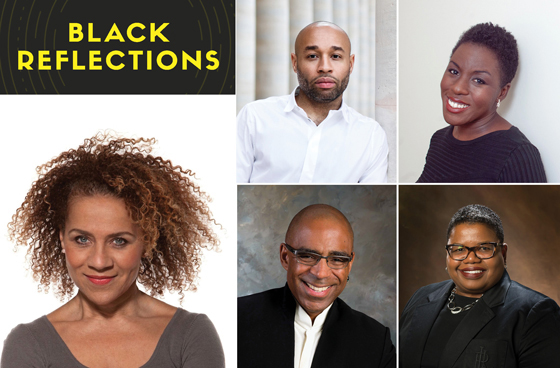
Oberlin Conservatory and the New World Symphony are collaborating on a three-part series on racial justice in the music world, conceived by bassist Michael Martin. Part one, “Black Reflections: Contributions of Black Artists” streams today at 5:00 pm on Oberlin Stage Left, with moderator Chi-chi Nwanoku, of Chineke Foundation, and panelists including pianist Aaron Diehl, Sphinx Organization founder Aaron Dworkin, and musicologists Fr.edara Hadley and Tammy Kernodle. Register for the webinar here.
(Earlier this week, the Oberlin Faculty approved a statement, “Towards a More Equitable and Diverse Conservatory Education.” Read the full document here.)
Also on today: “We Three Quings” from Bop Stop, with Noa Even, saxophone, Dan Bruce, guitar, and Anthony Taddeo, drummer, a Mozart Flute Concerto with Joshua Smith on Lunchtime with The Cleveland Orchestra, and the MET Opera’s archive production of Massenet’s Cendrillon. Visit the Concert Listings for details.
NEW VIDEO FROM THE ART MUSEUM:
In a conversation with CMA’s Tom Welsh, Ruth Reichl, sometime restaurant critic for the New York Times and editor of Gourmet Magazine, explores her Cleveland connection through her grandmother Mollie Brudno, “an unheralded but important impresario in the mid-20th century who organized hundreds of concerts with the Cleveland Museum of Art.” Watch the latest episode of CMA Behind the Beat here.
TODAY’S ALMANAC:
On this date in 1684, German organist and composer Johann Rosenmüller died at Wolfenbüttel, where he ended his career as choirmaster at the ducal court. Previously, he was organist at the Nikolaikirche in Leipzig before getting run out of town for alleged homosexual activities. He fled to Venice to work at San Marco and at the Ospedale della Pieta.
Watch videos of Rosenmüller’s Das ist meine Freude and Nisi Dominus performed by Burning River Baroque at St. Alban’s in Cleveland Heights in March, 2018, and of his Magnificat in c by ARTEK and Les Sacqueboutiers du Toulouse in 2017 at Old St. Patrick’s in New York.
And on September 10, 1941, British conductor, harpsichordist and musicologist Christopher Hogwood was born in Nottingham. Co-founder with David Munro of the Early Music Consort in 1967 and founder of the Academy for Ancient Music in 1973, Hogwood was a central figure in the early music revival movement, including his tenure as music director of Boston’s Handel and Haydn Society, but his expertise extended into more modern music as well.
Watch a video where Hogwood conducts Mozart’s Piano Concerto No. 15 with Robert Levin at the fortepiano, and a 2013 Gresham College lecture here where Hogwood talks about Messiaen’s Quartet for the End of Time with live musical illustrations. (He died a year later in Cambridge, where he served as honorary professor at Cambridge University.)