by Daniel Hathaway

by Daniel Hathaway

by Daniel Hathaway
TODAY’S ALMANAC:

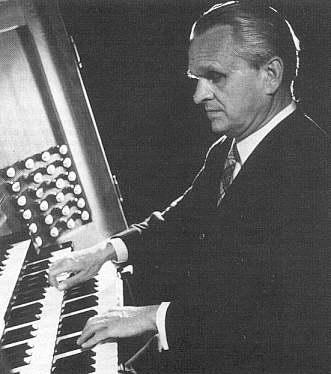
Walcha learned complex organ works — including the entire output of J.S. Bach, which he recorded twice — by having his wife play short phrases which he immediately memorized. One of his many students, George Ritchie, recounts that process here.
Walcha’s recordings employed a number of historical organs. Click here to listen to J.S. Bach’s Passsacaglia et thema fugatum on the Arp Schnitger instrument in the St. Laurenskerk in Alkmaar, the Netherlands, and here for Walcha’s interpretations of music by Vincent Lübeck and Nikolaus Bruhns on the Schnitger at the Church of St. Peter and St. Paul, Cappel, in Lower Saxony — an instrument rusticated there from Hamburg whose pipework escaped being melted down during World War I because the country roads were impassable.
On this date in 1782, Italian composer and guitar and violin virtuoso Niccolo Paganini was born in Genoa. In spite of chronic illnesses, he became the premier violin soloist of his day. Although the guitar was his constant companion on concert tours, Paganini regarded it as a private instrument better suited for playing with friends.
His superhuman technique led to rumors that he had made a pact with the Devil, a superstition that delayed a Catholic burial for some 36 years after his death in 1840. That technique is preserved in his famous 24 Caprices. Canadian violinist James Ehnes brings his own splendid technique to No. 24 here, recorded by the CBC at a recital in Koerner Hall at the Royal Conservatory in Toronto.
October 27 marked the birth in 1927 of American composer Dominick Argento in York, Pennsylvania. The composer of 14 operas and a great swath of choral music, Argento divided his time between the U.S. and Italy (he spent part of each year in Florence), finally moving to the Twin Cities in 1958, where he established a long professional relationship with Plymouth Church and its music director Phillip Brunelle. Brunell talks about that in the first episode of Musical Moment.
The University of Maryland devoted ten days in 2012 to a celebration of Argento’s vocal works, including the first performance of the composer’s Cabaret Songs. Watch a behind-the-scenes video here.
Finally, German composer Hans Werner Henze died on October 27, 2012. Christoph von Dohnányi returned to town in February, 2013 to lead The Cleveland Orchestra in Henze’s Adagio, Fugue, and Mänadentanz, an arrangement of part of the third act of the opera The Bassarids (read our review here), and Franz Welser-Möst led the orchestra in Henze’s Il Vitalino raddoppiato with violinist Julia Fischer in May, 2017 (reviewed here).
Probably Henze’s most famous work, Das Floß der Medusa, a requiem for Che Guevara based on the Géricault painting, was produced in Hamburg in 2017. Watch here.
by Daniel Hathaway
READ AND WATCH THIS WEEKEND:

Last we heard, Oberlin College Choir was going ahead with their plans for a rescheduled outdoor concert tonight at 7:30 pm at the Mudd Learning Center Patio off of Wilder Bowl on the Oberlin Campus. This event will also be streamed live.
Matthew Robertson’s The Thirteen Choir, who appeared at St. John’s Cathedral just a year ago, are broadcasting a performance of Heinrich Schütz’s exquisite Musicalisches Exequien today at 7:30 pm as part of their program “Sorrow to the Stars.” Tickets and connection details here.
Writing in the New York Review, conductor and composer Matthew Aucoin re-evaluates the legacy of Pierre Boulez. Read Sound and Fury here.
And a New York Times feature by Corinna da Fonseca-Wollheim visits Peruvian-born composer and pianist Gabriela Lena Frank and her husband on their farm in Mendocino County, California, where she raises chickens and hosts an academy for young composers. Read Part Teacher, Part Den Mother, a Composer Fosters Diversity here. Frank wrote a piccolo concerto for Mary Kay Fink and The Cleveland Orchestra in 2014 (read our preview here). She was to have been the featured guest composer with the Cleveland Institute of Music New Music Ensemble in November, 2019, but had to cancel because of the California wildfires.
THIS WEEKEND’S ALMANAC:
Among the decedents on October 24 and 25 in music history are French composer and organist Jean Titelouze (1633), Austrian violinist and composer Karl Ditters von Dittersdorf (1799), Hungarian operetta composer Franz Lehar (1948), and American composer Carl Ruggles (1971).
We’ll pick one work to memorialize Ruggles, the prickly New England composer who was also a prolific painter, Listen to his Sun Treader, recorded in a live performance in February, 1988 by Christoph von Dohnányi and The Cleveland Orchestra.
The storks were busy on this weekend in history, delivering Italian composer Luciano Berio in Oneglia (1925), Russian composer Sophia Gubaidulina in Tchistpol Tatarstan (1931), American harpsichordist and pianist Malcolm Bilson in Los Angeles (1935), German composer Hans Leo Hassler in Nuremberg (1564), English composer Thomas Weelkes in Elstedt (1576) and Russian composer Alexander Tikhonovich Grechaninov in Moscow (1864).
Here are just a few suggestions to mark those birthdays:
In the Berio documentary Voyage to Cythera, in addition to “interviews with conductors such as Riccardo Chailly and Riccardo Muti who shed light for us on Mahler, Stravinsky, Schoenberg and Berio,” the composer unpacks his Sinfonia, a tribute to Gustav Mahler, and rehearses it with the Concertgebouw Orchestra.
Gubaidulina’s Canticle of the Sun was performed by the Oberlin College Choir, Gregory Ristow, conducting, with Darrett Adkins, cello, on October 18, 2018. Here’s an earlier college performance of her dynamic setting of Francis of Assisi’s words by the Indiana University Contemporary Ensemble from February, 2013.
And Thomas Weelkes, one of the greatest madrigalists and church music composers of the Elizabethan period was also one its most colorful personalities. Listen here to his Hark, all ye lovely saints above, in a performance by the Sidonia-Ensemble, and here to his Gloria in excelsis Deo as sung by King’s College Choir in 2000. For insights into the craft of the English madrigalists, watch Texting With Madrigals, an Early Music America lecture by retired Oberlin English professor (and ClevelandClassical.com board member) Nicholas Jones.
by Daniel Hathaway

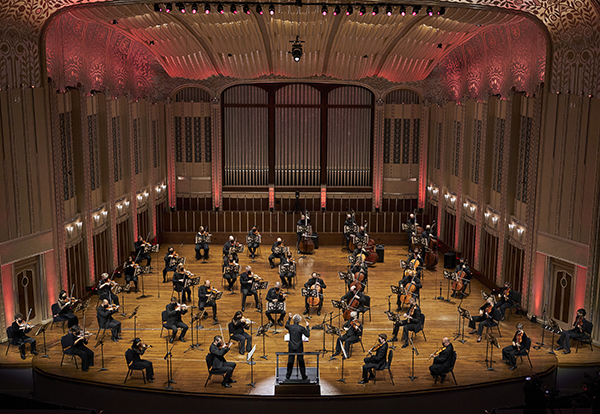
Though it had amassed a vast trove of audio over the decades, The Cleveland Orchestra has come late to the game in the video department. Even so, the organization wasn’t about to rush to produce the equivalent of home movies to keep its patrons engaged while live events were on hold. [Read more…]
by Daniel Hathaway
TODAY’S UPDATES AND NEWS:

And in the latest Cleveland Orchestra podcast in its On a Personal Note series, cellist Paul Kushious revisits the excursion he and his wife took to Switzerland to follow “in the footsteps of Richard Strauss.” Listen here.
After consulting the weather forecast, Oberlin College Choir has postponed its Friday evening outdoor concert to Saturday, October 24th at 7:30 pm at the Oberlin Seeley G. Mudd Learning Center Patio off of Wilder Bowl.
New to the calendar: Trinity Cathedral music director Todd Wilson plays a live-streamed recital tonight at 7:30 pm from Christ Church in the Detroit suburb of Grosse Pointe. Music by Dupré, J.S. Bach, Bizet arranged by Lemare, Gerre Hancocki, and Widor, and improvises on a submitted theme. Details in the Concert Listings.
In the market for a piano? Catherine Brulport of Steinway Gallery Cleveland writes that their Boston Heights warehouse is teeming with “an unexpected high number of used instruments as trade-ins from colleges and universities.” The Gallery is also offering recent Steinway-designed instruments at used piano prices during a three-day sale from October 29-31. Viewing is by appointment only: call or text 234.788.1678.
TODAY’S ALMANAC:
Russian choral director and composer Alexander Andreyevich Archangelsky was born on (or near) this date in 1846. A niche figure in the greater stream of Russian music, he mainly wrote Russian Orthodox Church music, including an All Night Vigil and masses, and led a choir that made successful tours of Russia and Europe, eventually transitioning from all-male voices to male and female singers.
Listen here to his chilling anthem about the day of judgement, and here to his setting of the Song of Simeon or Nunc Dimittis. Note the octave doublings of the bass line (octavism), which are such a unique feature of Russian choral music.
And American composer and diarist Ned Rorem was born on this date in 1923 in Richmond, Indiana. A prolific composer of art songs, he penned a few operas as well — listen here to a performance of his musical version of Thornton Wilder’s play Our Town. Baldwin Wallace produced the work in 2010.
Rorem’s tell-all diaries have tended to overshadow his compositions. The New Yorker published The Ultimate Diary, a wicked parody of his writings in 1975, and The Paris Review wrote about them in 1999. Rorem sat for an interview with New Music USA’s Frank J. Oteri in 2006. Watch “Ned Rorem at Home” here.
by Daniel Hathaway
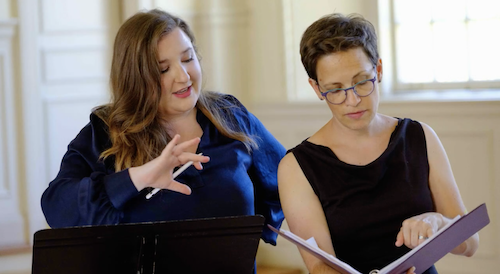
Les Délices launches its online subscription series with Bewitched, in which soprano Hannah DePriest channels the sorceress Circe and the witch Medea in works by de Blamont, Clérambault, and Charpentier — a bit early for Halloween, but the episode will be available through November 2. Above, DePriest and Artistic Director Debra Nagy talk over the scores. Check the Concert Listings for details, and read a preview article by Jarrett Hoffman here.
NEWS BRIEFS AND INTERESTING READS:
In a ground-breaking deal financed by an anonymous donor, The San Francisco Conservatory of Music has acquired the artist management firm Opus 3. Read a San Francisco Chronicle article where SFCM president David Stull (formerly dean of the Oberlin Conservatory) talks about the deal and its ramifications with Joshua Kosman.
Director Yuval Sharon, who has staged operas for The Cleveland Orchestra and the Los Angeles Philharmonic, has begun his Michigan Opera tenure with Twilight:Gods, a compressed version of Wagner’s Götterdämmerung set in a Motown parking garage. Read a New York Times article by Joshua Barone and watch a television story from Detroit’s Channel 4 here.
The latest entry into the ongoing debate about coronavirus transmission through aerosols involves a study of Minnesota Orchestra wind players by the University of Minnesota. Read the Star Tribune story here.
TODAY’S ALMANAC:
Today’s calendar mostly records historic finales, perhaps none so tragic as that of French Baroque composer Jean-Marie Leclair. On this date in 1764, he was murdered in his home, supposedly by his jealous nephew, although no one was ever tried for the crime.
Making a more natural departure, Italian composer Alessandro Scarlatti, father of the prolific keyboard composer Domenico, died on this date in 1725 in Naples at the age of 65. In his memory, we suggest his extraordinary setting of Stabat Mater for ten solo voices and organ, sung here by Ars Nova Copenhagen, led by Paul Hillier and recorded in the Garnisonskirken in April, 2014.
Another in memoriam is due to Spanish cellist Pablo Casals, who was welcomed into the heavenly cello section in San Juan, Puerto Rico on this date in 1973 at the age of 96. In a 1955 documentary filmed at his home in Prades, France, he talks with a former student about various subjects including his exile during the Franco regime, and plays one of Bach’s solo suites, in the revival of which he played a central role.
In a more civilized era, Casals played at the White House during the Kennedy Administration on November 13, 1961, a performance captured here on an LP recording.
Enough departures! Our birthday boy is Hungarian composer and virtuoso pianist Franz Liszt, born near Bayreuth on October 22, 1811. His eventful life and career included his single-handed invention of the solo piano recital, for which he wrote an enormous number of pieces to challenge keyboardists and make listeners swoon.
One familiar example from that repertoire is his Mephisto Waltz No. 1, played here by Megan-Geoffrey Prinz at the Cleveland Institute of Music on May 20, 2018 (the fantastic story behind the piece is included in the notes).
Liszt also invented and championed the tone poem, of which he wrote a dozen during his years in Weimar. Orpheus tells the tale of the singing poet and lyre player who learned his art from Apollo himself. It was first performed as an orchestral introduction to Gluck’s Orpheus and Eurydice, but Liszt later made a transcription for organ. So did Jean Guillou, who played the work in 1977 at Notre-Dame in Paris. Listen here.
by Daniel Hathaway

by Daniel Hathaway
TODAY’S ALMANAC — CHARLES IVES:

An hour-long documentary by Anne-Kathrin Peitz, The Unanswered Ives: Portrait of a composer, Wall Street giant and pioneer of sound, is available on Medici-TV.
Today at 7:30 pm, the Charles Ives Society is airing a free concert at Mechanics Hall in Worcester, Massachusetts celebrating the 100th anniversary of the publication of his Concord Sonata.
Listen to a performance of Ives’ First Violin Sonata by Stefan Jackiw and Jeremy Denk here, and of his Fourth Sonata by Jinjoo Cho and Shuai Wang here.
And watch a full-length concert of Ives’ hymns, songs, and violin sonatas at the 2014 Ojai Festival, performed by pianist Jeremy Denk, violinist Jennifer Frautschi, and the male vocal ensemble Hudson Shad.
Ives’ orchestral experiments are especially interesting. Click here to watch The Way Things Work, a short lecture by Detroit Symphony Conductor Leonard Slatkin on Ives’ Fourth Symphony, and here to listen to Pierre Boulez lead The Cleveland Orchestra in Three Places in New England in 1970.
And experience one of Ives’ experiments in bitonality: his setting of Psalm 67 in which the upper voices sing in the key of g minor, and the lower in the key of C Major. San Francisco Choral Artists perform at St. Luke’s Church.
Finally, one of Ives’ most amusing pieces is his Variations on ‘America’ for organ, written when he was only 16. Oberlin graduate Joseph Ripka plays it here on the Visser & Associates organ at All Saint’s Episcopal Church in Phoenix. E. Power Biggs is rumored to have once programmed it on a patriotic program at Princeton. The organizers were not amused.
by Daniel Hathaway
On Friday, Cuyahoga County Executive Armond Budish announced that $4 million in federal Coronavirus Aid, Relief, and Economic Security Act funding (CARES) is being directed to Cuyahoga County Arts and Culture. The allocation includes $2.7 million for nonprofits administered by CAC, and $1.3 million for artists and for-profit live performing arts businesses, administered by Arts Cleveland. Read the press release here.
STROUD COMPETITION RESULTS:
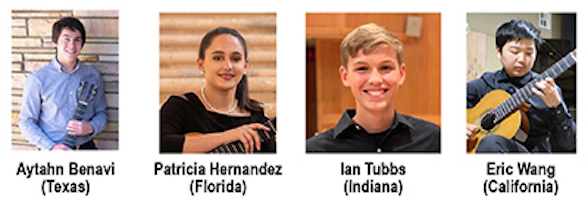
Following the impressive final round of the James Stroud Classical Guitar Competition for high school students on Friday evening, the winners were announced from the stage of Mixon Hall at CIM. First Prize went to Aytahn Benavi, 18, of Austin, Texas ($10,000), Second Prize to Eric Wong, 16, of San Jose, California ($5,000), Third Prize to Patricia Hernandez, 16, of Miami, Florida ($2,500), and Fourth Prize to Ian Tubbs, 15, of Bloomington, Indiana ($1,250). James Stroud also awarded a special $500 prize to Hernandez as the finalist who had shown the most improvement over the course of the contest. The final round performances can be viewed here.
ON THE WEB THIS WEEKEND:
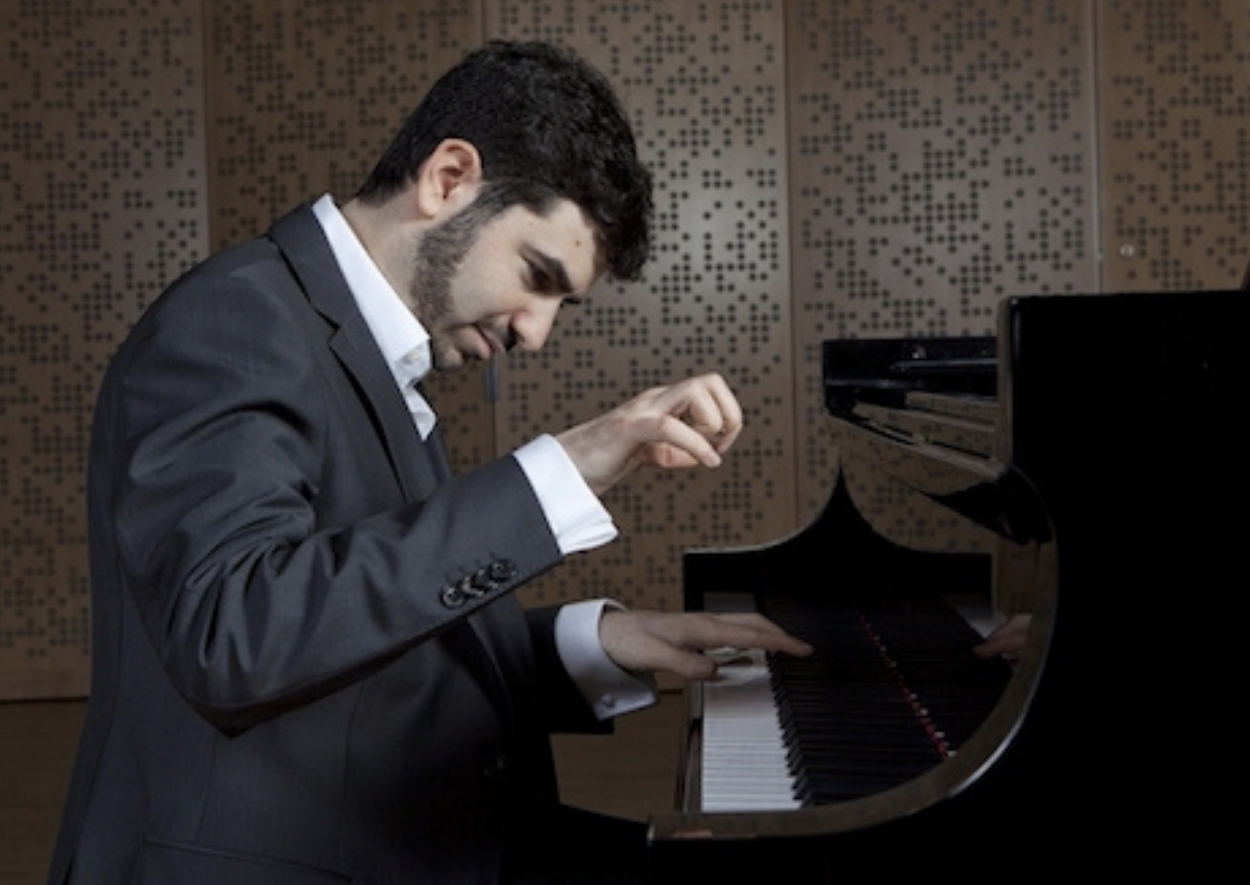
On Saturday, Korean guitarist Bokyung Byun performs on the Cleveland Classical Guitar Society’s International Series, gambist Arnie Tanimoto and harpist Parker Ramsay combine for a recital, and Oberlin State Left continues its series of large ensemble performances. On Sunday, the latest Bang on a Can Marathon runs for six hours, organist Steven Plank plays a recital in Huron, the CIM Black Student Union hosts a Benefit Concert, and Kent State piano faculty Andrew Le plays his debut recital, postponed from last spring (repertoire ranges from Bach to Gershwin). Details in the Concert Listings.
WEEKEND ALMANAC:
Lots to commemorate these two days. We’ll start with the arrivals: British composer Herbert Howells was born in Lydney, Gloucestershire on October 17, 1892; violinist, conductor, and soprano Susan Davenny Wyner in New Haven, CT on October 17, 1943; and American trumpet wizard Wynton Marsalis on October 18, 1961 in New Orleans.
And those whose cords were cut by the fates include German pianist and composer Johann Nepomuk Hummel (October 17, 1837 in Weimar); Polish pianist and composer Frederic Chopin (October 17, 1849 in Paris); Czech composers Vicktor Ullmann and Pavel Haas (October 17, 1944 at Auschwitz at the hands of the Nazis); English composer and organist John Taverner in Boston, England (October 18, 1545); and French composer Charles Gounod (October 18, 1893 in Paris).
We’ll pick just two composers to feature from that long list.
Howells’ reputation is based on his large output of Anglican church music — ecstatic and elegiac works that celebrate particular cathedrals and choirs, and many of which commemorate Howells’ son Michael, who died of polio at the age of nine. His Magnificat and Nunc Dimittis for London’s St. Paul’s Cathedral is a good example of his lofty tone and special harmonic language: this performance by St. Paul’s Choir in Christopher Wren’s monumental building is led by Barry Rose, with Christopher Dearnley at the organ.
Among Howells’ smaller works is his expressive setting of the carol A Spotless Rose, performed here by Ross W. Duffin and Quire Cleveland in 2013 in Trinity Cathedral. José Gotera is the baritone soloist.
Pavel Haas’ String Quartet No. 2, “From the Monkey Mountains” was performed by the ensemble that bears his name on the Cleveland Chamber Music Society series on April 17, 2012. Listen to their recording here. His Wind Quintet has been featured locally on concerts by the Berlin Philharmonic Wind Quintet (CCMS series), CIM faculty and students (“Violins of Hope” series), and CityMusic Cleveland (“The Composers of Theresienstadt,” including Viktor Ullmann’s Quartet No. 3).
by Daniel Hathaway
Four young classical guitarists compete virtually tonight in the final round of the James Stroud Classical Guitar Competition, which was to have made its debut reconfigured for high school students 14-18 at CIM during the Cleveland International Classical Guitar Festival last spring.
And anyone lucky enough to have heard the young French early music ensemble Nevermind in their pop-up performance at Oberlin in February, 2016 will want to catch their concert from an Belgian abbey in a stream sponsored by the Boston Early Music Festival. See the Concert Listings.
The Bowling Green State University New Music Festival is happening online this year from October 15-18. Click here to view the full schedule.
NEWS AND ARTICLES:
Canadian soprano Erin Wall, who most recently appeared with The Cleveland Orchestra in Beethoven’s Ninth Symphony during The Prometheus Project in May, 2018, has died of cancer at the age of 44. Read the New York Times obituary here.
In La Scena Musicale, Montréal-based critic Arthur Kaptainis considers the risks in resuming live performances. He concludes that “decision-makers everywhere could apply restrictions with common sense rather than draconian, across-the-board rigidity. If risk cannot be eradicated, it can be managed. Managing risk is what public health policy is all about.” Read Can there be performances in the age of COVID? here.
In his “Paging Dr. Hamblin” column in The Atlantic, James Hamblin tackles a parent’s question of how dangerous it is for her daughter to continue playing in an accomplished high school wind quintet. Read the article here.
In its “One to One” series, Musical America interviews eighth blackbird’s Matthew Duvall and Lisa Kaplan about some major changes to the Chicago-based new music ensemble on the brink of its 25th year. Watch the conversation here.
TODAY’S ALMANAC:
On this date in 1621, Dutch organist and composer Jan Pieterszoon Sweelinck died In Amsterdam, where he spent his entire career, although his fame spread elsewhere. He was known in Germany for his mentoring of young organists and in England for his keyboard compositions, which found their way into the Fitzwilliam Virginal Book.
Sweelinck was employed by the city rather than by the Oude Kerk, where he played, and which shunned organ music in services. His duties included improvising on Dutch psalm tunes and hymns at other times.
Click here to hear Brian Wentzel play Sweelinck’s Erbarm dich mein, O Herre Gott on the new Paul Fritts organ at First Lutheran Church, Lorain. [Read more…]