by Mike Telin

by Mike Telin
by Mike Telin

by Mike Telin
by Mike Telin

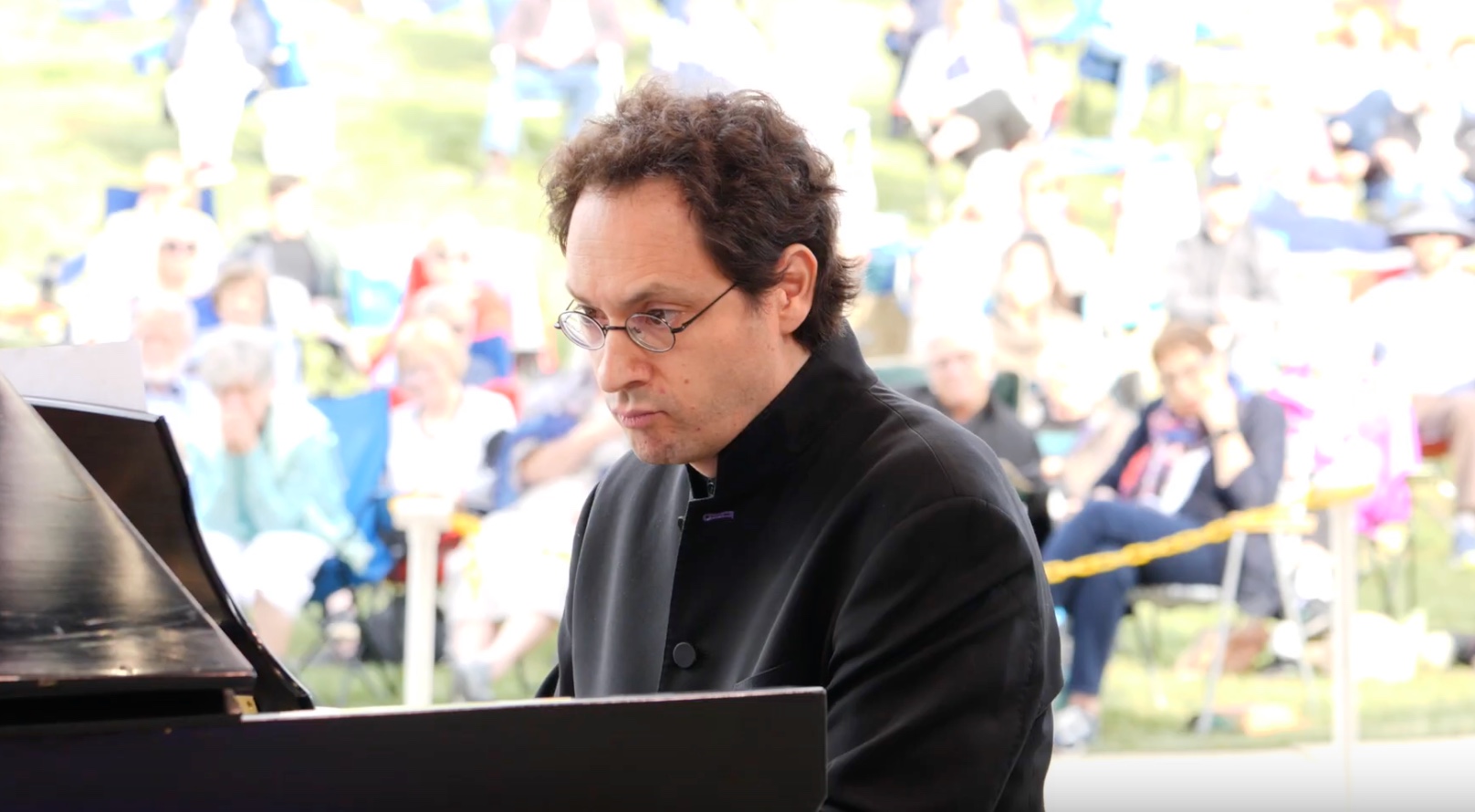
However, it was pianist Shai Wosner’s imaginative interweaving of sonatas by Italian Baroque composer Domenico Scarlatti with sonatas by American composer Frederick Rzewski that got things off to a fascinating start. [Read more…]
by Mike Telin
by Mike Telin

“The program is titled ‘An American Celebration,’ and while I’m certain there have been countless Fourth of July concerts over the decades with the same name, for me, this program feels truly American,”Mitchell said during a telephone conversation. “We’re certainly not going to ignore the holiday, so there will be the pieces that are associated with it — the 1812 Overture and Stars and Stripes Forever — but there was a desire to have the program be reflective of times that we are living in and that we have lived through since the Orchestra and audiences were last together.”
The playlist will also include Leonard Bernstein’s “Overture” to Candide, Mary D. Watkins’ Soul of Remembrance, Florence Price’s Concerto in One Movement with pianist Michelle Cann, Adolphus Hailstork’s An American Fanfare, and Aaron Copland’s “Suite” from Appalachian Spring. Tickets are available online. [Read more…]
by Mike Telin
by Mike Telin

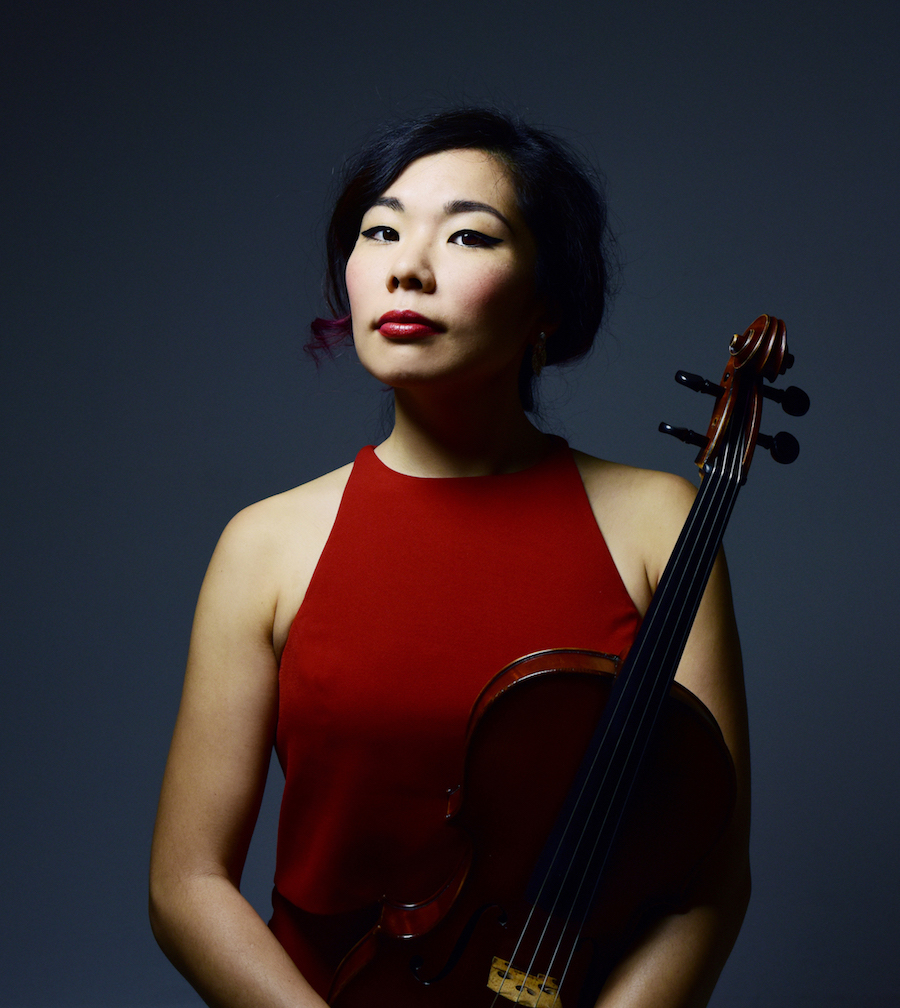
In addition to three imaginative programs, the week will also welcome two Festival first-timers, violist Ayane Kozasa and cellist Sterling Elliott. Both musicians bring a wealth of chamber music experience to Cleveland and look forward to being part of the “Chamber Hood.”
Ayane Kozasa began studying the violin at age four. She pursued her undergraduate degree as a violinist at the Cleveland Institute of Music, until making the decision to become a violist. Kozasa went on to study at the Curtis Institute of Music and the Kronberg Academy in Germany. The winner of the Primrose, Astral, and Irving Klein competitions, she is a member of the award-winning Aizuri Quartet. Dedicated to expanding the viola repertoire, in 2012 she commissioned her life-partner Paul Wiancko to compose the viola/cello duo American Haiku, which was performed on this season’s ChamberFest opening concert. When not performing she enjoys pie baking, stop motion videos, and iconic movies, as well as camping and hiking.
by Mike Telin
by Mike Telin

At 7:00 pm The Cleveland Orchestra debuts In Focus Episode 13, “Dance & Drama.” Franz Welser-Möst leads Edvard Grieg’s Holberg’s Time: Suite in Olden Style and Erich Korngold’s Symphonic Serenade. Free to subscribers and patrons who donate $300 or more to the Orchestra, premium subscriptions available. View here and on-demand. There’re plenty of concerts happening in the area the weekend — check our concert listings page for details.
The Crafting Change symposium continues today at 3:00 pm with “How to Teach in a Pandemic: A Case Study” Chicago-based new media artist Chris Collins is fascinated by digital technologies as a cultural force…which means he probably learned more from his COVID year than the rest of us did. He’ll discuss the ways he re-envisioned the spring 2021 class he taught at the School of the Art Institute of Chicago: what worked, what didn’t, and what we all might take away from the experience. The fascinating series continues through June 18. Click here for details.
IN THE NEWS:
The Cleveland International Piano Competition has announced that tickets for both in-person and virtual options are now on sale. Click here for details.
APOLLO’S FIRE ANNOUNCES NEW SEASON:
Cleveland’s Baroque orchestra will present seven local programs in 2021-2022, including a Messiah cycle led by guest conductor Nicholas McGegan, and a May performance at Severance Hall celebrating the ensemble’s 30th anniversary season. View the announcement here.
TODAY’S ALMANAC:
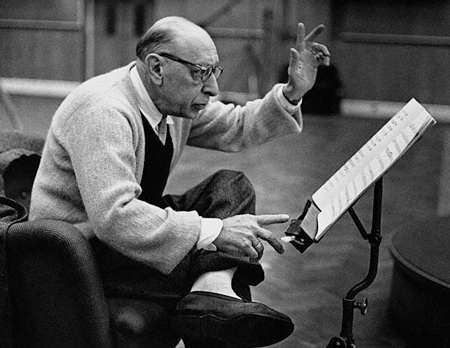
On this day in 1882 Igor Stravinsky (pictured at top) made his world debut in Oranienbaum, Russia. One year ago, Daniel Hathaway celebrated the composer’s birth by recounting the composer’s debut as guest conductor with The Cleveland Orchestra in February of 1925 conducting his Fireworks, Chant du Rossignol and Firebird Suite.
Hathaway reported that conductor Nikolai Sokoloff found Stravinsky to be “something of a showman and not entirely endearing,” adding, “He was, in short, a pain in the neck.” (Rosenberg, The Cleveland Orchestra Story, p. 87). Stravinsky was more complimentary about his experience: “I have never seen an orchestra in which there was finer discipline and a greater responsiveness than right here in your Cleveland Orchestra.” Here’s a live performance of Le chant du rossignol by Pierre Boulez and The Cleveland Orchestra from November, 1970.
Today we should revisit the controversy that surrounded the premiere of Le Sacre du printemps.
In his book, First Nights, Harvard professor Thomas Forrest Kelly begins his description of the premiere of Stravinsky’s Le Sacre du printemps on May 29, 1913 at the Théâtre des Champs-Elysées in Paris with reflections by its ballet master and a famous composer who happened to be in the audience.
I think the whole thing has been done by four idiots: First, M. Stravinsky who wrote the music. Second, M. Roerich who designed the scenery and costumes. Third, Mr. Nijinsky who composed the dances. Fourth, M. Diaghilev who wasted money on it. —Enrico Cecchetti
The choreography is ridiculous, the music sheer cacophony. There is some originality, however, and a certain amount of talent. But taken together, it might be the work of a madman. —Giacomo Puccini
Stravinsky’s score for Sacre was revolutionary in 1913 and still sounds fresh and inventive today. Similarly, Nijinsky’s choreography represented a complete disconnect with classical ballet when it was first unveiled a hundred years ago — and may have been largely responsible for the rowdiness of its first night audience. In an article for Dance Research Journal, Millicent Hodson traced the origins of Nijinsky’s concept from visual images of pre-Christian Russian idols. She quotes from an essay by Jacques Rivière written several months after the premiere. The body, he says,
...moves only as a whole, it forms a totality and its manner of speaking is to leap suddenly with arms and legs outspread, or to move to the side with knees bent and the head on the shoulder…If one can, for once, stop confusing grace with symmetry and the arabesque, he will find it on every page of Le Sacre du printemps, in the sight of profiles of faces posed upon full-front shoulders, in the elbows glued to the body, in the horizontal forearms, the rigid and open hands, in the trembling which descends like a wave from the head of the dancers to their feet, in the obscure, sparse, and preoccupied march of the adolescents in the second act.
Prior to Joffrey Ballet’s August 2013 Blossom Festival performance of Robert Joffrey and Millicent Hodson’s 1987 recreation of Nijinski’s original choreography, artistic director Ashley Wheater told ClevelandClassical.com that he agrees about that first night reaction. “I don’t think it was the music that caused the stir, I think it was more the ballet,” he said in a phone conversation from Chicago. “And to be honest, I think a lot of people did not think it was a particularly good piece of choreography. I think also the shock of it was that the Ballet Russe had become so famous for producing beautiful works from Russia — so when people went to see the ballet Russe they were expecting to see a classical ballet company.
“What upset or angered people was that they were offered something that just turned them upside down. I think people said, I don’t like this and I don’t want to see this. But it was a breakthrough in many ways. Looking back on it, would dance and music be different today if Stravinsky hadn’t written Sacre? It’s hard to say, because to me the music has always been brilliant.”
Click here to watch Joffrey Ballet’s 1987 performance of the work with the Orchestra of the National Theater of Prague conducted by Allan Lewis.
by Mike Telin
by Mike Telin

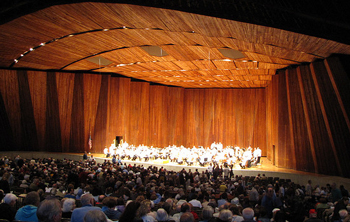
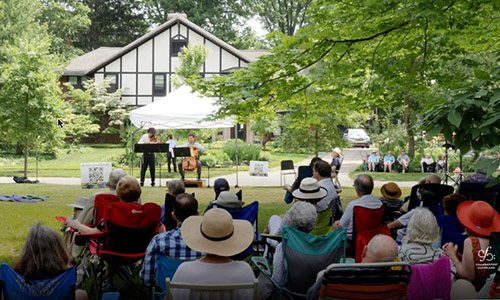
This year the majority of the concerts are being held at a single location, the magnificent Grove Amphitheatre in Mayfield. Although the venue has no permanent seating, lawn chairs and blankets are the perfect solution. Picnics are encouraged and the responsible consumption of alcohol is permitted. Think Blossom Music Center on a smaller scale and you’ll get the picture. [Read more…]
by Mike Telin
by Mike Telin

Aside from that, the beautifully curated program primarily features captivating performances of solo works that are presented in a logical progression of sound and temperament. [Read more…]
by Mike Telin
by Mike Telin

The program “Luscious Soundscapes” begins with pianist Shai Wosner’s imaginative interweaving of sonatas by Italian Baroque composer Domenico Scarlatti (1685-1757) with sonatas by American composer Frederick Rzewski (1938 -). Wosner’s three pairings include Scarlatti’s Sonata in d K. 141 with Rzewski’s Nanosonata No. 36 (“To a Young Man”), Scarlatti’s Sonata in d K. 9 with Rzewski’s Nanosonata No. 38 (“To a Great Guy”), and Scarlatti’s Sonata in c K. 230 with Rzewski’s Nanosonata No. 12.
If juxtaposing music by these two seemingly dissimilar composers sounds like an oddity, Wosner believes they make an interesting match. “I love Scarlatti and I love Rezewski,” the pianist said during an interview. “And I think that Scarlatti and Rzewski are mavericks in similar ways. Of course their music is very different from one another’s, and Rzewski was not trying to emulate Scarlatti in any way with his short sonatas. The Nanosonatas are almost like a stream of consciousness, but I hear that in the Scarlattis as well.” [Read more…]
by Mike Telin
by Mike Telin

After a year’s hiatus, the sounds of The Cleveland Orchestra will once again fill the grounds of Blossom Music Center and no one could be more excited than Binnie. “I was down there to do a television spot, and looking out on the lawn, the space is so beautiful. To be honest, it was very emotional, thinking that a small bit of people’s lives every summer is on its way back. And the more interviews I do the more excited I become.”
The season kicks off on Saturday, July 3 and Sunday, July 4 at 8:00 pm with An American Celebration. Brett Mitchell, will lead performances of Leonard Bernstein’s “Overture” to Candide, Mary D. Watkins’ Soul of Remembrance, Florence Price’s Concerto in One Movement, with Michelle Cann as soloist, Adolphus Hailstork’s An American Fanfare, Aaron Copland’s “Suite” from Appalachian Spring, Tchaikovsky’s 1812 Overture, and Sousa’s Stars and Stripes Forever. A full season list is below. [Read more…]
by Mike Telin
by Mike Telin

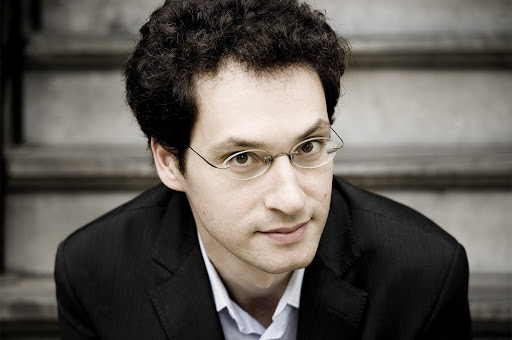
The evening will begin with pianist Shai Wosner’s arrangement of the Dvořák performed by clarinetist Franklin Cohen, violist Dimitri Murrath, and Wosner, who will be making his ChamberFest debut.
Originally written for piano four-hands, the ten pieces that comprise the work were later arranged for orchestra by the composer. I asked the pianist why he decided to make his own arrangement, and why he chose this particular instrumentation?