by Mike Telin

Aside from that, the beautifully curated program primarily features captivating performances of solo works that are presented in a logical progression of sound and temperament. [Read more…]
by Mike Telin
by Mike Telin

Aside from that, the beautifully curated program primarily features captivating performances of solo works that are presented in a logical progression of sound and temperament. [Read more…]
by Mike Telin
by Mike Telin

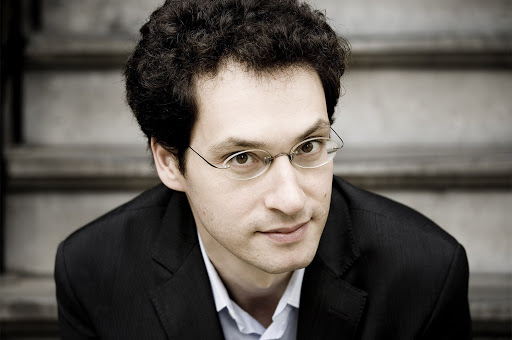
The program “Luscious Soundscapes” begins with pianist Shai Wosner’s imaginative interweaving of sonatas by Italian Baroque composer Domenico Scarlatti (1685-1757) with sonatas by American composer Frederick Rzewski (1938 -). Wosner’s three pairings include Scarlatti’s Sonata in d K. 141 with Rzewski’s Nanosonata No. 36 (“To a Young Man”), Scarlatti’s Sonata in d K. 9 with Rzewski’s Nanosonata No. 38 (“To a Great Guy”), and Scarlatti’s Sonata in c K. 230 with Rzewski’s Nanosonata No. 12.
If juxtaposing music by these two seemingly dissimilar composers sounds like an oddity, Wosner believes they make an interesting match. “I love Scarlatti and I love Rezewski,” the pianist said during an interview. “And I think that Scarlatti and Rzewski are mavericks in similar ways. Of course their music is very different from one another’s, and Rzewski was not trying to emulate Scarlatti in any way with his short sonatas. The Nanosonatas are almost like a stream of consciousness, but I hear that in the Scarlattis as well.” [Read more…]
by Mike Telin
by Mike Telin

After a year’s hiatus, the sounds of The Cleveland Orchestra will once again fill the grounds of Blossom Music Center and no one could be more excited than Binnie. “I was down there to do a television spot, and looking out on the lawn, the space is so beautiful. To be honest, it was very emotional, thinking that a small bit of people’s lives every summer is on its way back. And the more interviews I do the more excited I become.”
The season kicks off on Saturday, July 3 and Sunday, July 4 at 8:00 pm with An American Celebration. Brett Mitchell, will lead performances of Leonard Bernstein’s “Overture” to Candide, Mary D. Watkins’ Soul of Remembrance, Florence Price’s Concerto in One Movement, with Michelle Cann as soloist, Adolphus Hailstork’s An American Fanfare, Aaron Copland’s “Suite” from Appalachian Spring, Tchaikovsky’s 1812 Overture, and Sousa’s Stars and Stripes Forever. A full season list is below. [Read more…]
by Mike Telin
by Mike Telin

The evening will begin with pianist Shai Wosner’s arrangement of the Dvořák performed by clarinetist Franklin Cohen, violist Dimitri Murrath, and Wosner, who will be making his ChamberFest debut.
Originally written for piano four-hands, the ten pieces that comprise the work were later arranged for orchestra by the composer. I asked the pianist why he decided to make his own arrangement, and why he chose this particular instrumentation?
by Mike Telin
by Mike Telin

When I read further I encountered such terms as Maker Movement, STEM (science, technology, engineering, and mathematics), and STEAM (science, technology, engineering, the arts, and mathematics).
My initial reaction was, I know a little bit about most of this, but not a lot about any of it. But after reading session descriptions and presenter bios, I was hooked. I needed to know more.
Last week I attended two sessions. “Crafting the Hybrid Body,” led by Cindy Kao from Cornell’s Hybrid Body Lab, was a fascinating lecture about wearable technology, and the four presenters in the “Lightning Lunchtime Panel” all had inspirational stories to share. Hearing Sara Trail talk about how she uses sewing and quilting to engage young people though the Social Justice Sewing Academy was enlightening. Crafting Change continues through June 19. [Read more…]
by Mike Telin
by Mike Telin

Programs that have faced extreme obstacles are the junior high, high school, and city youth orchestras — how do you keep students engaged in performance-focused programs when their reasons for existing have been put on hold?
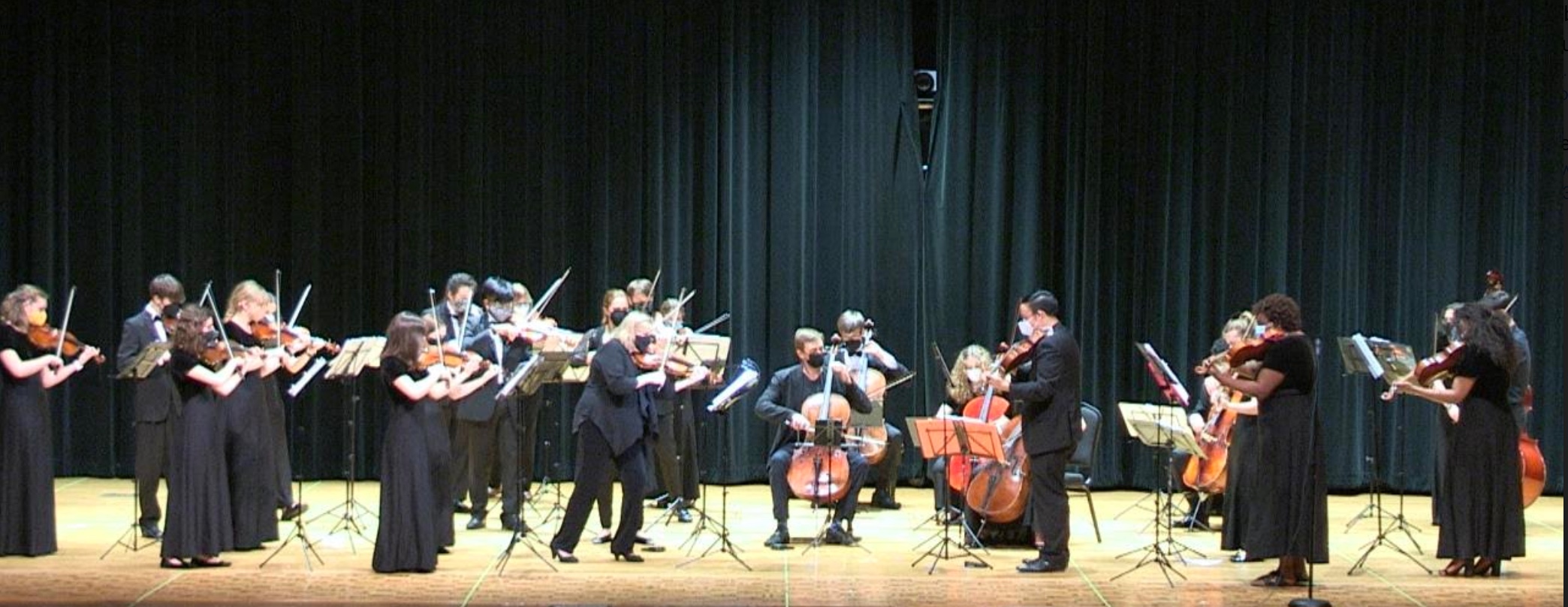
During the recently completed academic year, the Lakewood High School Orchestra program and the Cavani String Quartet partnered for the inspired, interdisciplinary Visiting Artist Project. Using chamber music — Shostakovich’s Quartet No. 8 and Daniel Bernard Roumain’s Kompa Variations — as a catalyst for expression and team-building, the Project also provided an opportunity to talk in general about the impact of the pandemic on high school age students. Although an in-person performance was not a certainty for the duration of the project, ultimately one did take place in front of a live audience in April.
During a Zoom conversation in the fall, Lakewood High School orchestra director Dr. Elizabeth Hankins explained that the gestation of the project began when the Ohio Music Education Association asked the Lakewood music teachers to create a plan for learning during the pandemic. One person Hankins turned to for advice was Annie Fullard of the Cavani String Quartet. [Read more…]
by Mike Telin
by Mike Telin
IN THE NEWS:
The Cleveland Orchestra has announced its 2021-2022 Severance Hall season: click here to view the rundown.
STREAMED & IN PERSON CONCERTS:
With the Memorial Day weekend approaching there are fewer concerts than usual, but check our Concert Listings page to see what events are happening.
TODAY’S ALMANAC:
On May 24 in 1803, Beethoven’s Violin Sonata No. 9 (“Kreutzer”) was premiered in Vienna by violinist George Bridgetower, with Beethoven at the piano. You can read more about the work’s interesting history — and less than stellar first performance — here.
Our birthday list is highlighted by three Americans. In 1936 composer and poet
Harold Budd came into the world in Los Angeles. Although Budd was first known for his minimalist and avant-garde pieces he was better known later for his work with Brian Eno and Robin Guthrie.
In 1947, composer Michael Horwood was born in Buffalo, New York. on May 24, 1947. A student of composition and theory at the State University of New York at Buffalo, his teachers included Lejaren Hiller, Lukas Foss, and Istvan Anhalt. He served as professor of music and humanities at the Humber Institute of Technology and Advanced Learning in Toronto, Ontario. He also formed the improvisation ensemble Convergence, in which he played piano and percussion.
And in 1955, composer Phil Fried was born in New York City. His catalogue of works include free improvisation, orchestral music, vocal music, solo, and chamber music. On his website he writes: “For me there are two kinds of improvisation: 1) collaboration with others which is a shared experience of reacting to others to make the form, and 2) solo improvisation which is composing in the moment.”
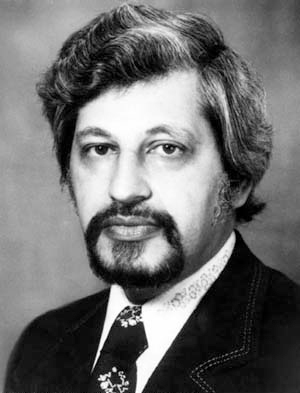
There is one passing to mention: in 1996 composer Jacob Druckman left the world in New Haven at the age of 67. Known for his extensive work in electronic music, he also wrote for small ensembles and orchestras. In 1972 he won the Pulitzer Prize for Windows, and served as composer-in-residence of the New York Philharmonic from 1982 until 1985. Druckman taught at Juilliard, The Aspen Music Festival, Tanglewood, Brooklyn College, Bard College, and Yale University. Click here to watch an interview with Druckman during which he talks about his compositional process — “the first measure of a piece is just too terrifying beyond words,” he says.
Click here to listen to Aureole: for orchestra (1979) performed by the New York Philharmonic under the direction of Gunther Schuller.
by Mike Telin
by Mike Telin

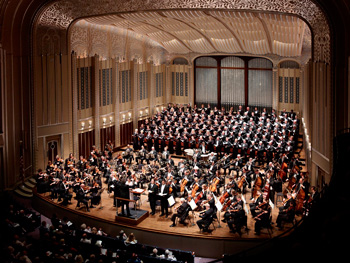
At 7:00 pm The Cleveland Orchestra: In Focus Episode 11, debuts “Order & Disorder.” Led by Franz Welser-Möst, the concert features Mozart’s Clarinet Quintet and Berg’s “Three Pieces” from Lyric Suite. The digital stream was filmed March 18-20 and April 14-16 at Severance Hall. Click here for more information.
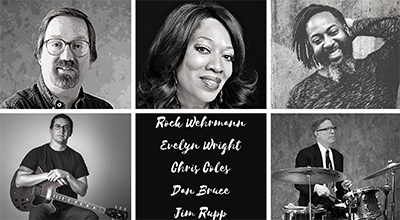
At 7:00 pm, Local 4 Music Fund’s “Tuning In” features Rock Wehrmann, Evelyn Wright, Chris Coles, Dan Bruce and Jim Rpp. “Jazzy jazz jazz,” the final program in this season’s virtual concert series. Live streamed only. Click here at start time. It’s free, but donations are welcome.
There’s more happening in other parts of the country — check our Concert Listings page for details.
IN THE NEWS:
The inventive ensemble Burning River Baroque has announced the live broadcast of a concert from St. John’s Episcopal Church, Youngstown, Ohio on June 26, at 7 pm. The environmental themed program — in English and Spanish — will feature a new work by Dawn Sonntag set to poetry by Craig Santoz Perez. Click here for more information.
Tri-C JazzFest has announced that it will return to live and in-person performances this year on September 11 and 12 at Cain Park in Cleveland Heights. To accommodate those who still do not wish to attend in-person, the festival will once again offer a free live streaming option. The lineup will be announced on June 1.
Conductor Carl Topilow has announced that his new book, The Orchestral Conductor’s Career Handbook, is now available for purchase. Written during the pandemic, the book is designed both for aspiring and established conductors. Click here for more information.
Speaking of Carl Topilow, The Cleveland Pops Orchestra will resume their concert series at Severance Hall on November 12, 2021. Click here for details.
Events of the past year have taught us that meaningful change is possible even in dark times.
Oberlin College and Conservatory will host the Crafting Change Symposium, a fully virtual series of presentations, concerts, panel discussions, and workshops, through which teachers — from kindergarten through college level — and artist-makers from a wide array of disciplines share their creative approaches to exploring science, humanities, art, and more, with an emphasis on inclusion. Crafting Change is free and runs from Tuesday, May 25 through Saturday, June 19. View a schedule of events here.
TODAY’S ALMANAC:
There are two notable passings today: In 1896, Clara Schumann, German pianist, composer, teacher, and wife of Robert, left the world in Frankfurt, Germany at the age of 76. And in 2000, French flutist Jean-Pierre Rampal, died of heart failure in Paris.

After immigrating to the United States with his family at age 11 — he became a naturalized American citizen in 1944 — Aschaffenburg served in the U.S. Army counter-intelligence corps during World War II.
He began composing at an early age and would go on to study with Herbert Elwell at Oberlin College, Bernard Rogers at Eastman, and later with Luigi Dallapiccola in Florence, Italy. During his career, Aschaffenburg was the recipient of two Guggenheim fellowships as well as awards from the Fromm Foundation and the National Institute of Arts and Letters, and in 1980 he was awarded the Cleveland Arts Prize for Music. He joined the theory and composition faculty at Oberlin in 1952, a position he held For 35 years.
In her Cleveland Arts Prize tribute, Wilma Salisbury wrote, “Aschaffenburg, a meticulous composer whose technically challenging music often required a long gestation period, combined 12-tone technique with diatonic melodies and consonant harmonies.”
His expansive catalogue includes the short opera Libertatem Apellant (1976), based on correspondence between John Adams and Thomas Jefferson, and an Oboe Concerto (1986) which longtime Philadelphia Orchestra principal John de Lancie called “the most impressive contemporary work for the oboe.” The piece was recorded by James Caldwell and the Cleveland Chamber Symphony and by Elizaveta Zuyeva and the Russian State Philharmonic Capella. His Ozymandias and Three Dances for Orchestra received performances by The Cleveland Orchestra — the first under the direction of Leopold Stokowski, the second under James Levine.
But as Salisbury noted, his most frequently performed piece is a fanfare he wrote for Blossom Music Center. “The brief composition was one of two winners in a competition sponsored by the Junior League of Akron. Cleveland Arts Prize winner Donald Erb (1966) and Special Citation winner Louis Lane (1971) selected Aschaffenburg’s fanfare from more than 200 entries by 158 American composers. The festive piece was recorded by the Cleveland Orchestra brass, premiered June 23, 1970, and repeated on orchestra concerts at Blossom for the next two decades.”
by Mike Telin
by Mike Telin

“The intergenerational possibility of these classes is something we are promoting,” Joseph Lubben, executive director of OC Global and associate professor of music theory at Oberlin, said during a Zoom interview. “I think a number of institutions around the world understand that one part of classes like these is connecting to the local community. Another part is connecting to their alumni who also cross all generations. I’m very excited about all of that — but it’s new territory for Oberlin.” [Read more…]
by Mike Telin
by Mike Telin

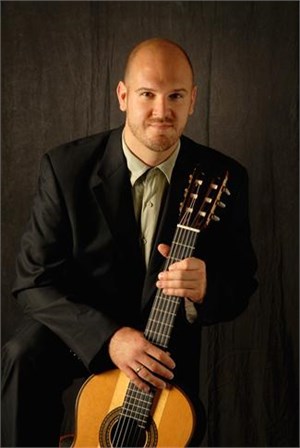
On Friday, May 21, Gruca and lutenist Nigel North will have the honor of kicking off the 2021 edition of that Festival with a split-bill, pre-recorded recital beginning at 7:30 pm. Viewing access is free — watch here — and donations are encouraged.
Since his student days, the guitarist has gone on to enjoy an active career as a performer, educator, and clinician. Hailed by Audaud.com as “a brilliant player with gorgeous tone and a flawless sense of rhythm,” Gruca has earned several first prizes in national guitar competitions and released two solo recordings. He launched the first Suzuki Guitar program in Northeast Ohio at The Music Settlement in 2013. Along with flutist Linda White, he is one-half of the acclaimed Gruca White Ensemble.