
Imagine a concert that highlights underperformed music from an underexamined region and an underrated historical era. Not only does the program chart logical thematic paths through that repertoire, but it also changes up group configurations often enough to keep the audience attentive.
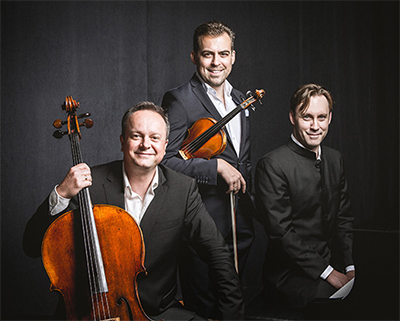
Every so often, the first seconds of a concert bring neither anxiety over how the rest will go nor twitchy overstimulation, neither boredom nor ecstasy, but a satisfying assurance. Some performances click right away, the musicians’ technique unimpeachable, their artistry and expression powerful, their manner warm but professional. Such concerts hold attention in a special way — the chances of a misstep negligible enough that listening never involves comparison to an abstract standard. In the Phaeton Trio’s recent tour de force in Rocky River, the initial gestures of the performance set a high standard that held throughout. [Read more…]
Musicians love a good metaphor: take, for instance, that of summiting a mountain. When a violinist speaks this way after playing all of Bach’s partitas, or a soprano recalls preparations for a Wagner opera, the image of the artist mounting some hostile peak offers implications of persistence, struggle, and of course triumph. Pianists might describe Beethoven’s sonatas this way. But how many have actually played at the top of a mountain? Archival video confirms that French pianist Pierre Réach literalized this image of the soloist at the summit over twenty years ago. A recent concert in Cleveland confirmed that the figurative Everest of Beethoven’s piano music still bears his banner as well. [Read more…]
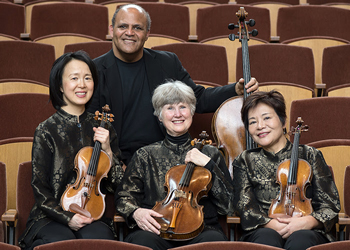
As the 250th anniversary of Beethoven’s birth sweeps classical music audiences along a twelve-month, field-wide festival of heroics, experiments, rhapsodizing, and apocalyptic drive, a challenge arises for performers who plan to acknowledge the occasion. In a season peppered with all-Beethoven programs, how does one stand out? Of the many approaches that could thrill an audience and do justice to the composer, which ones serve the ensemble just as well? On a late January evening, the Amici Quartet offered their answer: impeccable playing and utter unity. [Read more…]
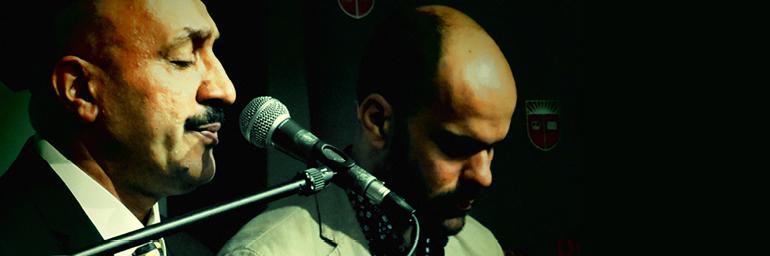
When UNESCO made its first list of the Intangible Cultural Heritage of Humanity in 2008, it welcomed Kabuki theatre, Sardinian folksong, and dozens of other media into a globe-spanning canon. These, the committee declared, stood out among the untold multitudes of human creative practices. Among them ranked the Iraqi maqam, in which poetry, chamber music, and lighter songs flow into extended, semi-improvised performances. As the ensemble Safaafir and singer Hamid Al-Saadi recently proved to Northeast Ohioans, the centuries-old coffeehouse art form still holds the power to thrill. [Read more…]
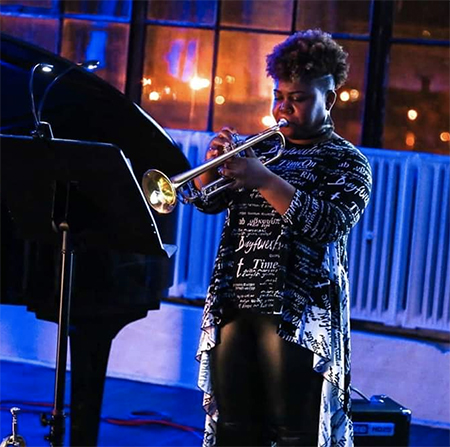
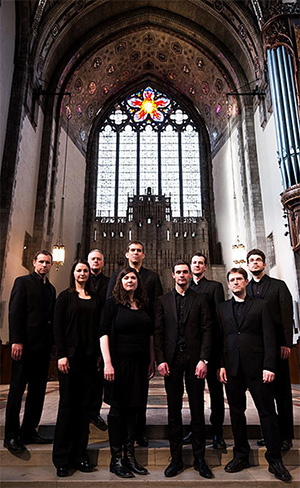
Much like genres, names of arts organizations constitute a sort of contract between artist and audience: mislabel something at your peril. The shouting that greeted The Rite of Spring at its debut offers an example. Patrons had paid for a nice evening at the Russian Ballet, and instead watched as dancers stamped all over the floorboards — and their expectations — to an insistent beat. All this to say that when the founders of fp (fresh perspectives) Creative named their classical and new music venture, they implicitly promised that their offerings would represent the best kind of break from convention. Last week, the call of a trumpet heralded a fulfillment of terms.
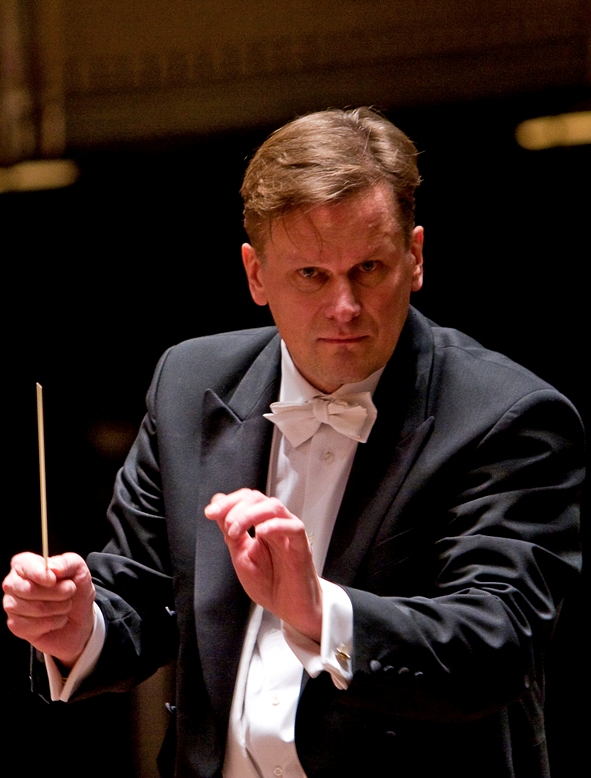
Mass media can make it feel as though the true color of the holiday season is a uniform Federal Reserve-issue sage, barely veiled by the colors of different proud traditions. The same ten songs blare in every grocery aisle. Yet on the ground, people find ways to wring something vital and unique out of a month when every icon of cheer feels somehow recycled. CityMusic Cleveland, prone to giving end-of-year concerts packed with music that knows no season, has found a way to reconcile seasonality with a respite. [Read more…]
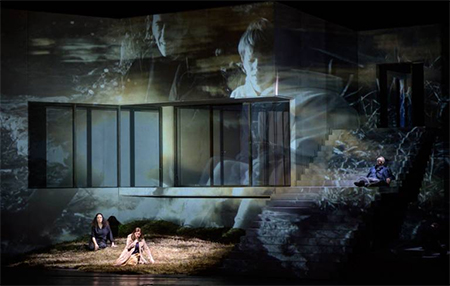
Opera has long dwelled on the point where love and suffering converge. When poets and composers made their first stabs at reconstructing Greek tragedy and created this genre instead, they retold myths of women who transformed to dodge lecherous gods, or of men duped into losing a lover twice. Artists have reiterated the idea of unhappy love for four centuries, each new opera of loss and longing a vertebra in the genre’s spine. Last week, I flew to Germany to hear a new opera as fixated on the consuming pressures of love as anything in the canon, yet also radical in its attention to the hearts, brains, and senses of ordinary, modern-day mortals. [Read more…]
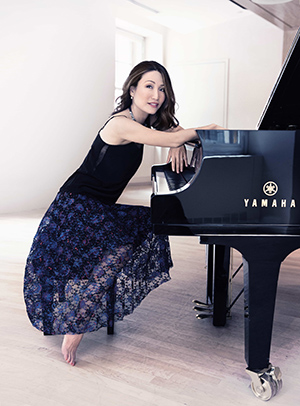
On Sunday, November 24 at the Cleveland Museum of Art, the audience in Gartner Auditorium clustered to the left, embracing the asymmetry typical of a piano recital. Yet if one shape came to mind repeatedly during the program, it was the ultimate figure of symmetry: the circle. Soloist Soyeon Kate Lee would come full circle that day, playing Mozart sixteen years after winning the Mozart Prize at the 2003 Cleveland International Piano Competition. [Read more…]
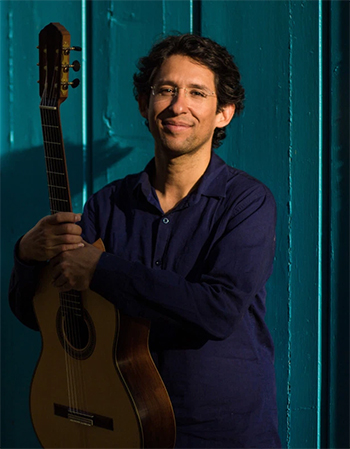
The Cleveland Classical Guitar Society continues to get it right. Where else can a listener applaud local high-school musicians and an award-winning professional soloist in the same evening, cheer a presenter for ensuring that said soloist could enter the country at all, and queue for tacos in the end? This all took place at Plymouth Church on Saturday, November 9. [Read more…]