

by Daniel Hathaway
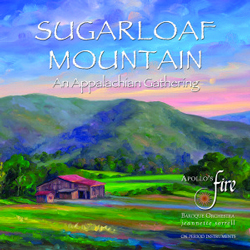 When summer arrives, Apollo’s Fire lets its hair down and goes off to visit Baroque music’s country cousin — the music of Appalachian America. The ensemble’s previous show, “Come to the River,” now has a prequel: “Sugarloaf Mountain,” an equally irresistible collection of tunes from the old and new worlds chronicling the passage of immigrants from the British Isles to their new homes in the American south — in the shadow of Sugarloaf Mountain. [Read more…]
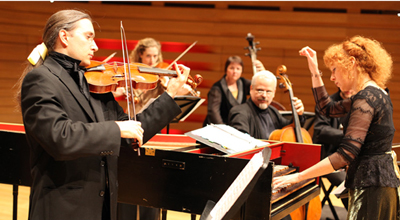 The challenge for any group that takes on The Four Seasons is to “make it new,” as the poet Ezra Pound enjoined his fellow modernists. Performed and recorded time and again, Vivaldi’s most famous pieces are in perpetual danger of being played (and heard) as baroque elevator music. Apollo’s Fire, with soloist Olivier Brault, met the challenge head-on in a dramatic, fresh interpretation of these Venetian masterpieces.
 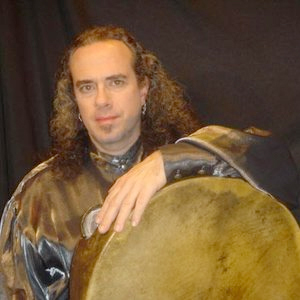 If you think packing for a plane trip is a challenge, here’s what Rex Benincasa has to take through the security checkpoint. “I’m bringing a low tension tabor, a darbuka, a frame drum from Morocco called the Alun — which is a Berber instrument from the Atlas Mountains — an Arabic tambourine or riq, a North African or Egyptian tambourine, an assortment of ankle bells, camel bells, clamshell bells, Indian brass bells, castanets, a classical tambourine, a triangle that’s made out of a drill used to drill into stone, and an assortment of little shakers, claves and maracas,” he said via cell phone, having just buckled himself in for the last leg of his flight from New York to Cleveland. “Homeland Security used to tear everything apart but now they just swipe me for explosives and let me slide.”
 Apollo’s Fire’s “Fireside Concerts” this season gather audiences around the hypothetical hearth of the Bach family in Leipzig (before moving on to Zimmermann’s Coffee House). Music by Johann Christian (1735-1782) Wilhelm Friedmann (1710-1784) and Papa Bach himself feature the talented members of the ensemble’s Young Artist Apprentice Program performing alongside AF regulars, with a special appearance by three even younger members of Apollo’s Musettes.
 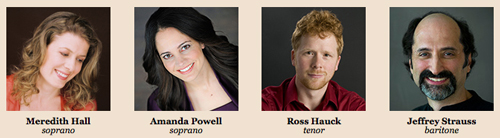 When you’re taking the risk of performing Handel’s most celebrated oratorio from end to end, you need to field a quartet of soloists with alluring personalities, bring together a stellar chorus and orchestra, and be able to count on your own fine sense of pacing — otherwise this two-and-a-half hour work could become tedious soon after the “Hallelujah” chorus. Jeannette Sorrell and Apollo’s Fire had all of these elements securely in place on Saturday night at First Baptist Church in Shaker Heights. Its version of Messiah — presented with a sense of theater, as Handel intended it to be — scintillated, charmed and inspired the large audience from Overture to “Amen.”
 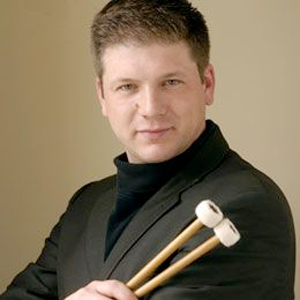 Most pre-concert lectures are delivered by musicologists or feature interviews with conductors. But when Apollo’s Fire gives five local performances of Handel’s Messiah beginning on Thursday, timpanist Matthew Bassett will talk about that most famous of oratorios from the point of view of the musician who has the least to do during the 2-1/2 hour work. “I don’t have that many notes to think about, but I think about them a lot,” he said in a phone conversation from Buffalo, where he serves as principal timpani with the Buffalo Philharmonic.
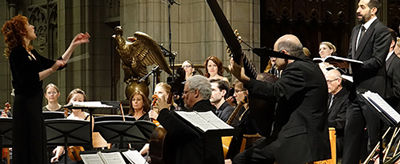 Ornate, exotic, and opulent, Claudio Monterverdi’s Vespers of 1610 defines the meaning of “Baroque” — and as a religious work, it just might be a Puritan’s worst nightmare. On Friday evening, the 37 singers and instrumentalists of Apollo’s Fire gave the large audience in St. Paul’s Episcopal Church in Akron a dazzling guided tour of its many and varied attractions.
 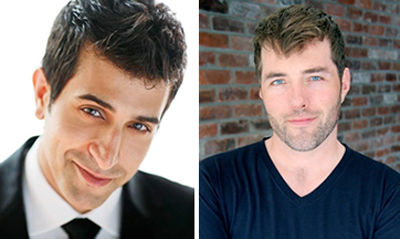 “The first time I heard the Monteverdi Vespers, I was absolutely floored,” said tenor Oliver Mercer in a phone conversation. “It was unlike anything I had ever heard and I became obsessed with it. It wasn’t just a quirky piece of early music, but a work that belongs in the upper echelons along with Beethoven’s ninth symphony.”