
by Peter Feher
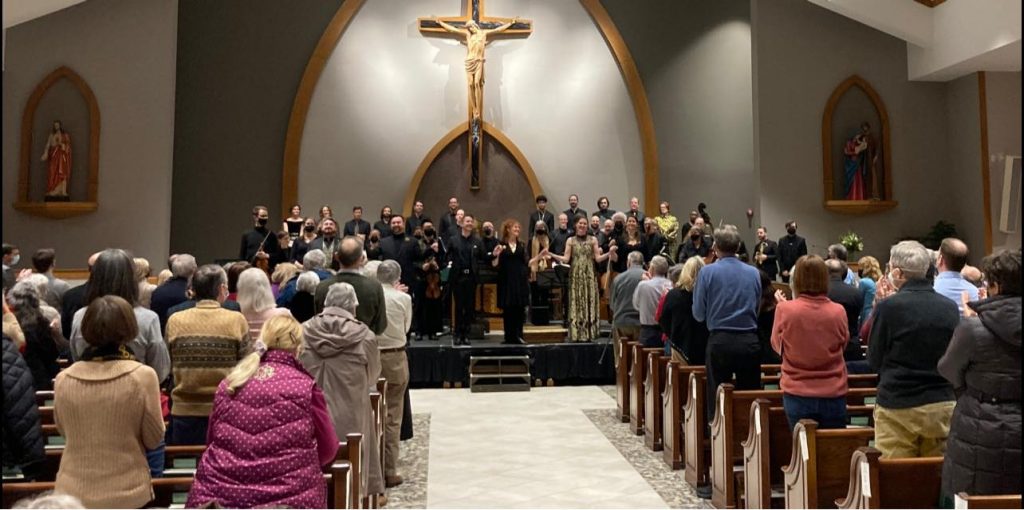 When it comes to Handel’s oratorios, another repeat isn’t always a welcome thing. But Apollo’s Fire knows how to make an evening exciting, and the group’s reprise performances of the composer’s Israel in Egypt last week — in a streamlined version first presented by the ensemble in 2017 — kept the intrigue factor high.
Artistic director Jeannette Sorrell adapted the Baroque score with certain modern expectations in mind. Her production retains Handel’s solemn opening, achieving a kind of period authenticity, but jettisons much of the repetition and inessential action in the rest of the music. The result is a lean and engaging dramatic arc — less than two hours — that translates 18th-century entertainment for the 21st century.
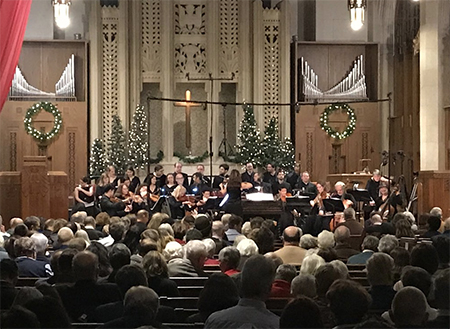
 There’s something so engaging about watching Handel’s Messiah performed live — especially in the capable hands of Apollo’s Fire and Apollo’s Singers. The movement of the instrumentalists, the stage presence of the singers, and the enthusiastic response from the audience all elevate the experience of listening to this familiar music. On the evening of December 8 at Federated Church in Chagrin Falls, guest conductor Nic McGegan led the ensemble in a breathtaking performance of one of Handel’s cornerstone works.
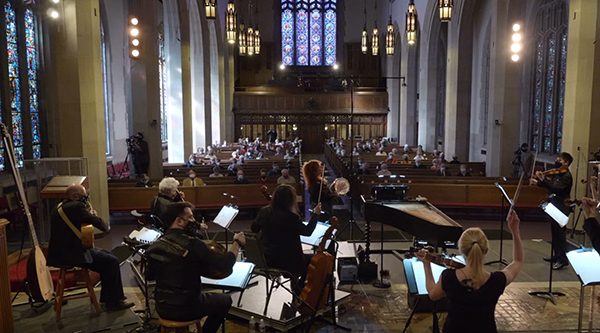 With each of its themed programs, Apollo’s Fire is becoming more than just a period instrument ensemble that gives concerts. Its March program, “Tapestry — Jewish Ghettos of Baroque Italy,” which replaces performances of Handel’s Israel in Egypt, finds Jeannette Sorrell and her colleagues moving seamlessly out of their usual roles to morph into singing actors and dancers, all in order to bring the subject at hand to vibrant life.