by Timothy Robson
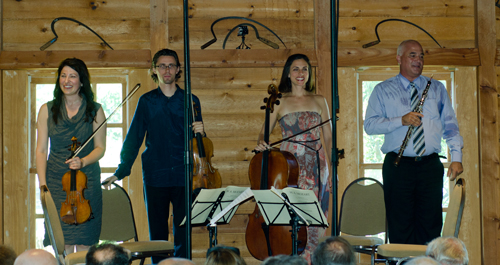
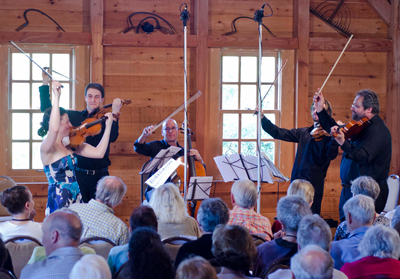
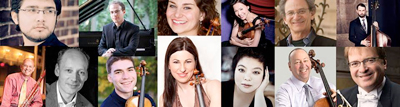 In its first three seasons, ChamberFest Cleveland made itself an indispensable set of summer events that helped satisfy the seemingly insatiable appetite for chamber music in Cleveland. Organized by Cleveland Orchestra principal clarinet Franklin Cohen and Diana Cohen, concertmaster of the Calgary Philharmonic, this year’s fourth festival has expanded to ten concerts over a two-week period in late June, in six venues, some of them traditional concert halls, others, more unusual sites. [Read more…]
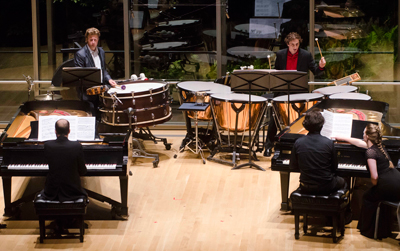
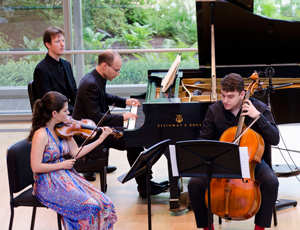 Three has been the magic number throughout ChamberFest 2014, and nowhere more than in its closing concert in CIM’s Mixon Hall on Sunday afternoon. The music was rich and, as usual with ChamberFest, the musicianship masterful. This very enjoyable program, titled “3X,” included three works, each featuring instruments in multiples of three.
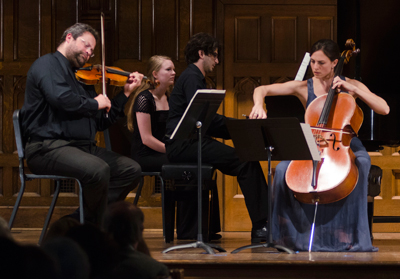
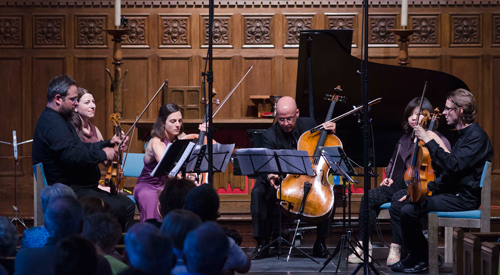 Intelligent programming at its best not only uncovers interesting musical connections, but can also lend insight into the world beyond music. The repertoire for ChamberFest’s eighth concert, at Fairmount Presbyterian Church, is a fine example. The juxtaposition of three works from a 35-year period by “Three Bouncing Czechs” provided a glimpse into different historical moods, revealing the drastic psychological damage wrought by World War I.
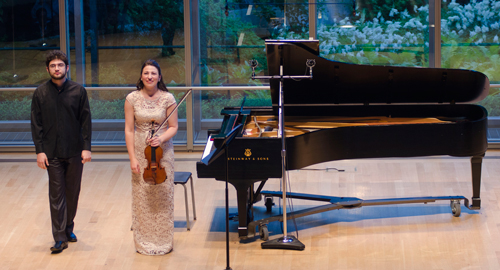 “I would write to you only by means of music,” said Robert Schumann in a letter to his wife, the composer and pianist Clara Schumann. Theirs is a storied coupling, beginning against the wishes of Clara’s father, ending with Robert’s mental breakdown and early death, and complicated by their close relationships with Johannes Brahms. All three being heart-on-their-sleeve Romantic composers, and with Robert’s letter in mind, it makes sense to explore this “Love Triangle” through their music.
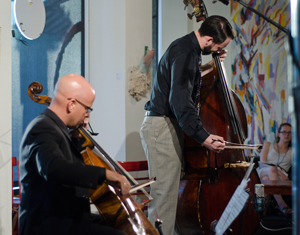 A back-lit beer cooler casting its light on rows of folding chairs. Vivacious artwork hanging from the walls. Popcorn tumbling from bag to hand to mouth. The murmur of conversations smoothed by wine. Plus the fine musicians of ChamberFest, having a ball.