



 By Daniel Hathaway|Cleveland Classical
This article was originally published on Cleveland.com
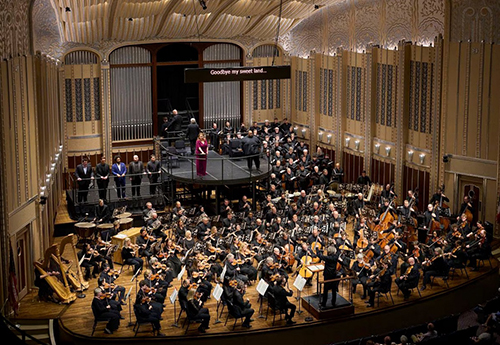
CLEVELAND, Ohio — Franz Welser-Möst and The Cleveland Orchestra set a high musical bar early in their new season at Severance Music Center on Thursday with totally committed performances of unique works by Arthur Honegger and Gustav Mahler.
Honegger set out to express the horror of World War II in three arresting movements named after religious texts in his Symphony No. 3, subtitled “Symphonie liturgique.”
And Mahler, who once said, “A symphony must be like the world. It must contain everything,” turned away from that idea in his symphonic song cycle “Das lied von der Erde,” crafting a six-movement work that simply sought to capture the experience of being human on planet Earth.
 The Cleveland premiere of Rhiannon Giddens’ and Michael Abels’ Pultizer Prize-winning opera Omar on December 8 at the Maltz Performing Arts Center proved that concert productions of opera can succeed without sets, elaborate costumes and extensive staging. Indeed, the Oberlin Conservatory presentation offered more than enough to keep the audience in the crowded house enthralled.

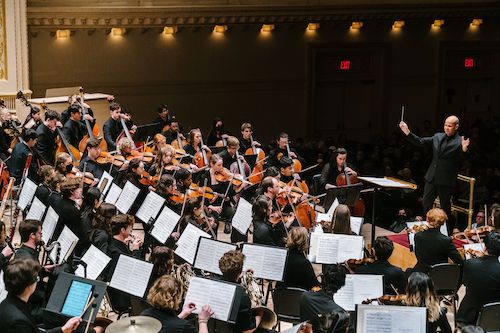 From a brooding opening, through a turbulent depiction of reality, to a rousing journey for freedom that surely lodged itself into the audience’s collective memory for a long time to come, the orchestral and choral forces of Oberlin College and Conservatory traced a compelling emotional arc with their program at Carnegie Hall’s Stern Auditorium on January 20.
 Franz Welser-Möst led the final bows on Saturday night at Severance, like the star of any show should. The Cleveland Orchestra’s music director is in his element presiding over the ensemble’s annual opera production, which this season packs the drama. Verdi’s Otello — in a concert staging that opened May 21 and runs for two more performances (May 26 and 29) — demands big voices, instrumental forces to match, and a conductor who can give it all shape and direction.