
by Daniel Hathaway
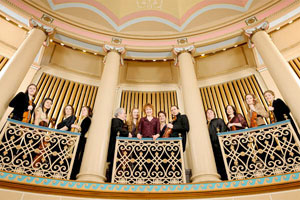 Although it seems odd for an ensemble who have performed together for over two decades, Apollo’s Fire is beginning its season with some first-time performances of well-known works by Johann Sebastian Bach — at least in their best-known versions.
“The E-Major Violin Concerto is popular and famous, and probably everybody, including our soloist, Olivier Brault, has played it many times elsewhere,” Apollo’s Fire artistic director Jeannette Sorrell said in a Skype conversation. “It just so happens that we’ve never programmed it with Apollo’s Fire before. It’s a sparkling piece!” [Read more…]
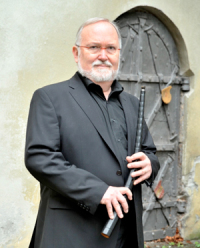 Now that the greater Cleveland area can boast housing two significant organs tuned in mean-tone temperament, early music fans can enjoy the unusual opportunity of hearing a pair of nearly back-to-back recitals featuring the celebrated cornettist Bruce Dickey and his distinguished associate, organist Lieuwe Tamminga. Dickey and Tamminga will perform on Friday evening, October 10 at 7:30 pm in Fairchild Chapel at Oberlin College and again on Sunday afternoon, October 12 at 2:00 pm at the Church of the Covenant in University Circle.
 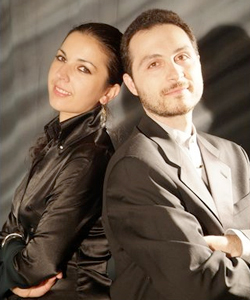 Michael Lynn, Oberlin Conservatory Professor of Recorder and Baroque Flute, founded the Medici Charitable Foundation in 2012 following a liver transplant that restored him to health and allowed him to continue his career as a performing artist and teacher.
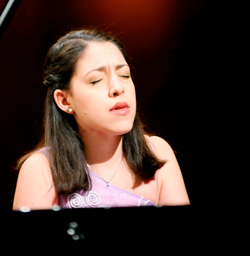 Director Emanuela Friscioni has chosen to take a new tack with this season’s Tri-C Classical Piano series at the Cleveland Museum of Art. Three Sunday afternoon recitals will showcase young pianists who are beginning to come to international prominence, commencing with 21-year-old Italian pianist Beatrice Rana, who won the silver medal at the fourteenth Van Cliburn Competition in Fort Worth in 2013.
 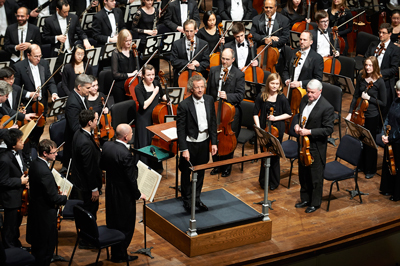 The opening night program for a symphony orchestra season is usually the occasion for an extra bit of celebration. In the case of The Cleveland Orchestra, a Beethoven symphony (other than the ninth) and three Ravel pieces looked on paper like mid-season repertory. But on Saturday, Franz Welser-Möst and the ensemble, fresh off a European tour, blew a capacity Severance Hall audience away with stunningly fresh performances of well-known pieces that seemed newly-minted for the occasion.
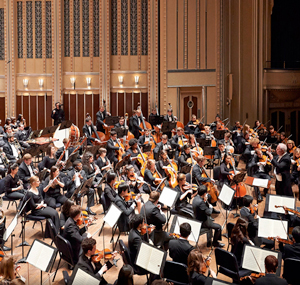 The Cleveland Institute of Music Orchestra opened its CIM @ Severance series on Wednesday evening, October 1, with a single work on the program: Gustav Mahler’s Symphony No. 5 in C-sharp minor, conducted by CIM president Joel Smirnoff. The performance was highly competent. I often had to remind myself that this was a conservatory orchestra, and there was a high probability that this was the first time that many of the students had performed this monster work.
 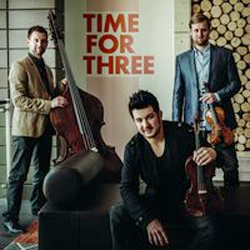 In this day and age it’s not unusual for classically-trained musicians to experiment with and perform music of seemingly unrelated genres. And it’s always interesting to hear how they go about incorporating their classical sensibilities into the works of bands like the Beatles or into bluegrass tunes like “Orange Blossom Special”.
 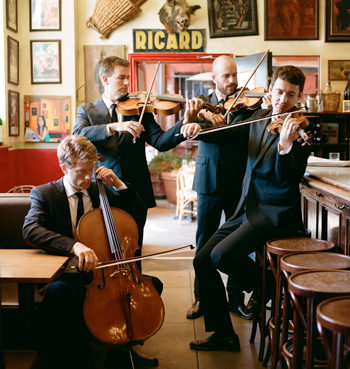 Oberlin’s new quartet-in-residence through 2016 introduced itself with a lengthy but compelling concert on Tuesday, September 30 in Finney Chapel. The performance by violinists Benjamin Jacobson and Andrew Bulbrook, violist Jonathan Moerschel and cellist Eric Byers also launched this season’s Artist Recital Series.
 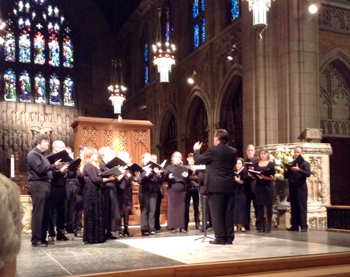 Historians of the arts sometimes ask: did England have a Baroque? Northern, chilly, and Protestant, could the British match the splendid Counter-Reformation emotionality of Catholic Rome? The answer arguably lies in three artists of the late seventeenth century, all of them working primarily in London: Christopher Wren (St. Paul’s Cathedral — noble, symmetrical, and infinitely baffling); John Milton (Paradise Lost — magnificent, touching, radically modern); and Henry Purcell — whose music is moving, challenging, surprising, and constantly creative.