

by Daniel Hathaway
 R.I.P. MICHAEL BISHOP:
News has reached us of the death of Telarc and 5/4 Productions recording engineer Michael Bishop in an accident on March 29. Details and tributes to follow.
ONLINE TODAY:
The Baldwin Wallace Bachcast today features BachFest artistic director Dirk Garner in conversation with alumni choir members. Though the debut went live at breakfast time this morning, you can still view the live stream of Pergolesi’s Stabat Mater from London’s Wigmore Hall. Tonight, it’s Trio Tuesday at the Bop Stop with Dominick Farinacci, the CWRU Orchestra plays from Silver Hall at the Maltz PAC, and a University of Akron faculty recital features Jim Johnson, trumpet, with Kiirsi Maunula Johnson, horn, and Randy Frye, piano.
Details in our Concert Listings.
INTERESTING READ:
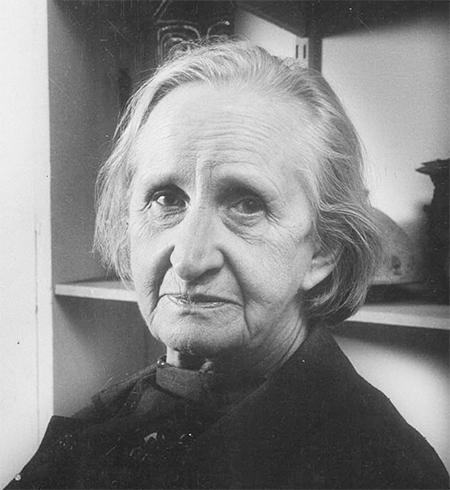
A well written guest obituary by Alex Vadukul in today’s New York Times profiles old-style oboe craftsman Paul Laubin, who died at his workbench in Peekskill, New York on March 1. “One of the last true artisans of the oboe, he made each of his instruments by hand, and the waiting list for a new Laubin could extend a decade.”
TODAY’S ALMANAC:
Compiling the Almanac portion of the Daily Diary begins with a search for noteworthy events that happened on the date in question in classical music history. Sometimes there’s a mighty list of composers, conductors, and artists to sift through, and on other occasions like today, March 30, there’s next to nothing of import to write about — except the founding of Boston’s Handel and Haydn Society in 1815.
Or so our usual go-to source for historical dates told us. Wanting to be accurate and thorough, we always check out dates before setting electrons in motion and choosing music to celebrate milestones.
So we were surprised to read on bach-cantatas.com that “The Handel and Haydn Society was founded as an oratorio society in Boston on April 20, 1815, by Gottlieb Graupner, Thomas Smith Webb, Amasa Winchester, and Matthew S. Parker, a group of Boston merchants and musicians who were eager to improve the performance of choral music in a city that, at the time, offered very little music of any kind.”
Pressing the search further, we learned from a New York Times article marking the 200th anniversary of the Society, that “The society was born from the peace festivities after news reached Boston of the end of the War of 1812, when musicians presented highlights from “The Creation” and Handel’s “Messiah.” After newspaper correspondents wrote of a need to hear more European works, a group of 44 amateur choristers and instrumentalists formed the Handel and Haydn Society, on April 13, 1815.”
Then there’s this notice from the City of Boston: “The exhibition The Handel and Haydn Society: Bringing Music to Life for 200 Years opens at the Boston Public Library’s Central Library in Copley Square in the Cheverus Room on Tuesday, March 24, and runs through Saturday, September 5….The opening date of the exhibition coincides with the 200th anniversary of H+H’s founding and “Handel and Haydn Society Day” in the City of Boston.”
Well, if you’re over 200 years old, what do those few days’ difference matter? We’ll just pretend it’s H+H’s 206th Birthday and list some interesting facts about the organization.
• The Society, the oldest continuously performing organization in the U.S., made its debut on Christmas Night of 1815, when a chorus of 90 men and 10 women sang at King’s Chapel.
• The Society saw the first American edition of Handel’s Messiah into print in 1816, and gave the U.S. premiere of the work in 1818, followed by Haydn’s The Creation in 1819.
• The organization sought to commission a work from Beethoven around 1823, but the project never came to fruition.
• Fast forwarding, Handel and Haydn underwent a sea change in the 20th century when it began adopting historically informed performance practices under Thomas Dunn at the behest of Boston Globe critic Michael Steinberg, and Christopher Hogwood transformed it into a professional chorus and period instrument ensemble beginning in 1986.
Check our H+H’s COV-19 Era Messiah for Our Time (Part I and Hallelujah Chorus), led by Ian Watson, to see how a 200+ year old organization adapts to new realities. There are 183 other videos on the organization’s YouTube channel to enjoy as well.
 ONLINE THIS WEEKEND:
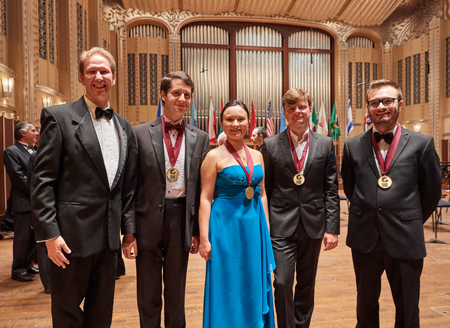 Piano Cleveland announced today that the 2021 iteration of the Cleveland International Piano Competition will begin online from July 8-25 with preliminary rounds recorded at eight venues across the globe, and culminate with in-person Semifinal and Final Rounds in Cleveland from July 29 to August 4. The final two days will feature contestants in chamber music with the Escher Quartet, and concertos with The Cleveland Orchestra. Read the press release
 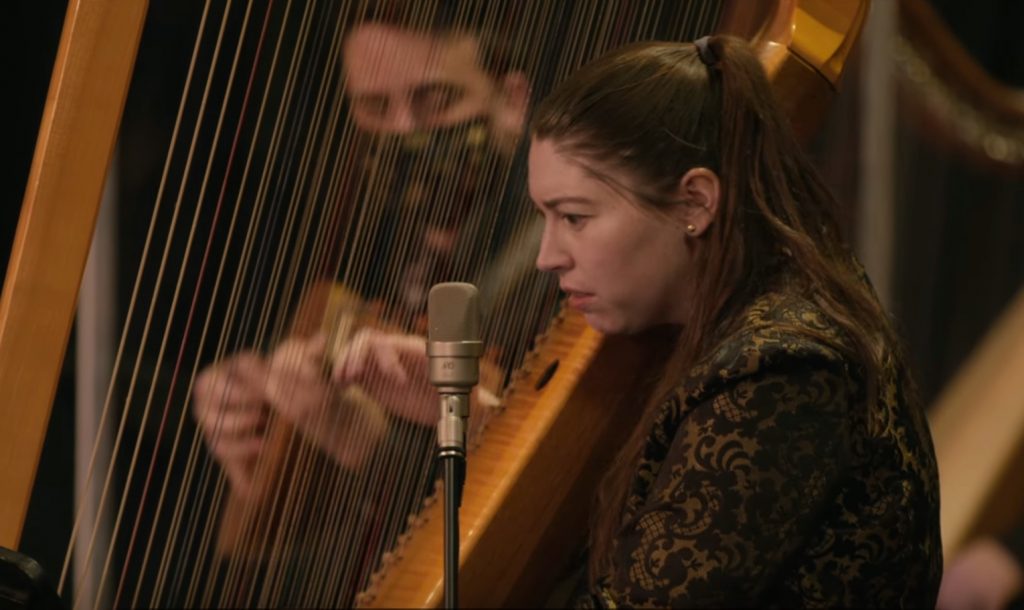 With the novel coronavirus surrounded but not yet defeated, Apollo’s Fire’s February program “Elegance: The Harper’s Voice” morphed from in-person performances to a recording session at First Baptist Church on February 27 that yielded a fine video of a high-quality concert, released on March 10. A few invited souls sprinkled throughout the pews provided enough of an audience to make a brave noise when cheering was called for, and that was often.
 ONLINE TODAY:
 IT’S SPRING!
 Overshadowing the birth of Russian pianist Sviatoslav Richter on March 20, 1915, and the 1948 duel on that date between CBS and NBC to broadcast the first symphony orchestra concert (CBS won by 90 minutes with a Philadelphia Orchestra program, and NBC was the runner up with a Toscanini-led NBC Symphony performance), German composer Johann Sebastian Bach was born in Eisenach in 1685.
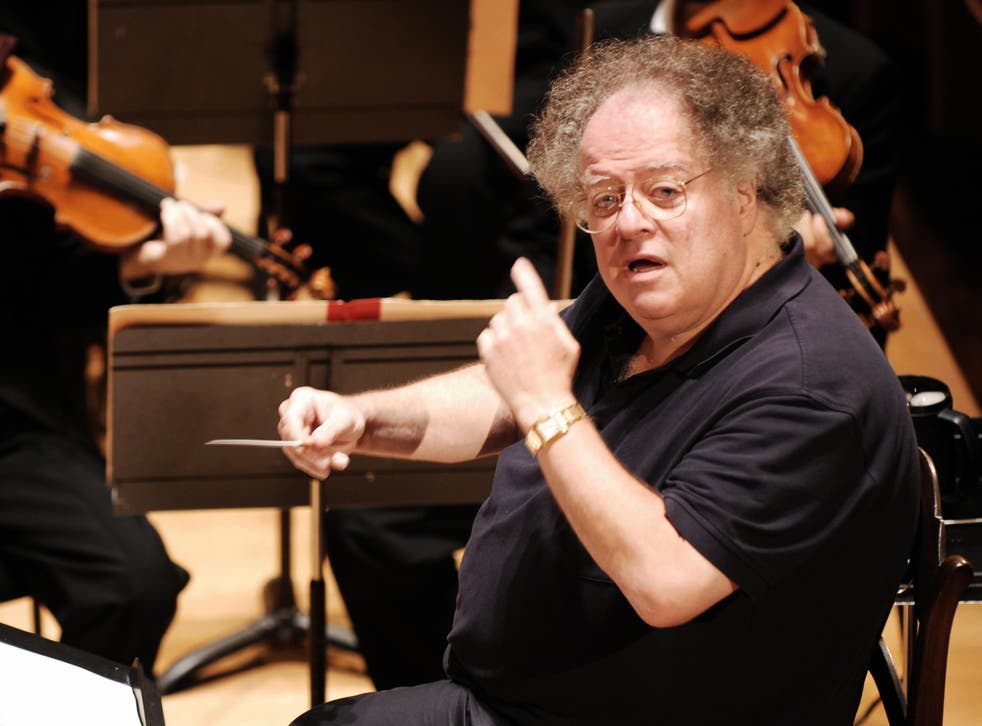 MEMORIALIZING JAMES LEVINE:
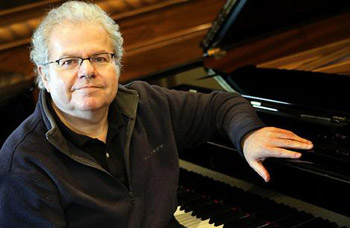 Thanks to COVID-19, the earth has cycled through four seasons since pianist Emanuel Ax has played a solo recital. He’s looking forward to making up for that with an all-Chopin program on the
  IN THE NEWS TODAY:
 ONLINE THIS WEEKEND: