

By Daniel Hathaway
 A CHANGE IN OUR NEWSLETTER SCHEDULE:
Beginning this week, our weekly newsletter will be emailed to subscribers at 5:00 pm on Wednesdays. This change will give the editors a bit more time to prepare the weekly Concert Listings and for our staff to write and copyedit articles before posting. Because details of the classical music scene can change so quickly these days, we recommend that you check the website frequently for new and updated information.
DALLAS INVITES THE MET ORCHESTRA:
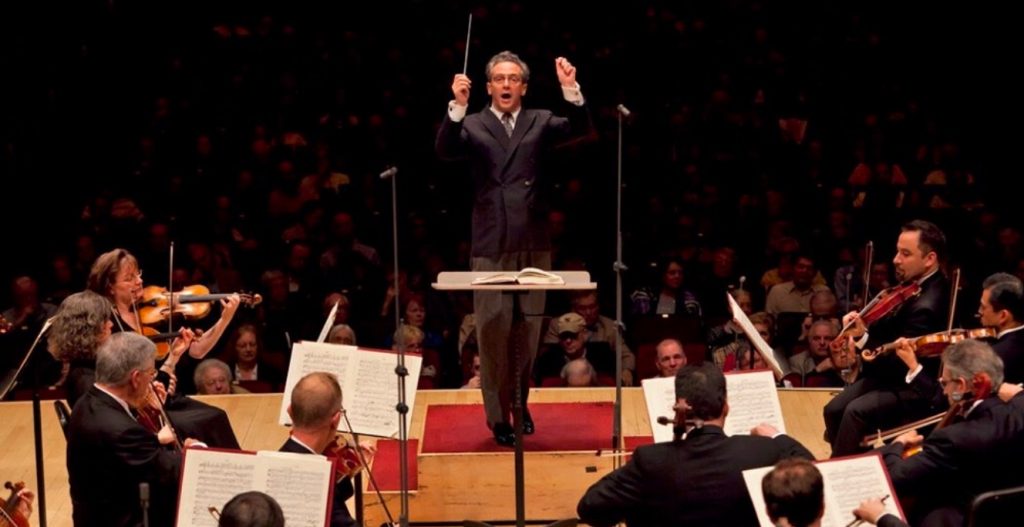
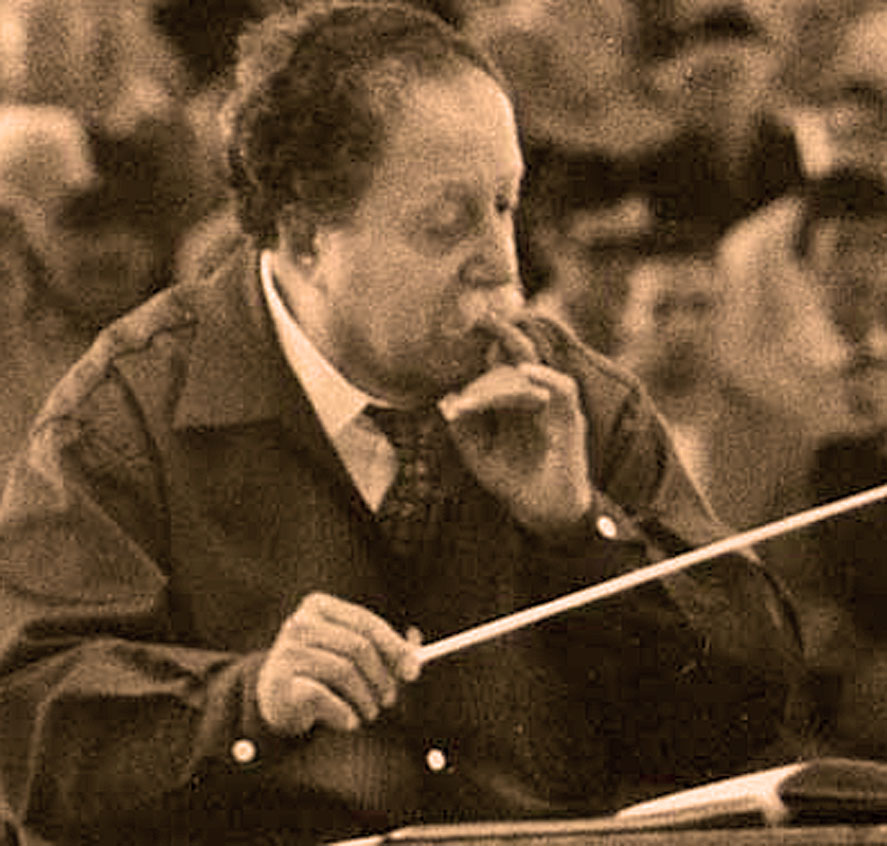
Fabbio Luisi, who served as principal conductor of the Metropolitan Opera before taking the helm at the Dallas Symphony Orchestra (photo above), has invited some 50 of his former colleagues to Texas to join the DSO in two benefit performances of Mahler’s First Symphony on April 30 and May 1.
The MET Orchestra has been furloughed without pay since the house closed its doors on March 12, 2020, although recent negotiations with general manager Peter Gelb have yielded a plan for partial salary restoration. On their Facebook page, the MET musicians wrote, “We cannot overstate the impact this unprecedented collaboration will have on our members, both financially and artistically, after this long year of cultural famine.” Read more in New York Times articles here and here.
MIGNARDA RELEASES NEW ALBUM:
The voice and lute duo of Donna Stewart and Ron Andrico, who perform as Mignarda, announce the release of their 14th CD on April 10.
“Unquiet Thoughts presents a selection of rarities and perennial favorites by John Dowland (1563 – 1626) and a few of his contemporaries, concentrating on songs with exquisite poetical texts by some of the best poets of the Elizabethan age. It is no accident that we chose the very first song from Dowland’s First Booke as the title of our album, as the eloquent term so appropriately describes a genre that pairs an intimate voice with the most personal of instruments to express the secrets of the soul. Unquiet Thoughts is also the title of our blog (soon to be published in book form), which since 2010 has been a platform that offers our insights and experience of music for voice and lute and its relevance in the modern era.”
More details here.
EVENTS ON TODAY’S CALENDAR:
Two online events look forward to Baldwin Wallace’s upcoming virtual Bach Festival. Director Dirk Garner speaks to recent Conservatory alumni and Festival Choir members in this Tuesday’s edition of BACHCAST, and half a dozen young scholars discuss the projects they’re pursuing through the Riemenschneider Bach Institute.
Today’s breakfast-time stream from London’s Wigmore Hall (still available at lunchtime, tea time, and suppertime) features Christian Wolff’s setting of Susan Griffin’s text about Underground Railway figure Harriet Tubman, while the New York Festival of Song features works written during the pandemic. Performers include Oberlin alum Joshua Blue.
Russian piano wizard Daniil Trifonov will be featured in works by Debussy, Prokofiev, and Brahms he recorded in January for New York’s 92nd St. Y, and the Baltimore Symphony showcases some of its soloists in BSO Session—Spotlight.
And organist Paul Jacobs, who soloed with The Cleveland Orchestra in last week’s Focus 8 performance of the Poulenc Organ Concerto (when he also gave a tour of Severance Hall’s E.M. Skinner instrument), pops up this evening in a concert from the University of Minnesota featuring music by J.S. Bach and Handel.
TODAY’S ALMANAC:
Two very different musicians to remember on this 13th day of April, when French composer and poet Guillaume de Machaut died in 1377 in Reims, and Polish American pianist and avant-garde composer Frederic Rzewski was born in 1938 in Westfield, Massachusetts.
Machaut, whose musical creations helped define the Ars nova movement of the eventful fourteenth century, was equally active as the author of some 400 poems in the courtly love tradition. His Messe de Nostre Dame may have been the first cyclical setting of the Roman Catholic mass by a single composer. Listen here to a performance by the Ensemble Gilles Binchois in which other music appropriate to the feast of the Assumption of the Virgin Mary is interleaved.
Just in time for his obsequies, Cleveland’s Les Délices has joined Boston’s Blue Heron to produce Machaut’s Lay of the Fountain. Read Mike Telin’s article here and watch the hour-long program here until April 19.
Rzewski had a traditional academic education at Phillips Academy, Harvard and Princeton, studying with Randall Thompson, Roger Sessions, Walter Piston and Milton Babbitt. Then he sojourned in Italy, where his career was influenced by Luigi Dallapiccolo and he was introduced to electronic music and improvisation.
Famous for politically-charged works, one of Rzewski’s most famous works is The People United Will Never Be Defeated! — 36 variations on Chilean leftist song meant to be a companion piece to Beethoven’s Diabelli Variations. Conrad Tao plays it here at the 2020 Modern Music Festival. (While listening, think of editor Nicholas Slonimsky’s comment in Baker’s Dictionary:
[Rzewski] is furthermore a granitically overpowering piano technician, capable of depositing huge boulders of sonoristic material across the keyboard without actually wrecking the instrument.”
 CONCERTS THIS WEEKEND:
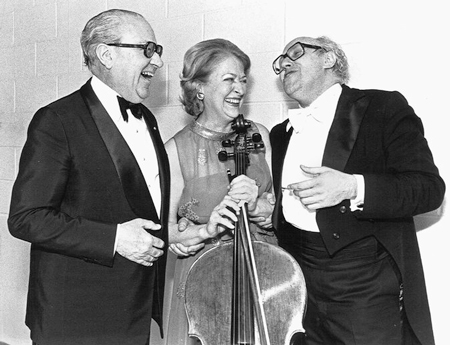 We’ll concentrate on Ginastera, the most prominent composer on the list, who like many Porteños (denizens of Buenos Aires) was of mixed Spanish and Italian ancestry — his father was Catalan, his mother Italian. He spent most of his career in Argentina, with brief sojourns in the U.S. (the first in 1945-47 to study with Aaron Copland at Tanglewood) before moving to Europe in 1970. (Photo: Ginastera with his wife, Argentine cellist Aurora Natola, and Russian cellist Mstislav Rostropovich.)
 UPDATES FROM CLEVELAND CHAMBER MUSIC SOCIETY & APOLLO’S FIRE:
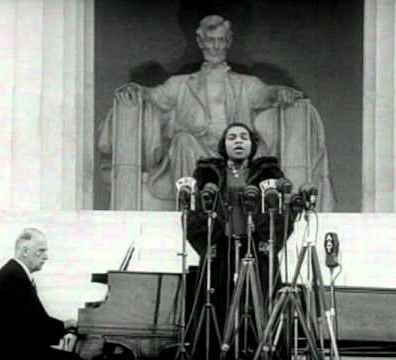 Three memorable dates in Black American classical music history appear on today’s calendar: the birth of composer Florence Beatrice Price in 1887, the birth of bass and actor Paul Robeson in 1898, and Marian Anderson’s 1939 concert at the Lincoln Memorial, sponsored by First Lady Eleanor Roosevelt, that drew a crowd of 75,000. The performance (pictured) protested the decision of the Daughters of the American Revolution to prevent the contralto from performing at the DAR’s Constitution Hall in Washington, D.C.
 STREAMING ON THE WEB TODAY:
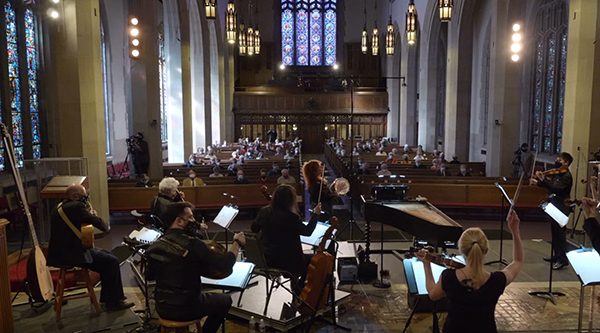 With each of its themed programs, Apollo’s Fire is becoming more than just a period instrument ensemble that gives concerts. Its March program, “Tapestry — Jewish Ghettos of Baroque Italy,” which replaces performances of Handel’s Israel in Egypt, finds Jeannette Sorrell and her colleagues moving seamlessly out of their usual roles to morph into singing actors and dancers, all in order to bring the subject at hand to vibrant life.
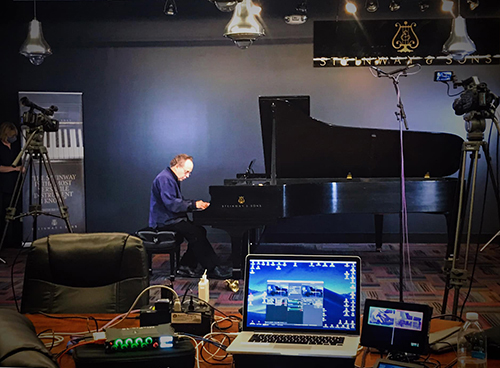 On Wednesday, April 7 at 7:00 pm, CIM Piano Professor Daniel Shapiro will play Beethoven’s last three sonatas in the 8th program of a complete cycle that he launched last fall to mark the 250th anniversary of the composer’s birth.
 IN THE NEWS:
 TODAY’S ALMANAC:
 MUSIC ONLINE TODAY:
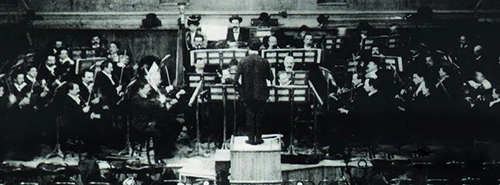 Just one historical event to spotlight today: the founding of the New York Philharmonic Orchestra in 1842, making the ensemble the oldest symphony orchestra in the United States (some sources report that the founding took place on April 5). The first concert was given in New York’s Apollo Rooms in lower Manhattan in December of that year with some 600 in attendance. (Photo: Gustav Mahler rehearsing the orchestra during his term as music director).
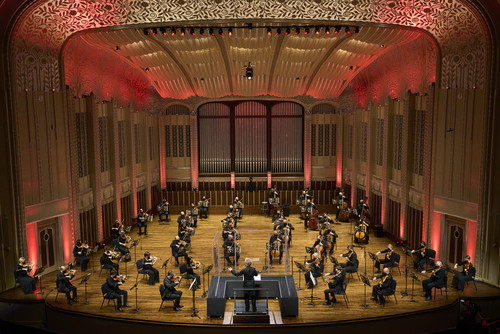 Episode 7 of The Cleveland Orchestra’s pre-recorded In Focus series is the shortest so far, clocking in at only 37 minutes. But the emotional impact of Dmitri Shostakovich’s bleak Chamber Symphony in c followed by the calm, shimmering hopefulness of Olivier Messiaen’s Le Christ, lumière du Paradis (from Éclairs sur l’Au-Delà) is out of all proportion to the length of the music.