by Jarrett Hoffman
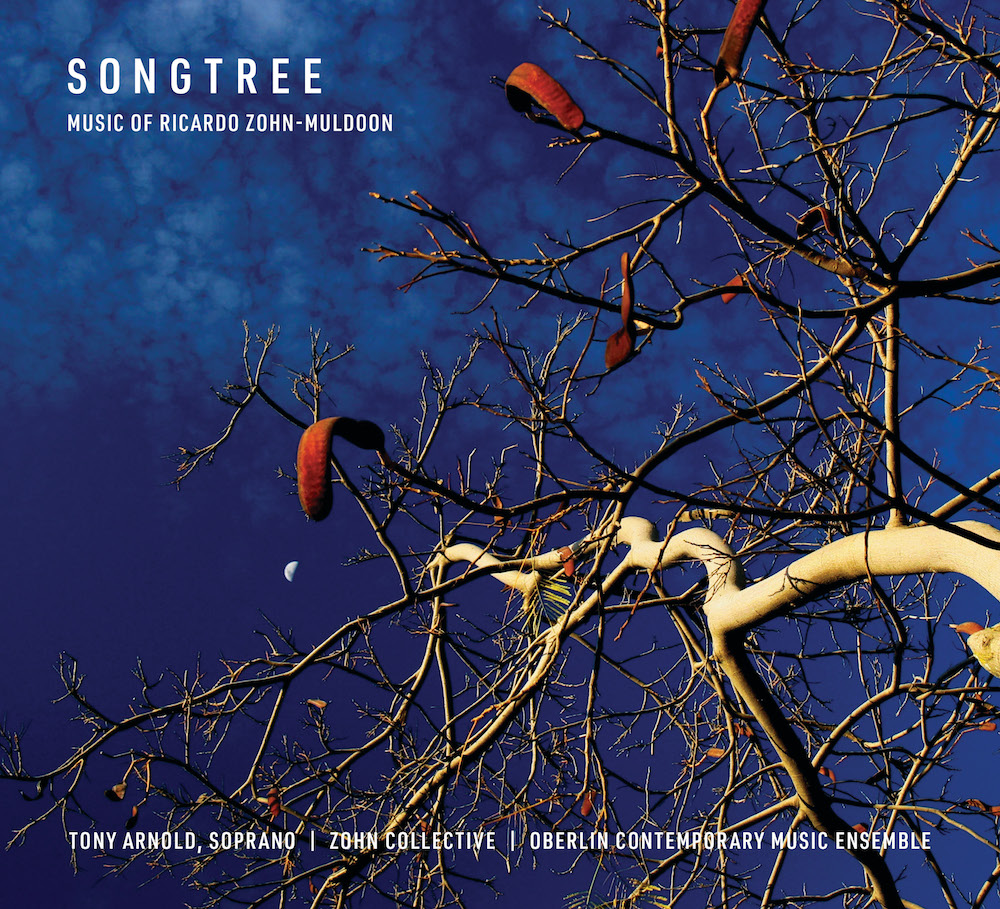 The alluring, accessible, and wildly creative music of Ricardo Zohn-Muldoon is the focus of last month’s release from the Oberlin Music label, Songtree.



by Jarrett Hoffman
The alluring, accessible, and wildly creative music of Ricardo Zohn-Muldoon is the focus of last month’s release from the Oberlin Music label, Songtree.
by Hannah Schoepe
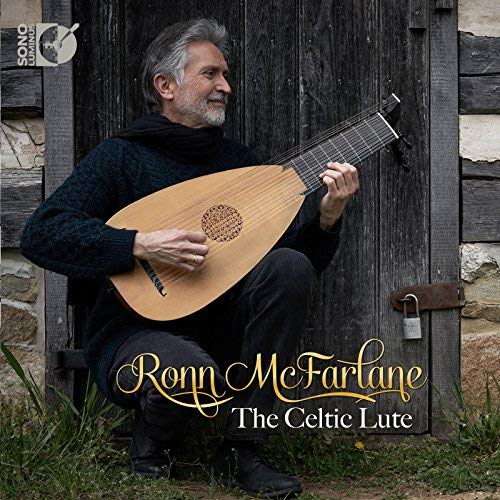 Existence can be filled with emotional weather of various kinds. Perhaps it’s a touch of rain inspired by to-do lists, appointments, and squabbles, or it may be a storm of vehement feelings. Everyone has moments where we long for a calming presence that tells us everything will be okay, and reminds us of the big picture. If clouds are descending upon you, the Christmas tree is crooked, the turkey is too big, or the Hanukkah candles simply won’t stand up straight, there is one thing you can do — sit down with a cup of tea and listen to Grammy-nominated lutenist Ronn McFarlane in his new album The Celtic Lute. [Read more…]
by Nicholas Stevens
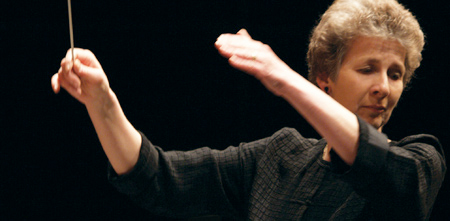 As ClevelandClassical reported last week, the performances of Handel’s Messiah that Jane Glover led with the Cleveland Orchestra this past weekend marked her hundredth through hundred-and-third times conducting the oratorio. The world can only have a handful of definitive Messiah masters at any given time, and in our moment, she certainly belongs among them. As the Orchestra’s performance under Glover on Thursday, December 6 demonstrated, status as an expert confers a certain privilege: that of taking risks with a perennial favorite. [Read more…]
by Jarrett Hoffman
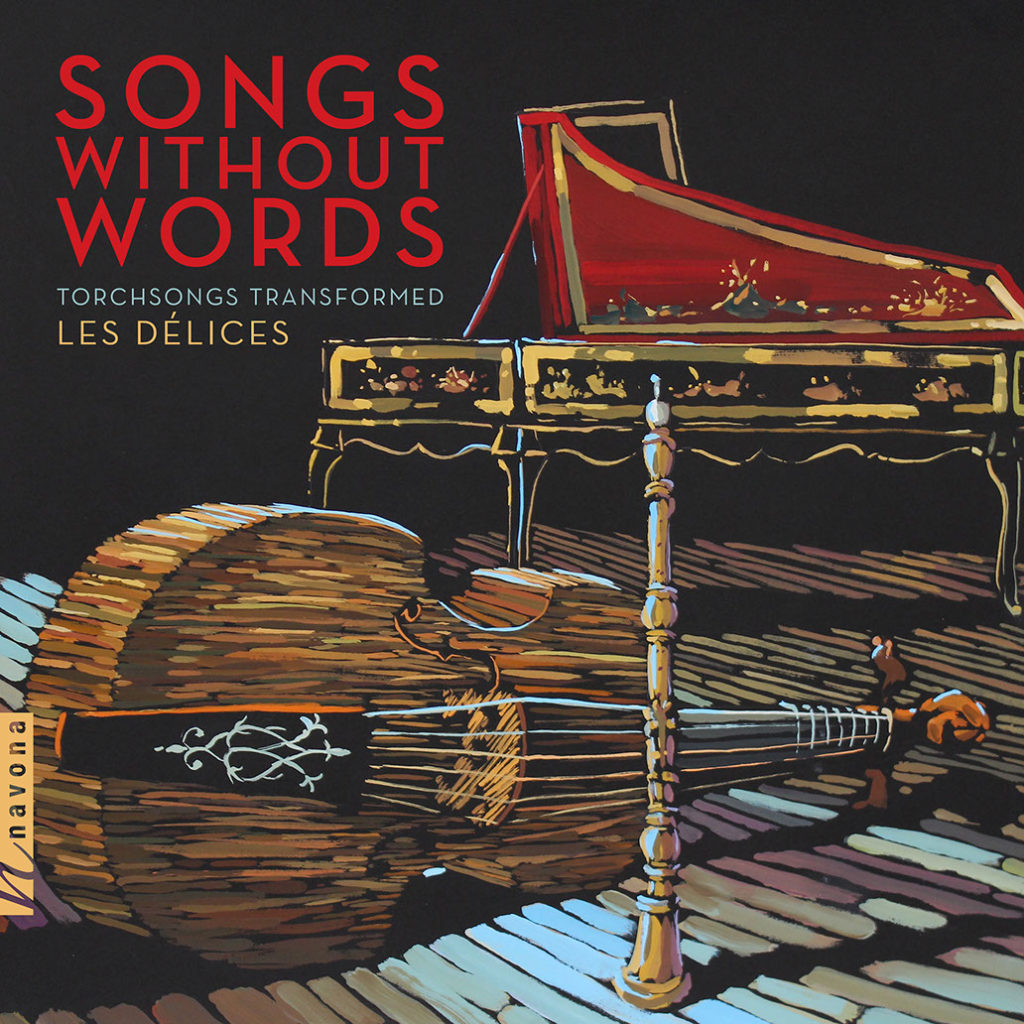 Two risks, one small and one big, make up the concept behind French Baroque ensemble Les Délices’ latest CD, Songs Without Words.
by Hannah Schoepe
 December evokes fantasies of snug fires, family festivities, and winter wonderlands. Cleveland’s Baroque Orchestra Apollo’s Fire provides a fitting soundtrack to these daydreams, in their new album Christmas on Sugarloaf Mountain. The tracks portray sounds of Christmas from the Irish hillsides to the Appalachian Mountains. Light a candle, and put your dancing shoes on, because this album traverses songs of community, faith, and history, as well as barn dances and Scottish reels.
by David Kulma
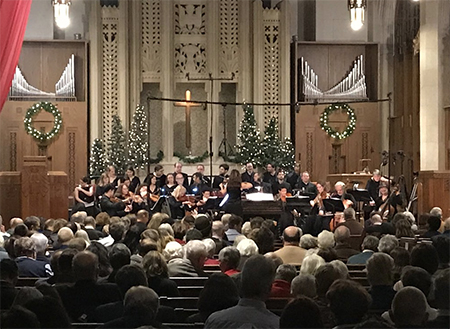 Performances of Handel’s Messiah are as sure a sign that Christmas time has arrived as lights decorating homes and mailboxes stuffed with holiday sale advertising. So it’s no surprise that the evening of Saturday, December 1 found this reviewer at First Baptist Church in Shaker Heights for an absorbing rendition of Handel’s classic oratorio from Jeannette Sorrell and Apollo’s Fire alongside Apollo’s Singers. [Read more…]
by David Kulma
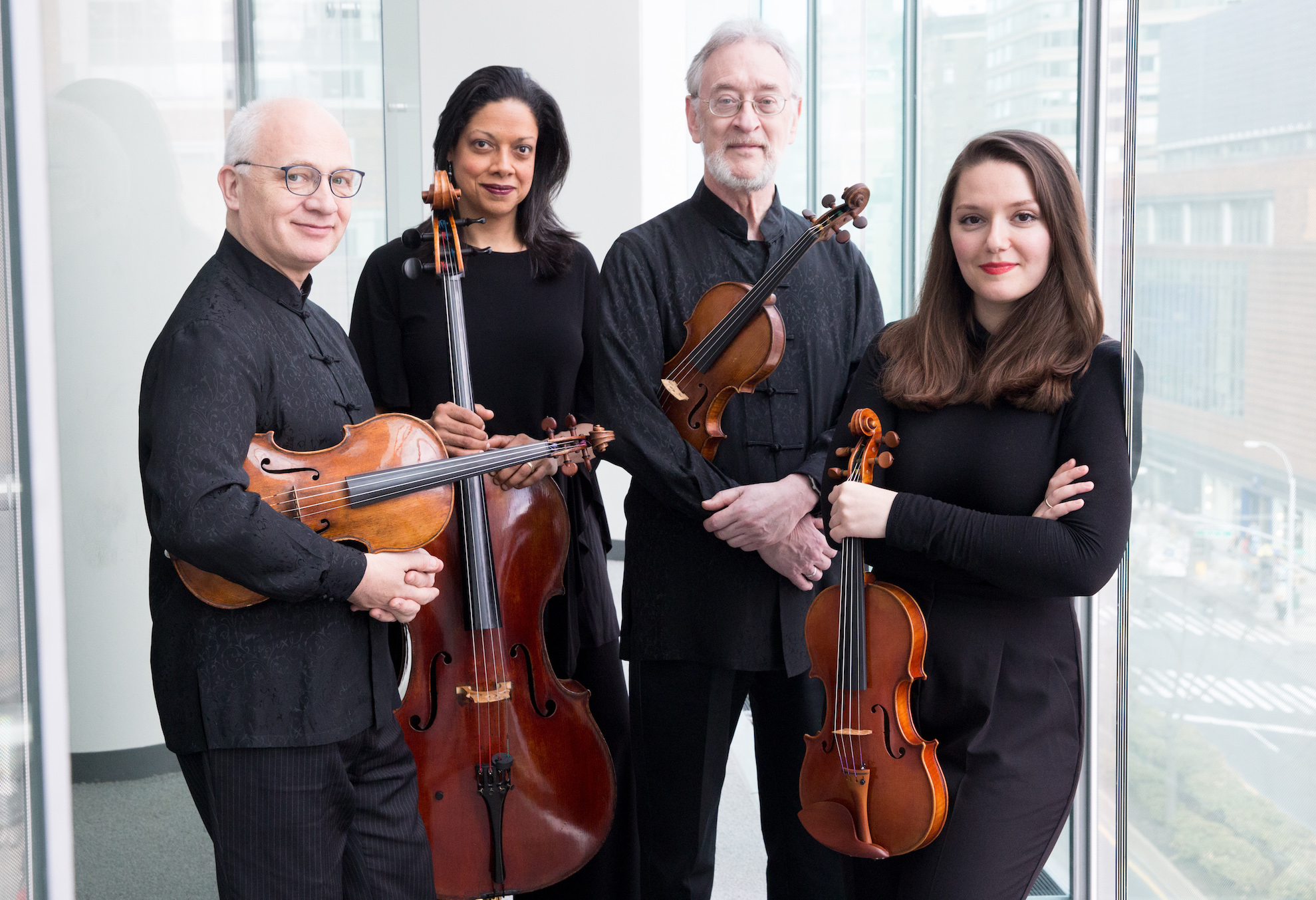 The standard chamber music concert format is so unremarkable to a regular concertgoer that it becomes like water to a fish. Three works in a row, one intermission; masterpieces, and every now and again a new piece. After a while, it’s easy to forget that other formats are possible. But sometimes a well-executed, no-frills concert with the usual shape comes along, and the reason all of that became the norm makes sense again. The Juilliard String Quartet’s performance at Plymouth Church in Shaker Heights on Tuesday, November 27 was such an evening. [Read more…]
by Jarrett Hoffman
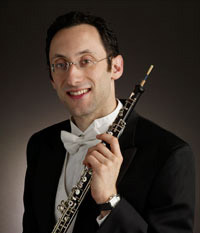 Having served in the U.S. army during World War II, oboist John de Lancie had the opportunity to meet Richard Strauss at his home in a Bavarian resort town following the war. He asked the composer if he had ever thought about writing an oboe concerto — Strauss said that he hadn’t.
And then, suddenly, the composer had. His Oboe Concerto would be premiered just months later in Zürich. And what a concerto it was — and is. As Cleveland Orchestra principal oboe Frank Rosenwein (above) told me during a recent phone call, “it stands at the pinnacle of oboe writing in terms of its beauty, but also its difficulty.”
Rosenwein will play the Strauss Concerto with CityMusic Cleveland and principal guest conductor Stefan Willich in five free performances this week. As is the orchestra’s custom, the concerts will jump from venue to venue each day from Wednesday, December 12 through Sunday, December 16 (details below).
by Mike Telin
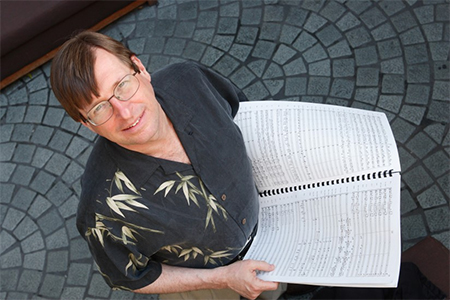 When Stephen Hartke composed his piano concerto Ship of State in 2017, he purposely wrote a piece that would send a S.O.S. to listeners that all was not going well for civilization. “The process of undergoing the emotional journey of writing a piece changes who you are,” Hartke said during an interview in his studio at the Oberlin Conservatory where he is chair of the Composition Department.
But having recently completed Da Pacem, his new concerto for cello and orchestra, the Grammy-winning composer said he feels “a little more serene” than when he began the work. “I had a lot of fun writing the piano concerto, but that was more of a violent roller coaster, while this piece seeks closure.”
On Wednesday, December 12 at 8:00 pm in Finney Chapel, cellist Darrett Adkins will perform the world premiere of Da Pacem with the Oberlin Orchestra under the direction of Robert Spano. The program will also include Jennifer Higdon’s Concerto for Orchestra. (Da Pacem was commissioned by Oberlin College and Conservatory, the Saint Paul Chamber Orchestra, the Aspen Music Festival, and the American Composers Orchestra.) [Read more…]
by Parker Ramsay
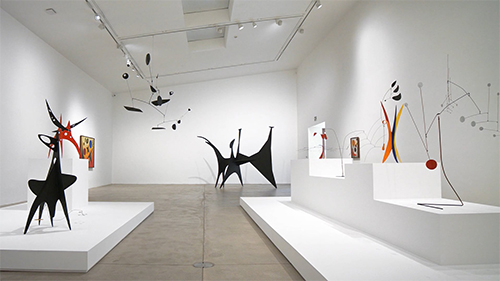 On a recent trip to Los Angeles, the author visited an Alexander Calder retrospective and saw productions of John Cage’s Europeras 1 & 2 by Yuval Sharon and Industry Opera, inspiring him to consider what vivifies or stagnates art. (Sharon has directed productions of Janacek’s The Cunning Little Vixen and Debussy’s Pelléas et Mélisande for The Cleveland Orchestra.)
On East 3rd Street in Los Angeles, the showrooms at Hauser & Wirth break away from the typical post-industrial chic of the surrounding Arts District. Solid white walls and polished concrete floors bear a sheen of sterility, defiant against trends to hang art on brick walls. There is light everywhere, eliminating the possibility of shadows. Windows and ventilation grates are absent, prohibiting the passage of moving air. And so, Alexander Calder’s mobiles sit frozen, restricted from displaying the anti-gravitational nuance for which they are known. Rotational joints appear locked in place, constraining metal ligaments from separating or conjoining in motion. Touching is strictly not allowed. Attempts by children to blow air are met with reprimands from security, loaded five or six guards deep in a showroom containing only twelve pieces.
The viewer can physically move around the art, imagining the possibility of various spirals and spins, but any permutation of the sculptures’ various elements is limited by the human mind. [Read more…]