
by Mike Telin

The 70-minute program features music and poetry by Louis-Nicolas Clérambault, Mme. Duval, Julie Pinel, Élisabeth Jacquet de la Guerre, and François and Louis Couperin. [Read more…]
by Mike Telin
by Mike Telin

The 70-minute program features music and poetry by Louis-Nicolas Clérambault, Mme. Duval, Julie Pinel, Élisabeth Jacquet de la Guerre, and François and Louis Couperin. [Read more…]
by Mike Telin
by Mike Telin

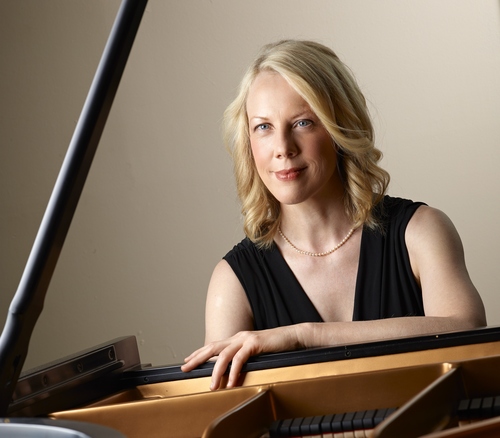
On Sunday, March 21 at 2:00 pm, Oltmanns will present a free, pre-recorded online recital as part of the Tri-C Classical Piano Series. The program will include works by Debussy, Gulda, Wilding, and Beethoven. Click here at start time.
When asked about the music, the pianist said she wanted to play pieces that were “festive, colorful, and sunny.” She also wanted the program to have a minimal amount of fuss. “There will be very short introductions before each part of the recital — I don’t want to say a lot unless I actually have something to say.”
Oltmanns will open her program with five of Debussy’s Preludes. “I wanted this set to have a crescendo,” she said. “‘Bruyeres’ is so gentle and one of my favorites.” (View a preview video of Bruyères here.)
In addition to being beautiful pieces, “Le Vent dans la Plaine,” “Ce qu’a vu le vent d’ouest,” and “Voiles” are part of Oltmanns’ current recording project. “I’m in the final stages of my next album, which is all about wind,” she said. The set will conclude with “Feux d’Artifices” (‘Fireworks’). [Read more…]
by Mike Telin
by Mike Telin

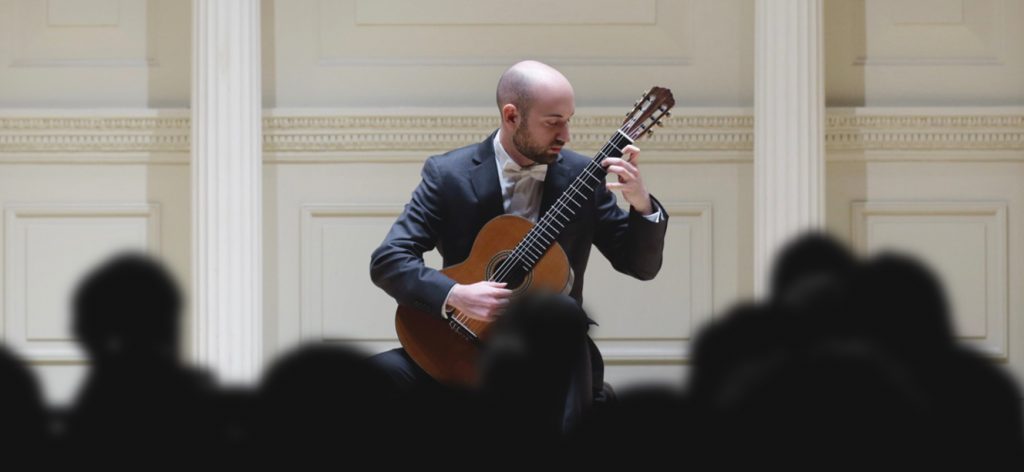
On Saturday, March 20 at 7:30 pm, Buono will make his Cleveland Classical Guitar Society International Series debut with an online program that will feature music by J.S. Bach, Franz Schubert, Hans Haug, and Gerard Drozd. The pre-recorded concert is free. Click here to receive links to the performance as well as to a post-concert Zoom reception with the artist, plus a copy of the full concert program.
Born in Turin, Italy in 1987, Buono began his musical studies at a young age. He went on to attend the Giuseppe Verdi Conservatory in Milan and later the Accademia Chigiana of Siena. He first broke onto the international concert scene in 2008 when he was awarded the Golden Guitar as the best young concert-player of the year at the XIII International Guitar Competition and Festival of Alessandria (Italy). In 2009, he won the Gold Medal at the International Christopher Parkening Competition (USA). [Read more…]
by Jarrett Hoffman

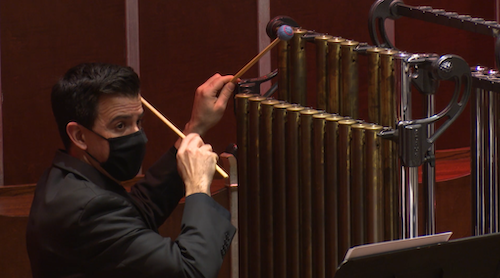
Shchedrin makes use of those extra capabilities right away. Brilliantly, the piece begins and ends with “Habanera,” as heard faintly from the tubular bells under the gentle touch of Marc Damoulakis. Other particularly memorable moments come from the marimba, which provides an intriguing melodic contrast to the strings. But even in the background, instruments like the tom-toms and the guiro bring a consistently fresh and modern color to this piece.
by Daniel Hathaway

This time around, the annual Margaret Baxtresser Concert will mark the Association’s first in-person event since the pandemic began, and the management has made sure that all performers have had their vaccinations, and that distancing protocols are respected in the seating plan.
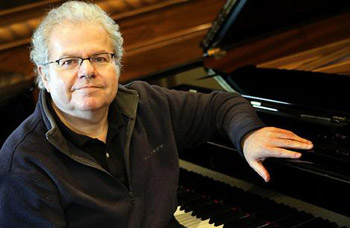
Ax has chosen works from Chopin’s later years: the Two Nocturnes, Op. 55, the Polonaise Fantasie, Op. 61, the Three Mazurkas of Op. 56, the Barcarolle, Op. 60, the Nocturne in E, Op. 62, No. 2, and Scherzo No. 4, Op. 54.
I reached “Manny” Ax by telephone at his getaway in the Berkshires to chat about his program, which I found a bit unusual. Lots of pianists program Chopin, but you don’t often see a complete recital dedicated to his works.
“I’ve never done it, but it’s been done,” he said. “This program is meant to feature incredible masterpieces from Chopin’s later years. I learned some of it that I’d never played before during quarantine and I’m excited about trying out the program. Of course, I’m going to be very nervous because I haven’t done a recital for a year. I hope people will forgive me for things, because it’s going to be difficult in that sense.” [Read more…]
by Jarrett Hoffman

Last month brought clarinet and acoustic guitar, which share the same basic material: wood. And next up is flute and accordion, which derive their sound from the same place: air.
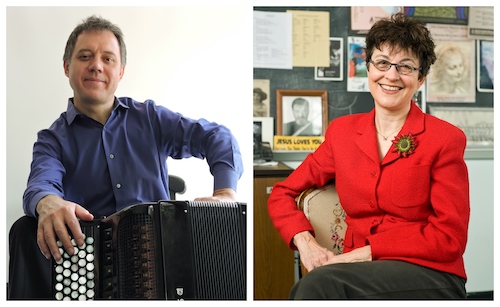
More specifically, when Stephanie Jutt and Stanislav Venglevski of the Stasera Duo give a virtual concert on Sunday, March 21 at 4:00 pm (register here), the combination that will be on display is flute and bayan, a type of chromatic button accordion developed in Russia that’s known for its wide range and rich sound.
Their program is diverse — it’s mostly made up of Venglevski’s original works, but also includes music by Astor Piazzolla, Isaac Albéniz, Alexander Tziganov, Raimundo Pineda, Claude Debussy, Henry Mancini, and J.S. Bach. It’s also very recent. The Duo was scheduled to record it on Monday at the Madison Museum of Contemporary Art.
by Daniel Hathaway

The Baldwin Wallace Bach Festival is releasing a series of Tuesday podcasts in advance of its Virtual 88th Festival. “Bachcast Podcast Conversations” begin today with a program about the vision of the Festival featuring Dwight Oltmann, who directed it from 1975-2014, in conversation with current Artistic Director Dirk Garner. Subsequent podcasts will be accessible at 8:00 am on March 23 & 30, and April 6 and 13 (click here to listen). The Festival itself, which runs from April 24-26, will include new venues and guest artists. Read a press release here.
More about the Grammy Awards. The Oberlin Conservatory and the Cleveland Institute of Music have added details about prize-winning projects that involved their alumni. Read the Oberlin article here and the CIM release here.
Viewers of the Awards ceremony on Sunday were treated to some ironic technical glitches. “…seeing as the Grammys primarily award outstanding sound, the multiple acceptance speeches during the Premiere Ceremony that suffered from echoing, distortion or absent volume felt like a big miss for a show of its stature.” Read a Variety article here.
The New York Times reports this morning about the status of the MET Opera Orchestra. ‘The Metropolitan Opera House has been dark for a year, and its musicians have gone unpaid for almost as long. The players in one of the finest orchestras in the world suddenly found themselves relying on unemployment benefits, scrambling for virtual teaching gigs, selling the tools of their trade and looking for cheaper housing. About 40 percent left the New York area. More than a tenth retired.” Read more here.
Rubinstein Competition Returns. The 16th iteration of the Arthur Rubinstein Competition will adopt a hybrid format in 2021 of digital and live sessions, with stages I & II (April 1-10) to be recorded in New York, London, Beijing, Potsdam, and Tel Aviv, and the Finals (April 29-May 3) to be streamed from Tel Aviv concert halls with live audiences. Laureates include Emanuel Ax and Daniil Trifonov. More information here.
ONLINE TODAY:
A new weekly series, Trio Tuesdays with Dominick Farinacci & Songbook Watch Party debuts at the Bop Stop today, Boston’s Handel and Haydn Society celebrates Telemann, and the MET Opera offers an archive production of Puccini’s Girl of the Golden West. Details in our Concert Listings.
TODAY’S ALMANAC:
There’s quite a mixed list of arrivals and departures to acknowledge on this 16th day of March. Italian composer Giovanni Pergolesi (who died in 1736 in Pozzuoli of tuberculosis at the age of 26), American composer and conductor Edwin London (born in Philadelphia in 1929), English conductor Sir Roger Norrington (born in 1934 in Oxford), American composer David Del Tredici (born in 1937 in Cloverdale, California), Italian composer Mario Castelnuovo-Tedesco (who died in Los Angeles in 1968), and American composer Roger Sessions (who died in Princeton, New Jersey in 1985 at the age of 88).
A pastiche of their compositions and performances would make a remarkably varied concert program.
We could start with Pergolesi’s popular Stabat Mater, performed here by Nathalie Stutzmann (conductor), Philippe Jaroussky (countertenor), and Emöke Barath (soprano) at the Château de Fontainbleau), and follow that with something completely different: Ed London’s The Declaration of Independence with saxophonist Howie Smith.
To end a rather long first half, how about Norrington’s take on Berlioz’ Symphonie fantastique with the Royal College of Music Symphony?
Transitioning after intermission to another world of fantasy, we could launch the second half with one of Del Tredici’s Alice (in Wonderland) pieces — an obsession of his.
Then as an entremet, one of Mario Castelnuovo-Tedesco’s classical guitar works. There are a hundred to choose from, but here are some interesting possibilities: Korean guitarist Bokyung Byun performing his Escarraman for the Cleveland Classical Guitar Society this season; Petra Poláčková playing the first movement of his Omaggio a Boccherini; Chaconne Klaverenga playing the fourth movement of his Quintet with Rebecca Benjamin and Andrew Ma, violins, Mark Liu, viola, and Sarah Miller, cello, at the Cleveland Institute of Music in April, 2016; or Klaverenga performing his Capriccio Diabolico at CIM in May, 2015.
For a finale, why not the work that earned Sessions his Pulitzer Prize in 1982. Click here for a 1981 performance of his Concerto for Orchestra by Seiji Ozawa and the Boston Symphony. (His opera Montezuma, premiered in 1976 by Sarah Caldwell’s Opera Company of Boston, is best left for another day.)
by Jarrett Hoffman
63RD GRAMMY AWARDS:
It was a big night for women at the socially distanced Grammy Awards in Los Angeles. Taylor Swift, Billie Eilish, H.E.R., and Meghan Thee Stallion took home the top four prizes — album, record, and song of the year, and best new artist, respectively. On top of that, Beyoncé’s 28th award gave her the most ever for a female artist. She tied Quincy Jones for 2nd all time behind the 31 wins belonging to none other than Georg Solti.
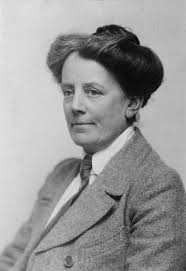
Speaking of figures from classical music history, composer Ethel Smyth (above) won her first Grammy, 77 years after her death, when Smyth: The Prison was named Best Classical Solo Vocal Album. The recording of The Prison — her final major work — features soprano Sarah Brailey, bass-baritone Dashon Burton, conductor James Blachly, and the Experiential Chorus and Orchestra. (According to Classic FM, the only historical female composer to even be nominated before Smyth was Amy Beach).
As Blachly told that same publication:
Dame Ethel Smyth’s music has been undervalued for too long, and this Grammy win is the recognition that she has deserved for decades…90 years after its premiere, I’m excited for this career-culminating masterpiece to finally be heard throughout the world’s great concert halls.
See the full list of winners here (scroll way down to find the classical categories — a humbling experience). Plus, a few links to dive in deeper: highlights from the awards show, a rundown from The New York Times of the evening’s best moments (particularly Meghan Thee Stallion’s speeches and performances) as well as its cringiest, and a handy guide from Syracuse.com breaking down the differences between some of the more similar-sounding awards. (Record? Album? Song?)
ON THE WEB TODAY:
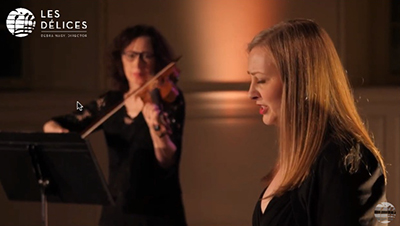
Les Délices celebrates “Women in Music” with an episode of SalonEra at 7:30 pm featuring harpsichordist Byron Schenkman, violinist Shelby Yamin, and soprano Michele Kennedy. The program includes music by Francesca Caccini, Barbara Strozzi, Isabella Leonarda, Élisabeth Jacquet de la Guerre, Maddalena Sirmen, and Clara Schumann. Read our interview with Michele Kennedy here, and watch the concert here.
And Musical America highlights other concerts of interest from further afield, including a program from extended-technique vocalist and composer Holland Andrew, a celebration of violist William Primrose from CMS Lincoln Center, violinist Gil Shaham with The Knights, and the Rochester Philharmonic’s “Truth Is of No Color” with music by Jessie Montgomery and Carlos Simon.
TODAY’S ALMANAC:
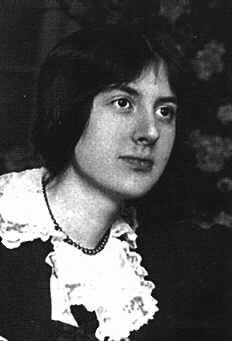
French composer Lili Boulanger, the first woman to win the Prix de Rome (and the younger sister of Nadia Boulanger), died on this date in 1918 at the age of 24 of what we now know as Crohn’s disease. Her story is remarkable for what she was able to accomplish not only in such a short career, but despite suffering poor health throughout her life.
In fact, her chronic illness played a part in her intense pursuit of a career in composition. In The Life and Works of Lili Boulanger, Léonie Rosenstiel writes that composing
provided Lili with the means to decide her own future as much as possible, and to show her family, her friends, and, above all, herself, that she was capable of being considered a contributing member of the artistic and intellectual community in which she lived. In other words, it gave Lili the chance to develop a positive self-image…Lili’s physical dependence on others, especially her immediate family and their servants, was often total, but she enjoyed complete intellectual and artistic autonomy.
Illness forced her to withdraw the first time she entered the Prix de Rome. A year later, at age 19, she won for her cantata Faust et Hélène, bringing her a contract with an important publisher — meaning a steady income, and a platform on which to grow her career.
By the time of her death five years later, her output numbered over 50 works. Perhaps most famous is her Psalm 24, as Daniel Hathaway noted in a Diary entry on August 21, the anniversary of Boulanger’s birth.
Another standout is the haunting and beautiful Pie Jesu. Listen to a spectacular performance here by Paul Jacobs and Christine Brewer in an arrangement for organ and soprano — four minutes of haunting yet subtle music to give you goosebumps of the soul.
by Daniel Hathaway

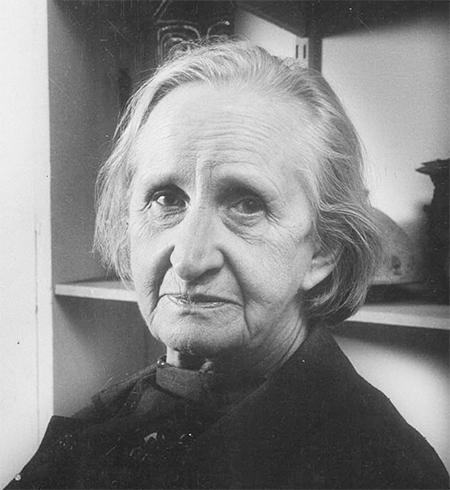
On Saturday evening, point your browser toward Oberlin for a pre-recorded concert by the Conservatory’s large ensembles. The program features the Oberlin Sinfonietta in works by British composer Elisabeth Luteyns (pictured) and Olly Wilson, and the Oberlin Orchestra in Mozart’s Symphony No. 29. Timothy Weiss and Raphael Jiménez conduct the ensembles.
On Sunday afternoon, catch young pianist Evren Ozel, a name that will be familiar to Piano Cleveland and ChamberFest Cleveland audiences, in a live performance from The Gilmore in Kalamazoo, and watch an interview with Music From the Western Reserve Executive Director Zsolt Bognár.
Details in our Concert Listings.
HONORS AND AN INTERVIEW:
Marilyn Horne, a frequent guest at the Oberlin Conservatory and Honorary Voice Program Director (and alumna) of the Music Academy of the West, will be honored with a lifetime achievement award at the 63rd Grammy Awards on Sunday at 8:00 pm EDT. Read an announcement here.
ChamberFest Cleveland cellist Oliver Herbert, 23, is among the recipients of this year’s Avery Fisher Career Grants. Read more here.
New Zealand-born conductor Gemma New has received the annual Sir Georg Solti Conducting Award. Music Director of the Hamilton, Ont. Symphony, Principal Guest Conductor of the Dallas Symphony, and Resident Conductor of the St. Louis, Symphony, she replaced Bramwell Tovey in a Cleveland Orchestra concert at Blossom in July, 2019. Read our review here.
British pianist and polymath Stephen Hough recently sat for an interview with Musical America’s Clive Paget in its One to One series, where he “discusses the effect of the pandemic on musicians’ bank balances, its impact on international touring, and reflects on how the industry might change as it seeks to re-establish live performance in a post-COVID world.” Watch here.
THIS WEEKEND’S ALMANAC:
On March 13, 1842, Italian-born composer Luigi Cherubini died in Paris at the age of 82, having taken up residence in France in 1785, where his aristocratic connections nearly put him on the wrong side of history during the Revolution. He wrote his most famous work, the Requiem in c in 1816 to commemorate the execution of Louis XVI. Watch a performance in Trieste in 2010 by a youth orchestra and four youth choirs led by Riccardo Muti.
Austrian composer Hugo Wolf, most celebrated for his many Lieder, was born on this date in 1860 in Windisch. 127 years later, British pianist Gerald Moore died on March 13, 1987. Though composer and pianist obviously never met, we can conjoin their landmark dates today through German baritone Dietrich Fischer-Dieskau, with whom Moore recorded Wolf’s Mörike Lieder — nearly two hours worth of music.
Gerald Moore spent his career advancing the usually sublimated role of the collaborative pianist, and filled several books with his witty commentary. Listen to an audio version of The Unashamed Accompanist dubbed from an Angel LP.
And on to March 14, the date on which German composer Georg Phillip Telemann was born in 1681 in Magdeburg. Choosing to accept a position in Hamburg, Telemann turned down the post of Cantor in Leipzig in 1723, leading the authorities to offer the job to their second choice, Johann Sebastian Bach (who made Telemann godfather to his son C.P.E. Bach) Telemann seems to have spent his every waking moment writing music for a career total of some 3,000 works.
Here are three in performances by Cleveland ensembles. First, his Concerto for Four Violins played by Cleveland Orchestra members in their Music Medicine series from the kitchen of Mitchell’s Ice Cream in Ohio City. Second, a movement from his Concerto for Recorder and Viola da Gamba from a concert presented at the Cleveland Museum of Art by Michael Lynn and friends in benefit for the Cleveland Clinic Liver Transplant Research Program. And third, a light-hearted funeral cantata for a dead canary performed by baritone Jeffrey Strauss and Apollo’s Fire.
by Daniel Hathaway
ONLINE TODAY:
Opera Philadelphia and LA Opera present a remastering of the 2016 recording of composer Missy Mazzoli and librettist Royce Vavrek’s Breaking the Waves, the work that won the inaugural Best New Opera award from the Music Critics Association of North America. Recommended for mature audiences. Tickets from $10. Watch here. (Opera Philadelphia photo by Nicholas Korkos.)
A rare opportunity to hear Rodion Shchedrin’s 1967 Carmen Suite for percussion and string orchestra presents itself twice: in the latest episode of In Focus with Franz Welser-Möst and The Cleveland Orchestra, that debuted yesterday on the Adella streaming platform, and on tonight’s live streamed performance by the CIM Orchestra under guest conductor Carlos Kalmar.
There’s a new video from Chamber Music at Lincoln Center available beginning today on the Cleveland Chamber Music Society website, and Jim Wadsworth Productions presents Jazz at the Maltz Performing Arts Center with acoustic-electric guitarist Moises Borges.
And composer/pianist Geoffrey Peterson has invited us to share a link to a video he has made. He writes, “As of March 2021, more than 2.5 million people have died from COVID-19. This collection of images captured from around the world speaks to the profound and devastating loss of life. I created this video, and arranged and performed the music.” Thanks to Geoffrey!
TODAY’S ALMANAC:
On March 12, 1837, French organist and composer Alexandre Guilmant was born in Meudon. Titulaire of La Trinité for 30 years (Messiaen held the post even longer beginning in 1931), Guilmant founded Paris’s Schola Cantorum, taught Marcel Dupré at the Paris Conservatory, and left a large legacy of works for the organ — his sole compositional interest.
Guilmant played his Fugue in D at the opening concert for the E.F. Walcker & Sons organ in Latvia’s Riga Dom (Cathedral) in 1884 for an audience of 3,000. Latvian organist Aivars Kalējs played the work in July, 2012 on the same instrument (but probably for not quite as many listeners).
During the Soviet occupation of Riga, the Dom was secularized. But Moscow picked up the bill for the renovation of its famous instrument in 1984 when the entire organ was flown to the shop of Flentrop Orgelbouw in Zaandam, the Netherlands.
While the grand organ of Notre-Dame de Paris is undergoing restoration after the fire, enjoy Olivier Latry’s performance of the Finale of Guilmant’s Sonata No. 1. And for fans of American organist Christopher Houlihan, here’s his performance of Guilmant’s March, Op. 15 based on the “Lift up your heads” chorus from Handel’s Messiah. Houlihan plays a large Allen electronic instrument. Loaded question: can you tell the difference?
On March 12, 1890, Russian ballet master Vaslav Nijinsky, famous — or notorious — for creating the role of the Faun in Debussy’s L’Après-midi d’un Faune, was born in Kvev. Although his performance seems to have been filmed, Ballets Russes impresario Sergei Diaghilev suppressed its release. But Nijinsky’s close counterpart Rudolph Nureyev contributed a tribute in 1980 in partnership with the Joffrey Ballet.
March 12, 1985 saw the death of Eugene Ormandy (born Jeno Blau in Hungary), who launched his American career with what is now the Minnesota Orchestra, then chalked up a record-winning 44 years as music director of the Philadelphia Orchestra. Both heralded and criticized for developing “The Philadelphia Sound,” to some ears everything he conducted sounded the same. Watch a film of Ormandy conducting Rachmaninoff’s Second Symphony in 1979.
And on this date in 1999, child prodigy violinist and conductor Yehudi Menuhin died in Berlin. For an interesting look at his artistry, watch a 1947 film of a concert by the Hollywood Symphonic Orchestra led by Antal Dorati at Charlie Chaplin’s Hollywood studios. Menhuin contributes the Mendelssohn Concerto, which he first played at the age of 7. There was no rehearsal for this pilot film — intended to be released in film theaters. The full performance requires a Medici-TV membership, but this clip is free.