



by Daniel Hathaway
 CONCERTS TODAY AND TOMORROW:
On Saturday, the BGSU Men’s Chorus continues its tour in the area with a 4pm program at First Congregational Church in Tallmadge and TrueNorth Chorale and Chamber Orchestra perform in Bay Village at 7.
Two Oberlin events on Saturday evening at 7:30 pm include a Faculty/Guest Recital by NEXUS Chamber Music with English hornist Robert Walters, and an organ recital by former professor William Porter with Michael Lynn, flute and recorder.
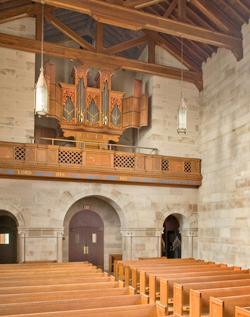
Porter’s recital is the harbinger of two events on Sunday marking the 40th anniversary of the 17th-century style North German meantone organ by John Brombaugh and Associates in Fairchild Chapel (pictured). Alumni play a tag team recital at 2:30 pm, and a 7:30 pm Vespers Concert will feature the Collegium Musicum, directed by Steven Plank, faculty organists Jonathan Moyer and Christa Rakich, Porter and guests.
Halloween inspires programs by the Euclid Symphony and the Kent State Orchestra, both on Sunday at 3, and other performances include composer, arranger, and organist Dan Miller (2 pm in Parma Heights), the Jerusalem Quartet on the Cleveland Chamber Music Society Series (3 pm at the Maltz PAC), the CIM New Music Ensemble with Jerod Impichchaachaaha’ Tate (4 pm in Mixon Hall), saxophonist Gabriel Piqué and pianist Casey Dierlam Tse on the Music From The Western Reserve series (5 pm at Christ Church, Hudson), and an Oberlin Jazz Society jam session with Caleb Smith (7:30 pm at the Birenbaum).
Details in our Concert Listings.
WEEKEND ALMANAC:
It’s time for the annual celebration of Hallowe’en, and probably also time to put that apostrophe back in its name, which is a contraction of “All Hallows Eve,” the day before the Christian feast of All Saints’ Day. So on Sunday there will be “ghoulies and ghosties, and long-leggedy beasties, and things that go bump in the night” out and about.
A variety of scary mix tapes is available, but Dark Classical, one of the better collections to listen to on Hallowe’en, will give you an hour and 45 minutes worth of thrills and chills while you’re waiting to pass out sugary treats.
Everyone has their own favorite hair-raising music, and comments on the aforementioned collection have lamented the omission of Mussorgsky’s Night on Bald Mountain, and proposed adding Schnittke’s Requiem, and the “Dance of the Knights” from Prokofiev’s Romeo and Juliet.
 My own recommendation for generating goose bumps is “Satan’s Dance” from Ralph Vaughan William’s Job: A Masque for Dancing, based on drawings by William Blake (left, Satan smiting Job with boils). The composer dedicated his 1930 work to conductor Sir Adrian Boult, who leads it here with the London Philharmonic at the age of 83. (Satan enters around 4:12).
A bit scary in its own way, George Crumb’s Ancient Voices of Children was first performed on October 30, 1970 at the Library of Congress by the Contemporary Chamber Ensemble, which included mezzo-soprano Jan DeGaetani, pianist Gilbert Kalish, and boy soprano Michael Dash. The piece was commissioned by the Elizabeth Sprague Coolidge Foundation, named for the American music patroness and composer who was, by coincidence, born on October 30, 1864 in Chicago.
Click here to watch a more recent performance by faculty and fellows at the 2016 Bang on a Can Summer Marathon at MASS MoCA’s Summer Festival. [Read more…]
 CONCERTS TODAY:
 TONIGHT’S CONCERT AGENDA:
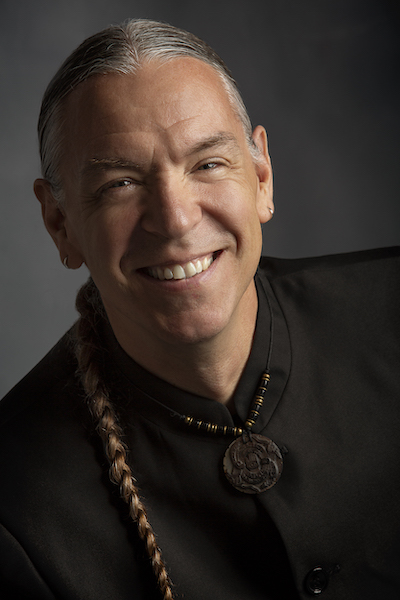 A swirl of CIM connections pervades the next program from the school’s New Music Ensemble, starting with the featured guest: Jerod Impichch
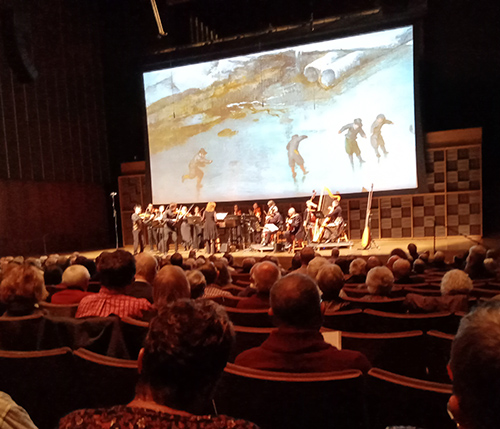 At the top of their program at the Cleveland Museum of Art on Sunday afternoon, October 24, Apollo’s Fire founder and artistic director Jeannette Sorrell told the full house that the Baroque orchestra was opening its 30th season with Vivaldi’s Four Seasons rediscovered, returning to a piece that the ensemble has featured every year since 1991.
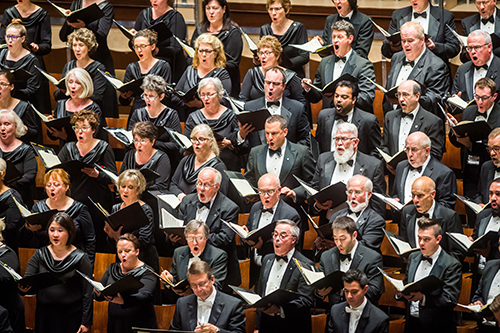 Whether it was the passing of his mother in February 1865 or the death of Robert Schumann later that same year, no one is certain what motivated Johannes Brahms to compose his large-scale, non-liturgical Requiem in the German language.
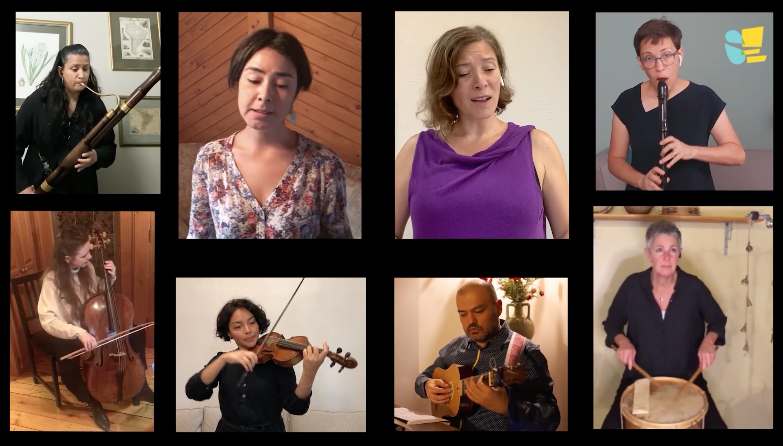 Poet, composer, and protofeminist — these are all accurate labels, but they only begin to describe the incredible Sor Juana Inés de la Cruz. Known as “The Phoenix of Mexico” and “The Tenth Muse,” de la Cruz led a fascinating life and left behind a legacy that artists of all kinds continue to explore today.
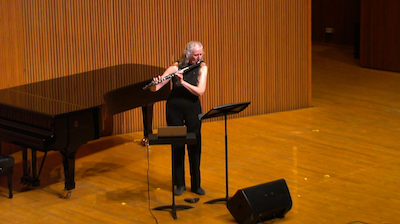 To open the academic calendar in recent years, Oberlin Conservatory violin professor Sibbi Bernhardsson has organized interdisciplinary festivals centered around intriguing themes. That continued earlier this month with “Music, Sports, and the Enduring Influence of Ancient Greece,” a topic that was examined through a variety of events, musical and otherwise, over the course of two days. I caught the tail-end of the festival via live stream: the fourth and final faculty recital in Warner Concert Hall on the evening of October 10.
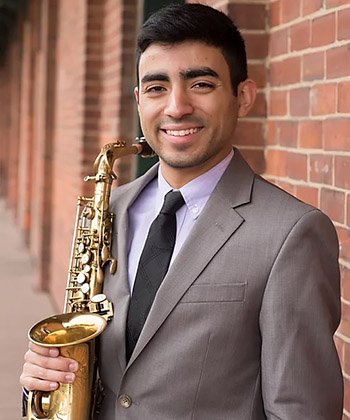 It’s always interesting to hear how musicians come to choose their instruments. Some want to follow in the footsteps of a family member, while others prefer to chart their own path. “What drew me to the saxophone to begin with was my grandma,” Gabriel Piqué said during a recent telephone conversation. “It’s something you never want to hear your grandma say, but I brought one home and she said ‘Gabe, that instrument is sexy.’ I think I was in the 6th grade, and that’s when I decided that I didn’t want to play clarinet or flute, I wanted to play the saxophone.”