by Daniel Hathaway

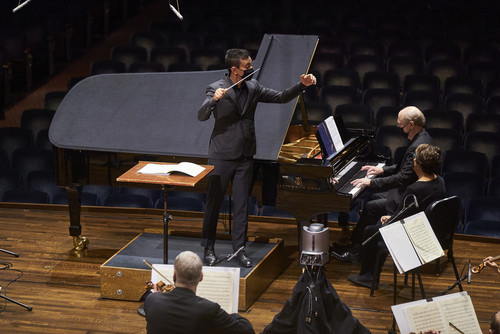
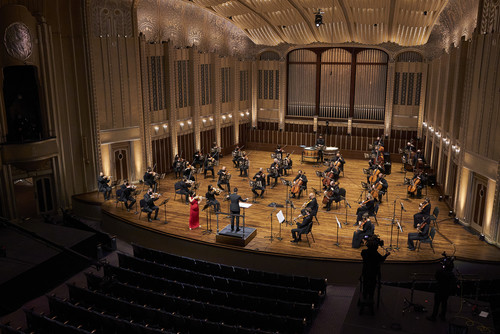
Episode 5 is subtitled “Musical Patterns,” a nod to the fact that three of the four works are examples of “minimalism,” or maybe more precisely, “repetitive music.” [Read more…]

by Daniel Hathaway

Episode 5 is subtitled “Musical Patterns,” a nod to the fact that three of the four works are examples of “minimalism,” or maybe more precisely, “repetitive music.” [Read more…]
by Daniel Hathaway

Artistic director Timothy Beyer set the tone for the opening work by Jeremy Rapaport-Stein, appearing like the floating head of the Wizard of Oz in a quasi-film noir introduction. Beset with a parched throat, he turned the emcee job over to a ventriloquist’s dummy, who carried on in time-honored vaudeville style while Beyer drank a glass of water. [Read more…]
by Daniel Hathaway
TODAY’S ALMANAC:
Historical events in classical music that took place on February 9 range from the sublime to the ridiculous.
Let’s start with Austrian composer Alban Berg, who was born in Vienna on this date in 1885. A student of Arnold Schoenberg, Berg is credited with humanizing his mentor’s 12-tone compositional system, overlaying it with a veneer of expressive Romanticism. His fame is inversely proportional to his output, which includes two operas — Wozzeck and the unfinished Lulu — a violin concerto, and some smaller works.
Alas, the pandemic resulted in the cancellation of Cleveland performances of the two-act concert version of Lulu, starring Barbara Hannigan, which was to have anchored The Cleveland Orchestra’s “Censored: Art and Power” Festival in May of 2020.a
The BBC highlighted Berg’s life in a documentary, and ChamberFest Cleveland included his Adagio for violin (Diana Cohen), clarinet (Franklin Cohen), and piano (Roman Rabinovich) on a concert in CIM’s Mixon Hall on June 21, 2018. That movement was extracted from Berg’s Concerto de chambre for piano, violin, and 13 instruments. And Pierre Boulez chose Berg’s Der Wein to open the 2011 Salzburg Festival with soprano Dorothea Roeschmann and the Vienna Philharmonic.
Two important figures in British choral music were born on this date, Sir George Guest in 1924, and Paul Hillier in 1949.
Guest, born in Wales, was the longtime organist and choirmaster of St. John’s College, Cambridge, where he saved the day school that provided trebles for the chapel choir, and developed a choir that rivaled that of King’s College. Perhaps by design, John’s and King’s scheduled their Choral Evensong services so you could catch both at the expense of a brisk walk.
Guest is the subject of the documentary, “A Guest at Cambridge,” and his last Evensong service, including Gerald Finzi’s Lo, the Full Final Sacrifice was broadcast by the BBC in 1991.
And baritone and conductor Paul Hillier, known for his equal interest in early and contemporary music, founded the Hilliard Ensemble in 1974 and the Theatre of Voices in 1990. Having crossed the pond to direct the Early Music Institute at Indiana University, he extended his geographical reach with the directorship of the Estonian Philharmonic Chamber Choir (2001), Ars Nova Copenhagen (2003) and the National Chamber Choir of Ireland (2008).
For a taste of his work with the Estonian choir, listen to Baltic Voices I, and/or his recording of Arvo Pärt’s Da Pacem.
Some will remember a remarkable noonday concert by Ars Nova Copenhagen at Cleveland’s Trinity Cathedral some years ago, thanks to a happy gap in their touring schedule. I will remember their visit because we all went to dinner at a Chinese restaurant in Playhouse Square where the proprietor had just installed a new karaoke machine and was eager to have the Danes try it out. That didn’t happen, but it would have added to the fun.
And in the end-of-career category, Hungarian composer, pianist and conductor Ernst Von Dohnanyi died on this date at the age of 82 in New York. Grandfather of Cleveland Orchestra music director laureate Christoph, Ernst (Erno) was an important figure in the Hungarian resistance movement against the Nazis. He moved to Florida after the War and taught at Florida State University in Tallahassee for ten years.
Two early works suggest the range of Dohnanyi’s compositional style: on the one hand, his Piano Quintet No. 1 in c, here played by the Cleveland Quartet and Barry Snyder, and on the other by his Variations on a Nursery Tune (the same song Mozart later used). It’s subtitled, “For the enjoyment of humorous people and for the annoyance of others.” The composer plays it here at the age of 79 with Sir Adrian Boult and the Royal Philharmonic Orchestra.
And to end with the ridiculous, it was on this date in 1967 that cellist and performance artist Charlotte Moorman was arrested “by two policemen who interrupted her performance at the Cinematheque in Manhattan of Opera Sextronique by Nam June Paik, a composer, video artist and performance artist.” (NY Times Obituary). Moorman was playing in the nude for an invited audience, an episode that branded her as “the topless cellist.”
by Daniel Hathaway

Reaching back into the 15th century, we’ll begin by marking the death of Flemish composer Johannes Ockeghem in Tours on February 6, 1497. The most important composer between Dufay and Josquin, his name has been spelled in creative ways (Ogkegum, Okchem, Hocquegam, and Ockeghama, to name a few variants).
Cleveland Chamber Choir featured his Alma redemptoris mater, paired with a setting of the same words by contemporary British composer Cecilia McDowall in its December, 2019 concert at First Baptist Church.
The 16th century painting above shows the composer (wearing eyeglasses!) with his choir singing from a large choirbook — standard practice before the invention of music printing and copy machines. Schola Cantorum Brabantiae performed Ockeghem’s Missa l’Homme Armé in authentic style in a 2005 concert in Slovenia. Watch here.
Ockeghem also left a significant number of secular pieces, collected in this LP by the Medieval Ensemble of London.
French organist André Marchal was born blind on February 6 in 1894, an affliction that didn’t prevent him from becoming a skilled improviser and teacher. Hear him play improvisations on three different instruments — at the Palais de Chaillot, the Royal Festival Hall in London, and the Cathedral of Notre-Dame in Paris here.
Marchal’s most important post was the Eglise Sainte-Eustache, situated in Les Halles, the medieval market neighborhood of Paris, where he recorded Franck’s Grand pièce symphonique in 1958. He resigned over a disagreement with the authorities about which builder should be entrusted with the renovation of the instrument.
And February 6, 2005 marked the demise of Karl Haas, the German-born commentator who hosted “Adventures in Good Music,” one of the longest running daily programs in classical music broadcasting.
On February 7, 1652, Italian composer and Papal Chapel singer Gregorio Allegri breathed his last in Rome. His noble setting with ornate embellishments of Psalm 51, Miserere mei, Dei, was closely guarded by the chapel singers until 14-year-old Wolfgang Amadé Mozart heard and transcribed it. Not to diminish his achievement, but the setting is repetitive enough that few trained ears should have any problem reconstructing the work. Here’s a video that tells the story of the work and includes a performance by Harry Christopher’s The Sixteen.
American composer Quincy Porter was born on February 7, 1897 in New Haven, going on to teach on two separate occasions at the Cleveland Institute of Music, as well as serving on the faculties of Vassar, the New England Conservatory, and Yale. Cleveland Orchestra violist Eliesha Nelson chose to include his 1948 Viola Concerto on her 2009 all-Quincy Porter album. Listen to her performance here with John McLaughlin Williams and the Northwest Sinfonia, and click here to hear the violist and the conductor answer some questions.
And Polish composer and conductor Witold Lutoslawski died in Warsaw on February 7, 1994. The BBC joined other news sources to produce a documentary about his life and work in 1990. Watch his conversation with Krzysztof Zanussi here.
When the composer fled Warsaw in 1944, he left most of his manuscripts behind, and those were lost in the almost complete destruction of the city by the Germans. His 1954 Concerto for Orchestra established his prominence as a composer. Listen to a Cleveland Orchestra performance of the work under Christoph von Dohnányi here. (The recording pairs the Lutoslawski piece with Bartók’s Concerto for Orchestra.)
ONLINE THIS WEEKEND:
Saturday’s highlights include the opening panel discussion that prefaces Oberlin’s Black History Month events, a concert from the Boston Early Music Festival by Quicksilver featuring Cleveland violinist Julie Andrijeski, and WCLV’s archive recording of Bach’s St. Matthew Passion.
On Sunday, watch Boston’s A Far Cry chamber orchestra perform Tchaikovsky’s Serenade for Strings from memory, along with works by Arvo Pärt and Chevalier de Saint-Georges, catch the Isaiah J. Thompson Quartet from The Gilmore in Kalamazoo and an Oberlin faculty recital by violinist Sibbi Bernhardsson and pianist Peter Takács, watch Rachel Barton Pine talk about the solo part of Beethoven’s Violin Concerto, and enjoy another extended work on WCLV — this time, a concert performance of Verdi’s Falstaff.
by Daniel Hathaway

Episode 6 of “Orchestrating Change” features Marie-Hélène Bernard, president and CEO of the St. Louis Symphony since July, 2017, in conversation with the CSO’s Rachel Hagemeier and Matthew Jenkins Jaroszewicz [38:39]. Watch here.
Bernard talks about what it means to be a leader in the field of orchestral music, and about “her experience as both a female and an immigrant [from Canada] and how that has affected her leadership style and her view on the future of this field. She is dedicated to equity, diversity and inclusion in her organizations and strives to create an inclusive environment in her organizations so the future of orchestral music is more diverse and representative of the communities we serve.”
TODAY ON THE WEB:
COVID-19 has taken its toll on local in-person events, but the pandemic has also opened wide avenues to concerts around the globe.
Just today, at 1:00 pm you can teleport to the Krannert Center at the University of Illinois Champaign-Urbana and catch the Jupiter quartet in works by Beethoven and Kati Agócs, at 2:00 pm you can zip over to Amsterdam to hear Mozart’s Gran Partita in the main hall of the Concertgebouw or — at the same hour — show up at Saanen Church in Switzerland to enjoy Argentine pianists Martha Argerich and Nelson Goerner play music by Debussy and Rachmaninoff.
Then at 7:30 pm, in a musical handshake between the North and the East Coasts, No Exit new music ensemble hosts Transient Canvas from Boston performing music of emerging composers from Cleveland State, Kent State, and Baldwin Wallace Universities.
That’s globalism at its best. More details in our Concert Listings.
TODAY’S ALMANAC:

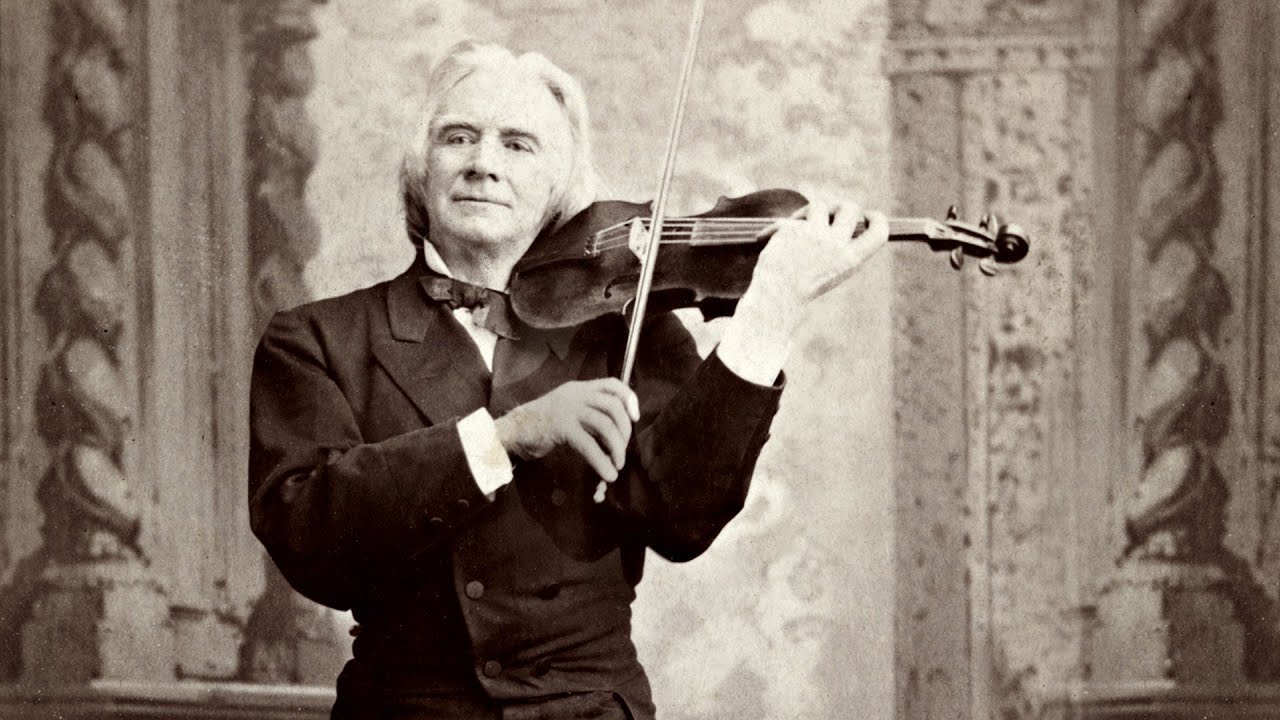
Norwegian composer and violinist Ole Bull entered the scene in Bergen in 1810.
The other two were born in France — Jacques Ibert in Paris in 1890, and Ivan Tcherepnin near Paris on this date in 1943. Ibert makes today’s honors list having written fine to his career in the French capital on February 5, 1962.
Bull figures importantly in the establishment of Norwegian independence from Sweden, including the co-founding of Det Norske Theater in Bergen, where Norwegian was established as the house language instead of Danish.
He also encouraged the talent of Edvard Grieg, whom he met in 1858 when Norway’s most famous composer-to-be was only 15, and leveraged his admission to the Leipzig Conservatory.
As one of the leading touring virtuosi of his era, Bull collected important violins, performed with Liszt, and made several tours to the United States, where he bought land and established Norwegian communities. As a result, today you can visit Ole Bull State Park in the Susquehannock State Forest, enter Ole Bull’s concert hall at Mammoth Cave in Kentucky, and check out Ole Bull Cottage in Eliot, Maine, originally meant to be a music school.
For a taste of Bull’s music, listen to his Grand Concerto, Op. 4, performed by Annar Follesø with Ole Kristian Ruud and the Norwegian Radio Orchestra, or his somewhat shorter Concerto Fantastico with the same artists.
And/or watch a documentary where two sisters, Ragnhild Hemsing and Eldbjørg Hemsing, go on a quest to discover the secrets behind the virtuoso’s tone.
Ivan Tcherepnin, who came from a family of Russian composers, studied with Leon Kirchner, Karlheinz Stockhausen, and Pierre Boulez, and taught at the San Francisco Conservatory and Stanford before becoming director of Harvard’s Electronic Music School from 1972 until his death in 1998.
Alas, I haven’t been able to locate recordings of what are said to be two of his defining works: the Double Concerto for Violin, Cello, and Orchestra that won the 1996 Grawemeyer Award, or his Samur Opera, which earned the Grand Prize at Austria’s 1982 Ars Electronica Festival. Any clues from our readers?
Jacques Ibert shared the predilection of 20th century French composers to write for wind instruments. Who could ask for a more alluring performance of his Trois Pièces Brèves than that played (and choreographed!) by Carion? Begin here and click here for the last two movements.
But for sheer cuteness, here’s a video posted by pianist Conrad Tao of his performance of Ibert’s Le petit âne blanc (“The Little White Donkey”), captured at the tender age of 6.

A new series of recorded concerts will be available on the Orchestra’s Adella platform beginning in March for subscribers, ticket holders, and donors who have supported the ensemble above $300 for the year.
Looking forward to summer, Gremillet noted that the Orchestra is planning a ten-concert season at Blossom Music Center in July and August, which will operate at reduced capacity.
by Daniel Hathaway
Apollo’s Fire has announced that its February programs, “Elegance: The Harper’s Voice,” featuring Parker Ramsay and originally scheduled as in-person events from February 18-21, will be replaced by a video to be released to subscribers and ticket holders on March 10 and viewable on-demand for 30 days. More information here.
Early Music America and the panel of Emerging Artists Showcase judges have announced the performers who will take part in the 2021 Emerging Artists Showcase, a virtual festival of video presentations in May. The list includes the Cleveland ensemble Time Stands Still (Anna O’Connell, voice and triple harp, and Addi Liu, violin), and Oberlin alum John Walthausen, harpsichord. Read the article in ENotes here.
Liza Grossman, who founded the Contemporary Youth Orchestra and served as its music director for more than two decades, announces the founding of the Kaboom Collective, “the first national initiative of its kind that provides young adults ages 16 – 21 an immersive real-world entertainment industry experience.” Read the press release here.
Parma Recordings is launching a Call for Scores for a program of solo violin works to be streamed online and archived on its Live Stage. The opportunity has been designed specifically for artists who have had concerts cancelled in the last year due to the pandemic. More information here.
Pittsburgh’s Chatham Baroque has posted the latest episode in its video concert series. “Multiplied” features its three artistic directors, each performing on multiple instruments to create a sextet: Andrew Fouts (violin & viola), Patricia Halverson (tenor viol, bass viol & violone), and Scott Pauley (archlute, theorbo, & baroque guitar). The program includes music by J.S. Bach, G.F. Handel, Henry Purcell, G.G. Kapsperger, John Jenkins, and Carlo Farina. Previous episodes are available on demand, including last month’s program by viola da gambist Jaap ter Linden and Oberlin harpsichord professor Mark Edwards, who perform works by Marin Marais, Georg Philipp Telemann, François Couperin, and J.S. Bach recorded at Church of the Redeemer.
ON THE WEB TODAY:
Tonight at 7:00 pm, the International Contemporary Ensemble presents Jacob Greenberg, Wendy Richman and audio engineer Ryan Steber of Oktaven Audio in conversation about “Creating an album.” A Zoom session follows in which they discuss the ins and outs of releasing an album on a label vs. producing one independently. See our Concert Listings page for more information.
TODAY’S ALMANAC:
On this date in 1594, Italian polyphonic master Giovanni Pierluigi Palestrina died in Rome and was buried in St. Peter’s Basilica at the Vatican where he had served in various important positions, most notably as maestro di cappella of the Cappella Giulia. The quality of his counterpoint marked the culmination of Italian Renaissance church music.
Cleveland choirs have regularly programmed Palestrina’s masses and motets, including Quire Cleveland (who sing Sicut cervus under guest conductor Jameson Marvin here), and Contrapunctus Cleveland (watch them sing Super flumina Babylonis here, led by David Acres).
Other Palestrina works, not so expressive as those two, can seem a bit cold in their perfection. I personally enjoy some of his later pieces that tend toward the freer Baroque style. Like O magnum mysterium, performed here by The Sixteen with a follow-along score.
Just a birthday nod today to two celebrated violinists who need no introduction — Fritz Kreisler, born in Vienna in 1975, and Jascha Heifetz, born in Vilnius, Lithuania (then part of Russia) in 1901.
And then on to celebrate the birth of American pianist Ursula Oppens in New York in 1944, and the departure of American composer Lou Harrison in 2003.
Oppens (interviewed here by vocalist Tony Arnold in 2020) has an affinity for contemporary music, as she demonstrates by joining Jerome Rosenthal in Frederic Rzewski’s Four Hands at the Spectrum Rzewski Festival in 2018. For something completely different, watch her interpretation of Ravel’s La Valse.
Lou Harrison was the subject of an interview by John Cage and Virgil Thomson, and his music was featured in a centennial concert at the Cleveland Museum of Art in October of 2017. Read two articles in ClevelandClassical.com about that event — a preview by Jarrett Hoffman, and a review by Timothy Robson.
A similar tribute took place that year at New York’s Trinity Church, Wall Street. Click here to watch organist Chelsea Chen and the Rutgers Percussion Ensemble perform Harrison’s thrilling Concerto for Organ, Percussion. and Strings.
by Daniel Hathaway

Having been moved online, Heights Arts’ “Close Encounters” won’t bring performers and audiences into as close proximity as usual this season, but the performances will be predictably excellent. The first program, “OMNIPresence with Obligat’OBOE,” airs on Saturday at 3:00 pm, live from the Bop Stop.
Same day, same venue, but at 8:00 pm, Steve Kortyka and Jackie Warren put their talents on saxophone and piano together. Comments and donations encouraged.
See our Concert Listings page for more information.
THIS WEEKEND’S ALMANAC:
Imagine being the little brother of a famous composer. Imagine being christened with the name of a famous Roman emperor. Such was the dual fate of Giulio Cesare Monteverdi, younger sibling of Claudio. born on January 31, 1573. He left a few works to prosperity, two of them published in his brother’s Scherzi Musicale. Here’s one of them: “Deh, chi tace il bel pensero,” performed by Ars Lyrica Houston under the direction of Matthew Dirst from their 2018-2019 season.
Also born on the last day of January: French flutist, bassoonist, and composer François Devienne in 1759 in Joinville. He survived the Revolution, wrote extensively for wind instruments and taught at the institution which became the Paris Conservatory. Here are three of his Bassoon Quartets featuring Jane Gower.
In 1797 on this date, Austrian composer Franz Schubert was born in Vienna. There are so many familiar works with which to celebrate, but let’s go for a luminous performance of his F-Minor Fantasy for Piano Four Hands that happened only a week ago. Emanuela Friscioni and Antonio Pompa-Baldi recorded it in their music room for the season opener of the Tri-C Classical Piano Series of which Friscioni is the executive director.
Another worthy tribute is Schubert’s Cello Quintet (not for five cellos, but rather for string quartet with an extra cellist). For a performance, you couldn’t do much better than the one played by ChamberFest Cleveland musicians Yura Lee, David Bowlin, Dimitri Murrath, Clive Greensmith, and Peter Wiley at Harkness Chapel in June 2015.
Or there’s also the famous Octet, which you can enjoy here in George Szell’s arrangement for orchestra from December, 1965. That work also gave Cleveland Orchestra Youth Members an opportunity to join their compatriots from the Anton Bruckner Private University in preparing and performing the piece in Linz during their European Tour in 2019. Watch footage of rehearsals (coached by Franz Welser-Möst) and the performance here.
January 30 marks the death of French composer Francis Poulenc in Paris in 1963. His Gloria exemplifies his compositional style, aptly described by a YouTube commentator: “His ingenious ability to join the secular and the sacred, in this case, French cabaret and High liturgy is unmatched, except maybe for Mozart.” That comment was in response to a live performance by soprano Else Benoit, the Netherlands Radio Choir and Radio Philharmonic Orchestra, led by Peter Cijksatra, that took place in Utrecht in November of 2019.
An earlier work that captures Poulenc’s urbane wit is the 1928 Concert Champêtre for harpsichord and orchestra — quite a large ensemble to pit against the soloist, but Poulenc was writing for the heavy Pleyel instruments championed by the dedicatee, Wanda Landowska, during the 20th century harpsichord revival.
Jory Vinikour was featured in the Concerto in Severance Hall with Stéphane Denève and The Cleveland Orchestra in March, 2018. Watch for that to come around on a WCLV rebroadcast, but in the meanwhile, here’s a performance by Aimée van de Wiele and the Orchestre de la Société des Concerts du Conservatoire, conducted by Georges Prêtre.
We’ll wrap this up with brief mentions of American minimalist composer Philip Glass, and British composer George Benjamin, born on January 31 in 1937 and 1960 respectively.
Glass’s Glassworks is featured in The Cleveland Orchestra’s In Focus 5 program, which premiered on January 28 on the Adella platform and will be available on-demand for the next three months.
And thanks to the Festival d’Aix en Provence, you can watch Benjamin’s complete opera, Written on Skin, from 2012. The composer talks about the work, based on the 13th century Provençal legend of the troubadour Guillaume de Cabestanh, here.
by Daniel Hathaway
The Cleveland Orchestra announced the promotion of assistant conductor Vinay Parameswaren to associate conductor on Thursday, coinciding with the release of Episode 5 of In Focus, in which he leads works by Arvo Pärt, Philip Glass, J.S. Bach, and John Adams. That concert remains viewable on-demand on the Adella platform, and Parameswaren’s contract has been extended through the 2021-2022 season (including the directorship of the Cleveland Orchestra Youth Orchestra.)
In the same news release, the Orchestra noted the availability of an exclusive interview with composer John Adams, whose Shaker Loops is featured on In Focus 5. Watch it here.
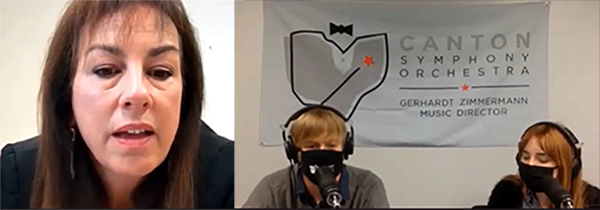
The latest Canton Symphony “Orchestrating Change” Podcast has just been released today. Episode 4, “Navigating the Unknown,” features Michelle Charles, who discusses her career path, and how she has navigated unexpected developments as the Orchestra’s Executive Director. What does an orchestral organization do when faced with events like COVID-19, racial injustice and the #MeToo movement? What is the responsibility of the orchestra and how can the orchestra push to orchestrate change to create a more diverse and inclusive future?” Watch here.
ONLINE TODAY:
Cleveland Chamber Music Society debuts the latest Front Row National program from the Chamber Music Society of Lincoln Center. Available on-demand through February 2, the program features clarinetist David Shifrin in Mozart’s Clarinet Quintet, Bassi’s Concert Fantasia on Verdi’s Rigoletto & Duke Ellington’s Clarinet Lament. Watch for free here.
No Exit New Music Ensemble debuts its January concert tonight, a pre-recorded program of works by Jeremy Rapaport-Stein, Inga Chinilina, Tyler Adamthwaite, Iannis Xenakis, and Giancinto Scelsi. Percussionist Luke Rinderknecht added a personal note to his social media post about the concert: “It’s my birthday! But also a streaming concert at 7pm in which I will tune some radio dials, tap some books, and clink a few glasses for you. Join me?”
And streaming from Oberin, actor-comedian Ed Helms and Punch Brothers guitarist Chris Eldridge engage in Red Herring Conversations, “an opportunity to ruminate about their Oberlin days, reflect upon their influential mentors, and share plans for Eldridge’s first semester as visiting associate professor of contemporary American acoustic music.” Click here at 7:30 pm to watch the conversation on Oberin Stage Left (available later on-demand.)
TODAY’S ALMANAC:
It’s interesting that two British composers who have achieved cult status rather than wide acceptance were both born on January 29 — Frederick Delius in Bradford, Yorkshire in 1862, and Havergal Brian in Dresden, Staffordshire in 1876.
Delius’ music was championed by conductor Sir Thomas Beecham, and one click will take you to an 8-1/2 hour compendium of his complete orchestral and choral music led by Beecham.
Brian, mostly self-taught and largely supported by a wealthy businessman, wrote 32 symphonies, including the mammoth “Gothic” Symphony No. 1, which Oscar Wilde might have foreseen in his bon not, “Nothing succeeds like excess.” Brian’s allies on the podium were Sir Adrian Boult, who was persuaded to conduct his 8th Symphony in 1954, and Leopold Stokowski, who led the 28th Symphony in a BBC broadcast in 1973 when both composer and conductor were 91.
Watch An Introduction to Havergal Brian’s symphonies and orchestral music by Malcolm MacDonald here, and follow the score along with a nearly two-hour-long performance of the “Gothic Symphony” by the Czecho-Slovak Radio Symphony Orchestra.
Mark the birth on this date in 1924 of Italian composer Luigi Nono, with a performance of his Il canto sospeso, commemorating the victims of fascism. He wrote the work at the age of 32, a piece that first brought him to international prominence.
And celebrate the natal day in 1971 of German composer and conductor Matthias Pintscher, who became director of the Ensemble InterContemporain in 2013. An occasional guest conductor with The Cleveland Orchestra, Pintscher’s Chute d’Étoiles received its premiere by the ensemble at the Lucerne Festival in August of 2012 under Franz Welser-Möst with trumpet soloists Michael Sachs and Jack Sutte. Had it not been for COVID-19, Pintscher would have conducted the premiere of Oded Zahavi’s Piccolo Concerto with Mary Kay Fink at Severance Hall last April.
As a consolation prize, here’s a performance of Pintscher’s Cello Concerto with Alisa Weilerstein and the Gürzenich-Orchester Köln led by François-Xavier Roth, recorded on October 1, 2019, in the Cologne Philharmonie.
by Daniel Hathaway

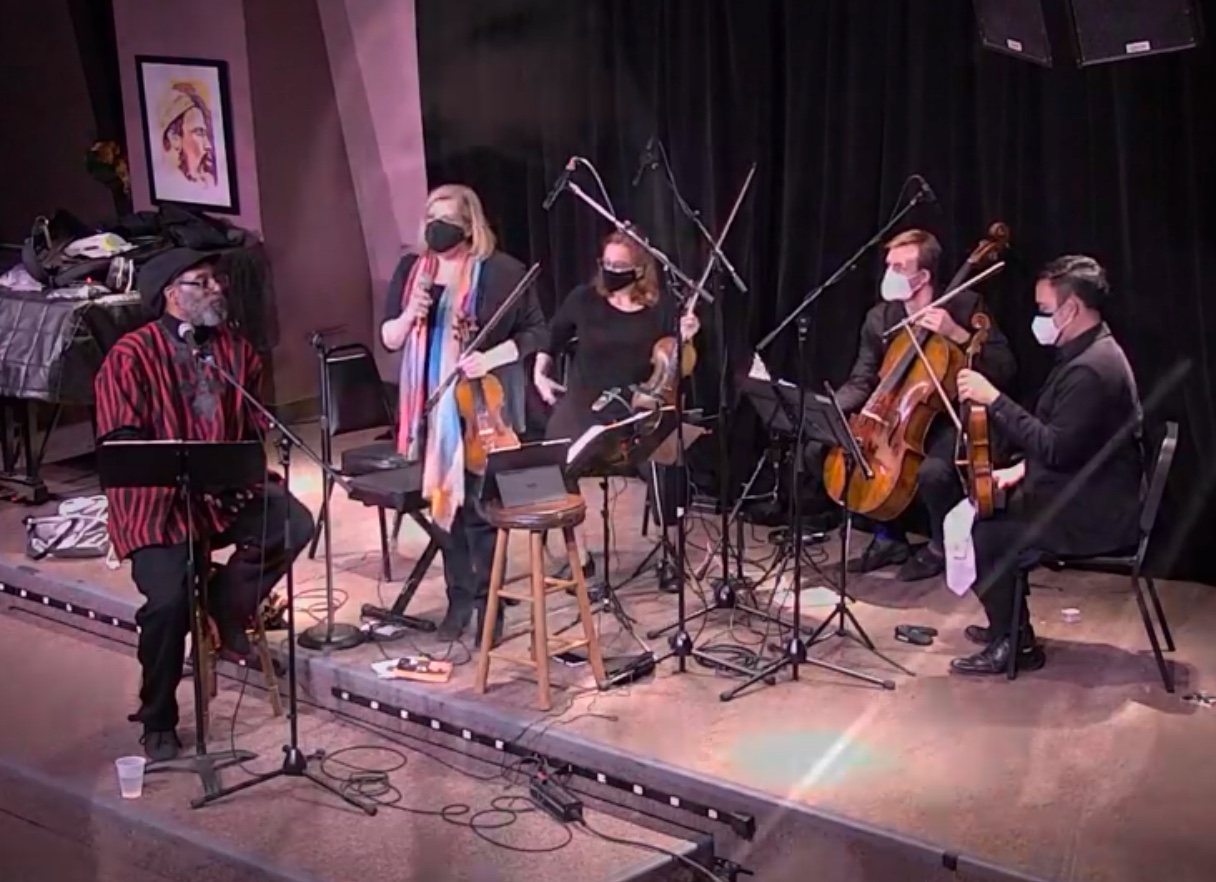
A refreshing reminder of both the unique powers and deeper kinships of music and poetry, the performance of Collage on October 14 filled the Auditorium of Pilgrim Church with sounds both tranquil and mighty. In an era when rhyming rhythmic recitation over instrumental sound hardly constitutes a new idea — hip-hop, after all, is the ascendant popular genre of the present century — Okantah and the Cavani have engineered something unique, brilliant, and vital. [Read more…]