


by Mike Telin
 Many times in life an event sparks the beginnings of an idea. For Groupmuse founder Sam Bodkin, that event was his first hearing of Beethoven’s Grosse Fuge, Opus 133 in December of 2008. “I had never seriously listened to classical music before, and the piece shattered all of my preconceptions about what the genre was. It opened up an entirely new universe that had existed beside my own for so long but that I had never accessed, despite the fact that both my parents have always been classical music lovers.”
Once he got hooked on classical music, Bodkin fell in with a group of musicians studying at the New England Conservatory who would regularly put on house concerts. “Obviously this type of event has been happening for as long as there have been houses,” he said, “but it is such a departure from how most people experience classical music.
“For me, and for so many people, music isn’t just about the sound — it’s about the social scene that goes along with it. Anyone can have a string quartet perform in their home because you don’t need amplification, all you need are four chairs. Push the coffee table aside and you can have great masterpieces performed in just about any apartment in any city. [Read more…]
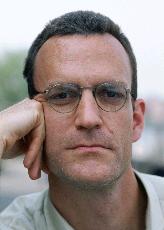 50-foot-long string instruments; traditional music from the Republic of Kyrgyz, Ireland’s “Wild West,” and the Balkans; dialogues between deep flamenco song and Iranian classical music; Egyptian classical music of the golden age; an a cappella sound track to a silent film about Joan of Arc; two prominent string quartets, an organ recital, and a multifaceted violinist — that list gives just a quick rundown on the variety of concerts the Cleveland Museum of Art has planned for its 2015-2016 Performing Arts Series, both in Gartner Auditorium at the museum and at its near-West Side gallery, Transformer Station.
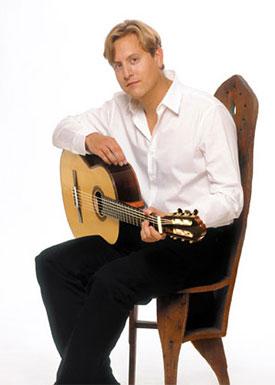 Since its founding in 2010, BlueWater Chamber Orchestra has quickly immersed itself into the cultural fabric of the community. The orchestra’s neighborhood-based programs bring classical music directly to listeners’ doors. One such program is BWCO’s residency at St. Ignatius High School — a partnership which unites students with professional musicians.
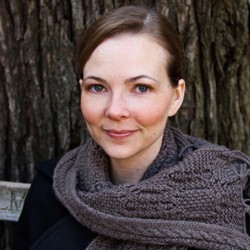 Last Friday morning, Canadian composer Tawnie Olson of the Hartt School of Music faculty in West Hartford, Connecticut — along with her four colleagues in the 2015 Iron Composer Competition at Baldwin Wallace Conservatory — accepted the challenge of writing an “instant” composition for recorders, celesta, and an overturned grand piano, to include this year’s “secret ingredient” of a board game. After five hours of creation and a brief rehearsal, Olson’s piece, called Subbeteo after the 1947 tabletop soccer game invented by Peter Adolph and published by Borras Plana SA, was declared the first prize winner during an evening concert in Gamble Auditorium.
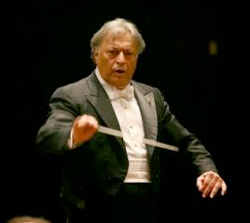 The Cleveland Orchestra announced today that the Israel Philharmonic, led by its music director, Zubin Mehta, will perform in Severance Hall on Monday, November 16 at 7:30 pm as part of the
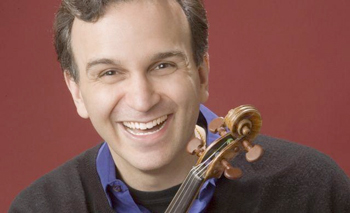 The final classical music concert by The Cleveland Orchestra for the 2015 Blossom Music Festival season on August 30 was a winner. Veteran Dutch conductor Edo de Waart made his first appearance leading the orchestra since 1991, and violin virtuoso Gil Shaham was a welcome visitor in Max Bruch’s Violin Concerto No. 1 in G minor, op. 26. Gustav Mahler’s Symphony No. 1 in D major occupied the second half of the program. These two landmarks of musical romanticism made for a satisfying — and not too long — late summer Sunday evening.
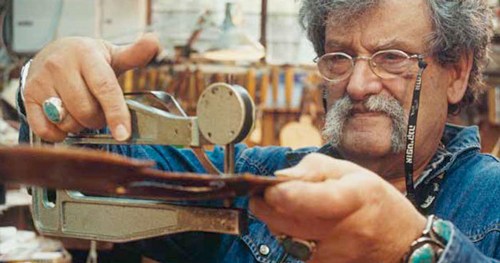 What may be the largest group of Cleveland cultural institutions ever to circle their wagons around a single project will come into play this fall when Case Western Reserve University, the Cleveland Institute of Music, The Cleveland Orchestra, Facing History and Ourselves, Ideastream, the Jewish Federation of Cleveland, and the Maltz Museum of Jewish Heritage join together to present Violins of Hope Cleveland.
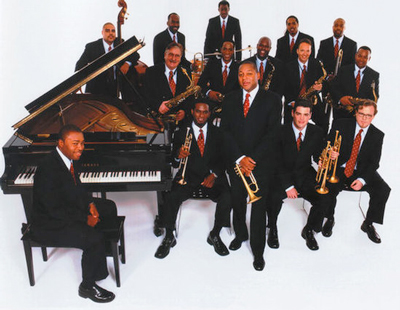 At the relatively young age of 54, Wynton Marsalis has been a prominent star in the jazz world for many decades now. Many facets of his celebrated talent were showcased on Saturday, August 29, when he brought the Jazz at Lincoln Center Orchestra to Blossom both to perform alone, and later to join forces with The Cleveland Orchestra in a performance of his Swing Symphony.
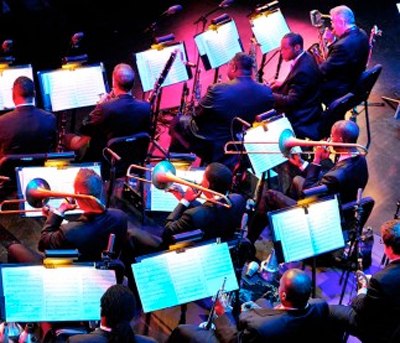 I had no idea how wonderful a jazz orchestra would sound in Severance Hall! With discreet miking and an excellent speaker system, Jazz at Lincoln Center Orchestra with Wynton Marsalis produced tremendously vivid music which the hall supported and enriched just as it does with Mozart and Mahler. Even the visuals seemed to converge: the ornate 1920s Art Deco roulades of the ceiling were perfectly matched by the intricate roulades of the extended solo improvisations.