by Kevin McLaughlin

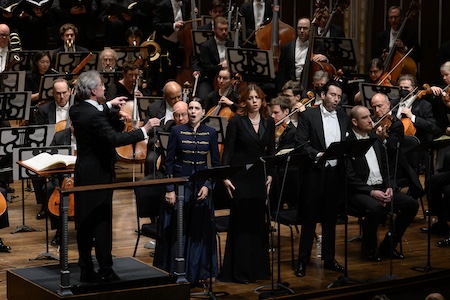
The program, titled Three Eras, One Conversation (although I only counted two) traced a through-line from Mozart to Haydn to Stravinsky, with conductor James Feddeck clarifying the connections across style and time. [Read more…]
by Kevin McLaughlin

The program, titled Three Eras, One Conversation (although I only counted two) traced a through-line from Mozart to Haydn to Stravinsky, with conductor James Feddeck clarifying the connections across style and time. [Read more…]
by Peter Feher
by Peter Feher

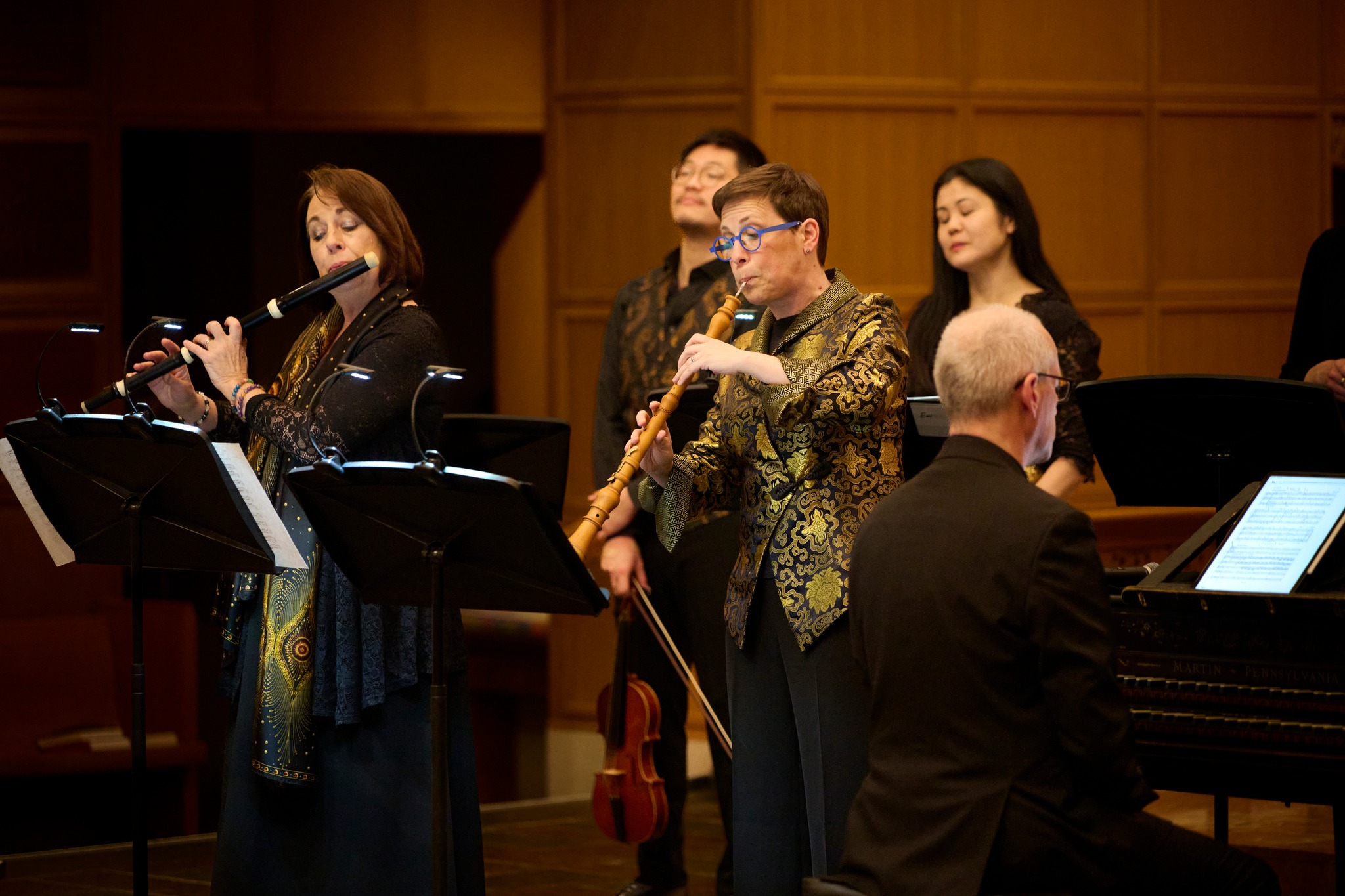
The Aesop Project, the latest community offering from Les Délices and artistic director Debra Nagy, is slightly less ornate but just as inspired. Cleveland’s ever-resourceful period chamber ensemble partnered with local puppeteers and poets for this family-friendly program teaching music and morals.
After touring Northeast Ohio schools earlier in the week, the project received a public performance at the CMA Community Arts Center on Saturday morning, November 22. Children, parents, and committed patrons of early music sat down for the 35-minute show, surrounded by spectacular displays of costumes and props from the Cleveland Museum of Art’s annual Parade the Circle celebration. [Read more…]
by Stephanie Manning
CLEVELAND, Ohio – Thanksgiving weekend concerts by The Cleveland Orchestra often center around a big-ticket soloist or a popular piece.
This year’s program offers both, thanks to star pianist Yuja Wang and Maurice Ravel’s brilliant orchestration of Modest Mussorgsky’s “Pictures at an Exhibition.”
On Friday November 28, the snow cleared just in time for the crowds to arrive at Severance Music Center for the evening event. Led by conductor Petr Popelka, the resulting concert equally displayed the prowess of Orchestra and soloist over the course of three fascinating works.
György Ligeti’s Piano Concerto stood out in contrast to the lush textures and easy-to-follow melodies of the works that surrounded it. Premiered in 1988, its dissonant and avant-garde music might have come from another world. But both Wang and the Orchestra rose to meet the challenge of its devilishly tricky rhythms with an assured confidence.
by Stephanie Manning

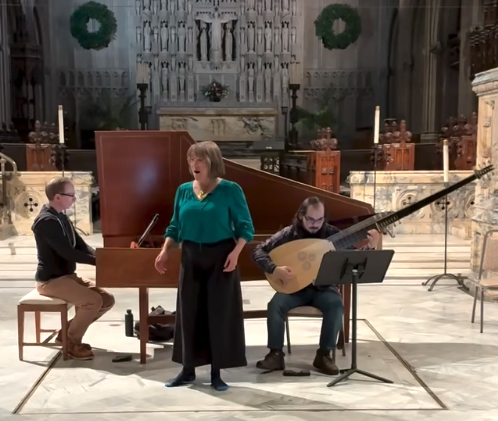
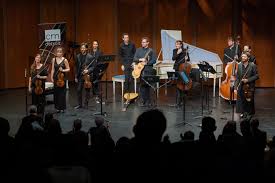
On November 18, the renowned French baroque ensemble visited Tuesday Musical to celebrate the 300th anniversary of Vivaldi’s famous quartet of violin concertos. Soloist Théotime Langlois de Swarte led the spirited group in the Vivaldi-focused program, which also included works by Marco Uccellini and Claudio Monteverdi. [Read more…]
by Daniel Hathaway

The straight-through performance preceded the Beethoven with works by Cleveland composer Margaret Brouwer and a youngish Aaron Copland.
Brouwer’s engaging and popular The Art of Sailing at Dawn evokes memories of growing up on the Great Lakes. A flute conjures sonic images of gulls, and subtle waves support a lovely oboe solo before the wind kicks up and dark clouds assemble. A storm erupts, but soon passes, leading to a quiet ending. [Read more…]
by Stephanie Manning

CLEVELAND, Ohio – Although written by a European composer, Antonín Dvořák’s beloved “New World” Symphony represents a particularly “American” idea of music to many.
An audience favorite ever since its premiere in New York in 1893, this symphony is often performed together with works by American composers — an approach taken by The Cleveland Orchestra the last time they played it here in 2023.
This time around, the program expanded its scope to encompass the North American continent, pairing the Dvořák with a piece by Mexican composer Silvestre Revueltas. Conductor Dalia Stasevska led a memorable performance of both works on Thursday, Nov. 20 at Severance Music Center.
by Daniel Hathaway

CLEVELAND, Ohio – Untenured conductors can rejoice in rave reviews for their work with orchestras, but by far the sincerest of accolades they can receive is simply to be invited back for more.
On Friday, November 21, James Feddeck, who served as the Cleveland Orchestra Youth Orchestra’s music director for four seasons from 2009-2013 (the side gig that came with his job as assistant conductor of The Cleveland Orchestra), made a triumphant return to Severance Music Center to lead the junior ensemble in super-sonorous performances of music by Sergei Prokofiev and César Franck.
by Max Newman
by Max Newman

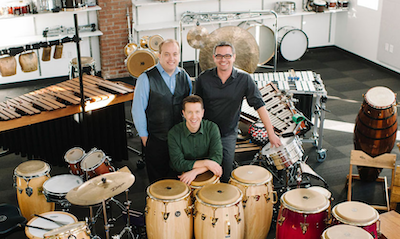
One of these many musical corners is the Birenbaum Performance Space, where on Thursday evening, November 20 in front of an intimately seated crowd, steelpan virtuoso Victor Provost strutted his stuff along with the Oberlin Performance and Improv (PI) Ensembles. The performance blended both genre and experience level in a delightful and holistic exploration of world music.
Considering the eclectic mix of instruments that were used, the spatial awareness of each member of the ensemble was impressive. Instruments seldom overlapped or obscured others. Indeed, there was a collective sound that could only be described as unbrokenly full.
by Kevin McLaughlin

On Friday evening, November 21, in Oberlin’s Finney Chapel, three Danes (Frederik Øland & Rune Tonsgaard Sørensen, violins and Asbjørn Nørgaard, viola) and a Norwegian (Fredrik Schøyen Sjölin, cello) using, in their words, “four simple instruments made of wood” brought ease and gravity to a program that moved from Stravinsky and Jonny Greenwood to late Beethoven and to the folk traditions of their northern homes.
Their spoken introductions were casual in the best way: well-crafted, low-key, and quietly funny. In introducing the first half, Sørensen introduced Stravinsky’s Three Pieces and Jonny Greenwood’s Suite from There Will Be Blood, followed by the Beethoven, as if that were the most natural sequence in the world.
by Peter Feher
by Peter Feher

In truth, it’s tradition for this great oratorio — which embraces the New Testament theme of Jesus as savior — to arrive ahead of schedule. Handel intended the work to be presented each year during Lent, when theaters were otherwise closed and only entertainment of the most ennobling character was allowed. But in the centuries following its 1742 premiere, Messiah crept up the concert calendar to become a Christmas favorite.
Never mind that the famous “Hallelujah” Chorus comes from Part 2 of the oratorio, which recounts Christ’s death and resurrection. Part 1 includes the Nativity, and it was to this opening section that the Akron Symphony and music director Christopher Wilkins devoted themselves on Saturday, November 15.