

by Jarrett Hoffman
 It’s not an easy time for opera, to state the obvious — any new production is an achievement in itself. Immense creativity is required to prevent the spread of COVID-19, and as a result, things are bound to look and feel different from the norm.
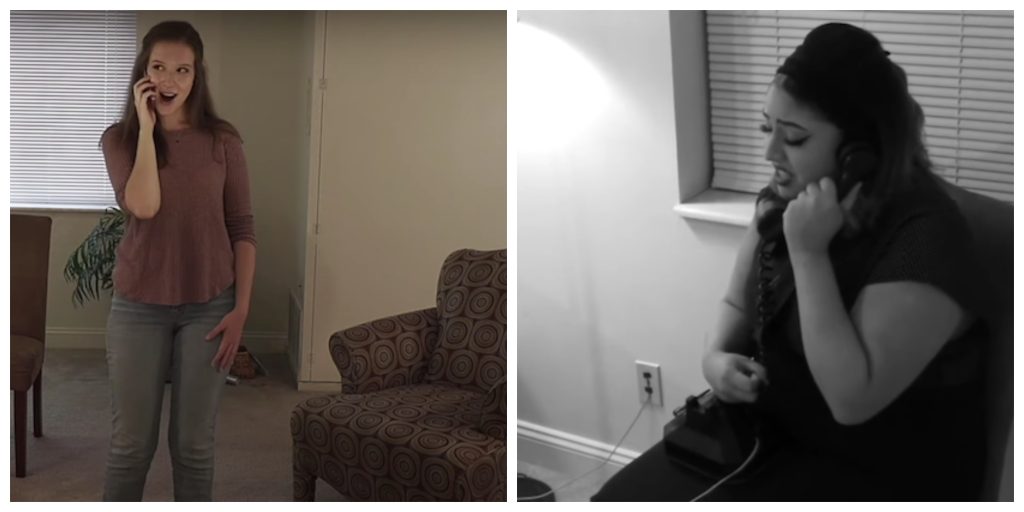
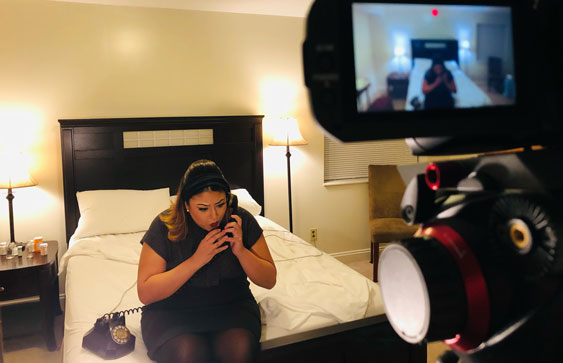
That was the case with Oberlin Opera Theater’s pre-recorded double-bill of Gian Carlo Menotti’s comedy The Telephone and Francis Poulenc’s tragedy La voix humaine, which brought together impressive performances with sometimes inventive, sometimes puzzling decisions from director Jason Aaron Goldberg. The production, which premiered on November 6 on the Oberlin Stage Left series, remains available to watch through November 13.
 Complicated relationships between children and their parents have often served as inspiration for opera. Most people know the disaster that awaits Humperdinck’s Hansel and Gretel after they misbehave and their mother sends them to the haunted forest to look for strawberries. In Ravel’s L’enfant et les sortilèges, after being scolded by his mother, a young boy destroys everything in the room — later the objects come to life and show him the error of his ways.
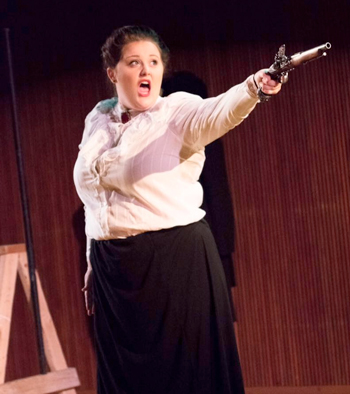
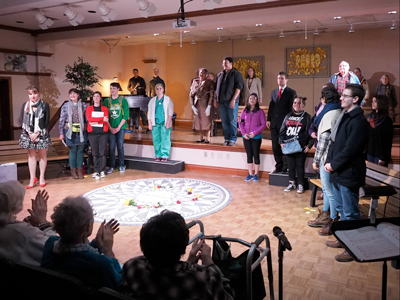 Opera in a dance club? Why not? Opera can be intimidating and ridiculous, with its gilded houses, extravagant length, fantastic plots, and the bewildering phantasmagoria that generally appears onstage. There’s a reason why it’s parodied so frequently. So it was refreshing to see digestible, one-act operas about everyday people presented by Oberlin Opera Theater in the basement Dionysus Disco, better known to the sweaty college revelers who are its normal customers as the ‘Sco.