

by Daniel Hathaway
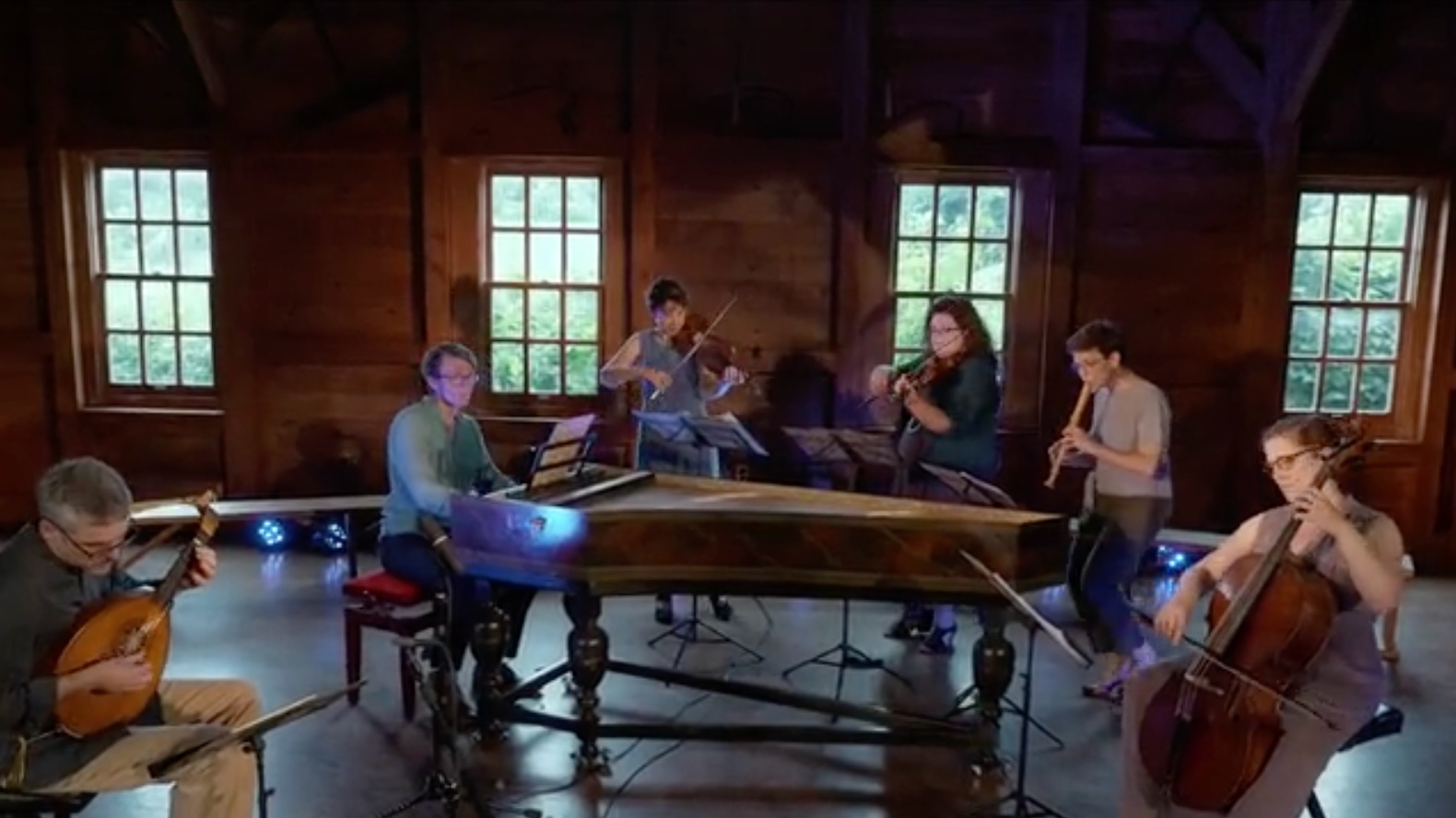 Just in time for Rabbie Burns Day (January 25), Les Délices will release its latest concert series episode, “The Highland Lassie,” for on-demand viewing on Vimeo beginning on Thursday, January 20.
Robert Burns (1759-1796), Scotland’s national bard, played a major role in the preservation of Scottish traditional music, joining a group of collectors who were mainly interested in capturing the texts of ballads passed down orally and thus subject to subconscious or intentional changes as they moved from host to host — not unlike viruses, as we now know all too well.
That process created the families of related songs most famously codified in five volumes published from 1882-1898 by Harvard professor Francis James Child. On this program, one of the best-known families provides soprano Elena Mullins with the material for a sensitive rendition of Barbara Allen. [Read more…]
 There’s something so engaging about watching Handel’s Messiah performed live — especially in the capable hands of Apollo’s Fire and Apollo’s Singers. The movement of the instrumentalists, the stage presence of the singers, and the enthusiastic response from the audience all elevate the experience of listening to this familiar music. On the evening of December 8 at Federated Church in Chagrin Falls, guest conductor Nic McGegan led the ensemble in a breathtaking performance of one of Handel’s cornerstone works.
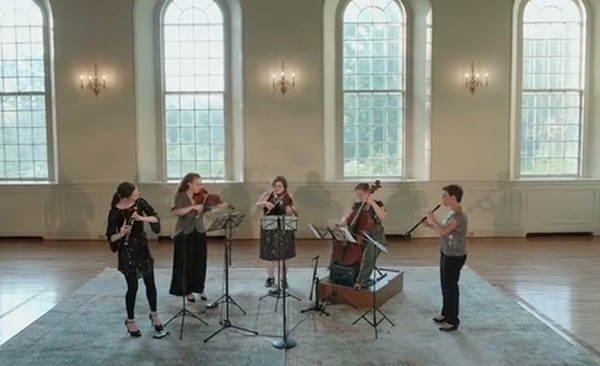 Parallel revolutions in France and Haiti have inspired the second episode of this season’s online concert series from Les Délices. “Winds of Change,” which went live on November 18 and is available both on subscription and as a single performance, includes late 18th-century music by Joseph Bologne (Chevalier de Saint-Georges), Karl Bochsa, and Luigi Boccherini, and the premiere of a commissioned piece, Haitian-born composer Sydney Guillaume’s A Journey to Freedom.
 If you’re intrigued by the idea of contemporary composers writing music for historical instruments, Les Délices says that their latest program is for you.
 In Greek mythology the nine Muses were the source of knowledge and inspiration for poets, musicians, and philosophers. “They inspired everybody,” bassoonist Catalina Guevara Víquez Klein, said during a telephone interview. “That’s the reason Sor Juana Inés de la Cruz is called the 10th Muse, because she too inspired everybody.”
 No mythological character has inspired musicians more than Orpheus. Legend has it that his music was so powerful that trees and mountains bowed in his presence — his song so beautiful that he convinced the ruler of the underworld to allow him to bring his love Eurydice back from the underworld.
  Last year, Cleveland’s period ensemble Les Délices dared to be different with their contribution to the world of online concerts: SalonEra. Billed as a “variety show for early music,” the web series’ unique format made it a hit among audience members, director Debra Nagy said in a recent interview.
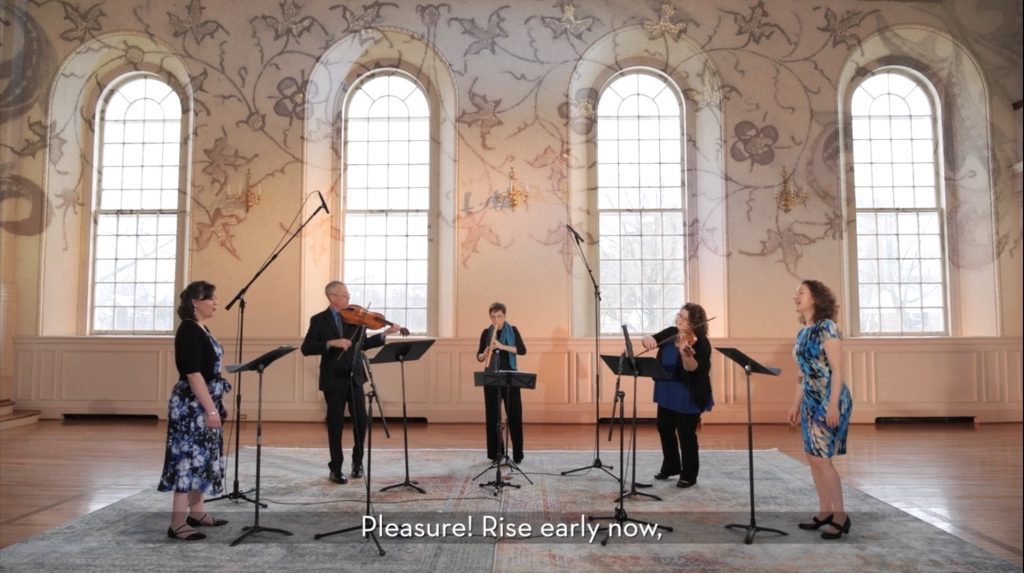 Les Délices has once again joined forces with Boston’s Blue Heron, this time to produce the impressive video “Machaut’s Lai of the Fountain,” which debuted on Vimeo on April 8, and remains available on-demand until April 19.
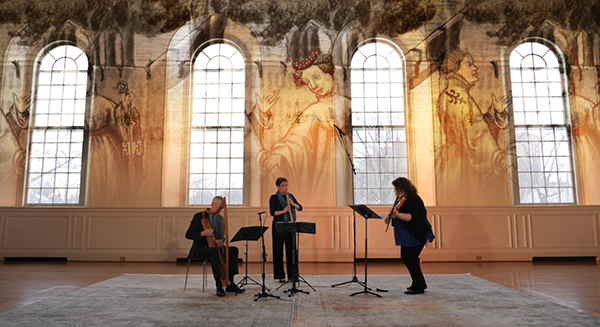 Now that the cold and dreary winter is behind us, our thoughts turn to spring. And with trees beginning to blossom and flowers blooming we can begin to think about cultivating the garden. On April 8 at 7:30 pm,
 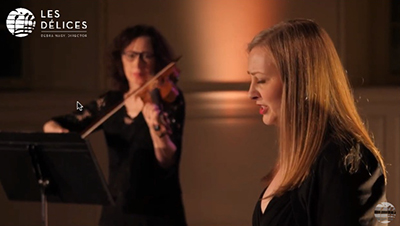 Once again Les Délices scores a winner with the latest installment of the French Baroque ensemble’s online subscription series. Debuting on Thursday, March 18 at 7:30 pm, “Women of Genius” takes a historically thoughtful and musically fascinating look into the music of female composers who influenced French musical culture. After its debut, the video will be available on-demand through March 29. Read our preview article