


by Mike Telin
 On Tuesday, May 12, at 7:00 pm in Baldwin Wallace University’s Gamble Auditorium, 25 young pianists representing eight countries will compete for top prizes at the Cleveland International Piano Competition’s Young Artists Competition. Launched by the CIPC in 2003 as a one-day competition for Ohio piano students, the program has been reorganized this year to follow the multi-round format of the Senior version of CIPC. Click here to view the competition’s ten-day schedule.
Why take the Young Artist Competition to this next level? “When I came on board at CIPC and saw the level of playing by the young pianists, it took me by surprise,” CIPC president and chief executive officer Pierre van der Westhuizen said during a telephone conversation. [Read more…]
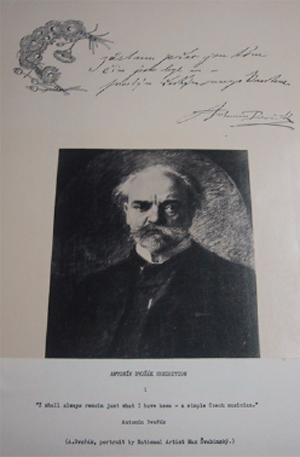 On Thursday, May 14, at 7:30 pm, Franz Welser-Möst returns to Severance Hall to lead The Cleveland Orchestra in three programs that will feature Hindemith’s Concert Music for Strings and Brass, Jörg Widmann’s Violin Concerto with Christian Tetzlaff as soloist, and Dvořák’s Symphony No. 9 (“From the New World”). The program will be repeated on Saturday at 8:00 pm.
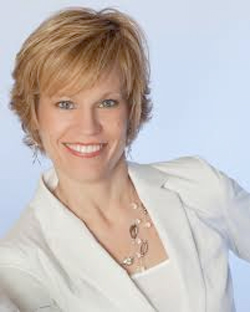 “Choosing a recital program can be so selfish,” pianist Lura Johnson quipped during a recent telephone conversation. “Of course you want to play pieces that you love but you also need to find a way to present them from a point of view is useful and relevant to the audience.” This weekend
 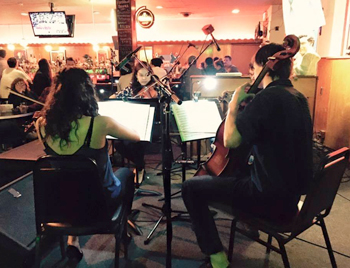 “People have come to know: every third Tuesday of the month, free classical music. And hotdogs! You can always find it,” Ariel Clayton Karas, Director of Classical Revolution Cleveland, said in a recent conversation. Classical Revolution Cleveland (CRC), self-defined as a “loosely bound group of classically-trained musicians who love sharing music with Cleveland in unusual and non-traditional formats,” has deservedly earned the recognition and enthusiasm of the Cleveland community.
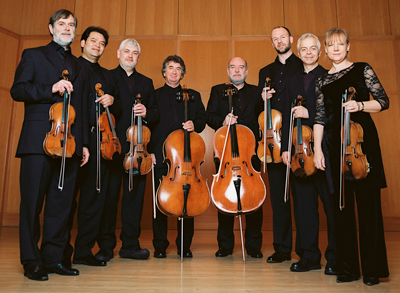 Ever since Haydn established the string quartet as the ensemble de rigueur, chamber music for strings has tended to operate in base four. There are many variants on the quartet (“4 ± n”, as a math teacher might write it), but even when you subtract a violin (Beethoven) or add a viola (Mozart), a cello (Schubert), or a double bass (Dvořák) — or, as in this concert, when you pump it up to a sextet (Brahms) or an octet (Mendelssohn, Shostakovich) — the quartet remains the norm.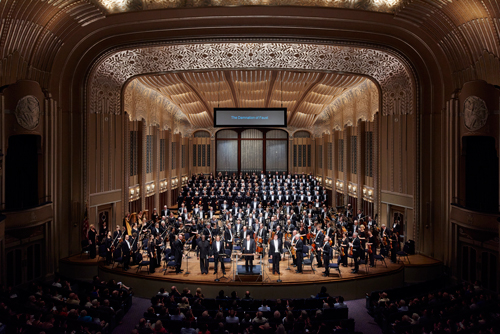
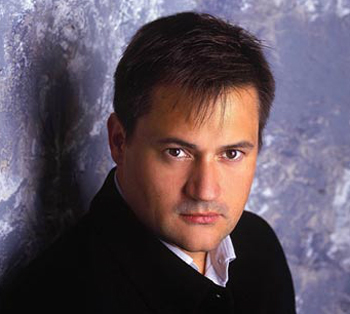 Since launching his career by winning the Metropolitan Opera’s National Council Auditions in 1991, tenor Paul Groves has sung in a dizzying number of operas and logged a long list of concert performances around the world.
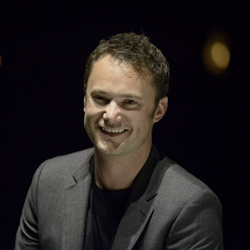 A full evening devoted to the music of Joseph Haydn is sure to be filled with sophisticated musical rhetoric, and at least a good handful of surprises. Last Thursday evening at Severance Hall, visiting British conductor Matthew Halls and The Cleveland Orchestra dug deeply into the fabric of an overture and a symphony, and with the help of the fastidiously exciting pianist Marc-André Hamelin, into one of the Austrian master’s piano concertos. Though the fourth work was obviously not by Haydn, its performance by duo hornists Richard King and Jesse McCormick would have deeply impressed whoever actually wrote it.