by Daniel Hathaway

by Daniel Hathaway

by Daniel Hathaway

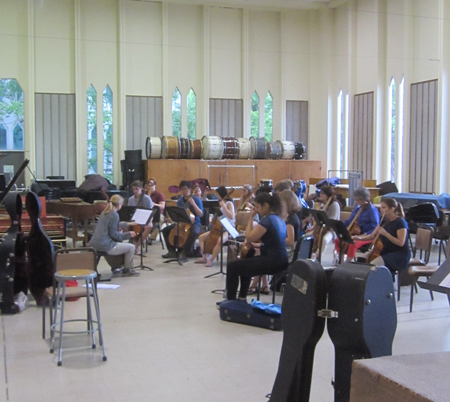
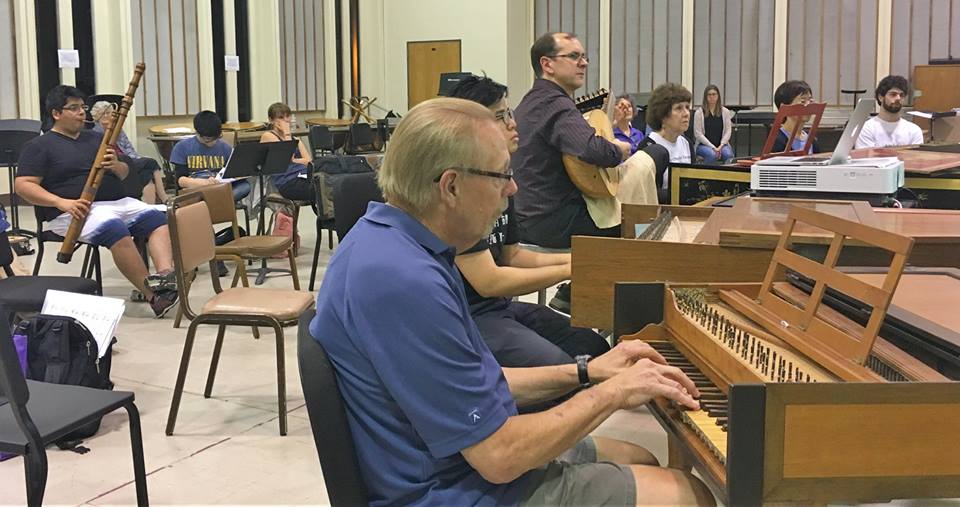
The last day of Oberlin’s Baroque Performance Institute was devoted almost entirely to preparations for the final participant concert, which would begin at 1:30 pm in Warner Concert Hall with performances by the Student Orchestra and Choir and the Intermediate and Beginner Dance Classes.
Before that, most of the 16 ensembles who would play on the second part of the event in Kulas Hall got a 15-minute dress rehearsal — really more of a sound check — onstage. That necessitated a number of furniture moves by the agreeable and accommodating stage crew, and not in the same order as the concert itself. [Read more…]
by Daniel Hathaway

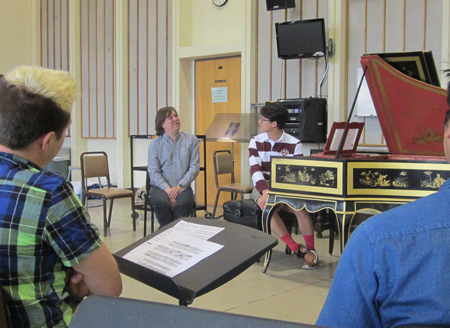
Performance No. 1 was a C-major prelude from the Wilhelm Friedemann Bach Notebook — a set of pieces Johann Sebastian Bach expressly selected for the tutelage of his eldest son beginning in 1720. Edwards began by asking what type of piece it was. Answer: a figuration prelude, in style brisé, which is meant to imitate the lute. In fact, Edwards said, the harpsichord is really a giant lute with keys. Advice to student: overhold notes (including octaves in the left hand), let the strings vibrate, and think of articulation in terms of wetness vs. dryness. [Read more…]
by Daniel Hathaway

He also noted — in a discussion of playing difficult trills — that he had stopped admiring effort over results (he related that to grant writing), and had less than complimentary things to say about the traverso, though he suggested trilling like a flute would. [Read more…]
by Daniel Hathaway

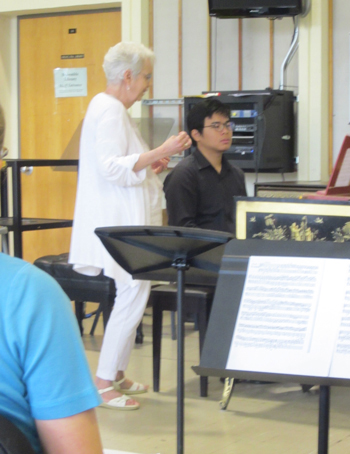
On Wednesday, the harpsichord master classes split into two concurrent sessions, one led by Lisa Crawford, the other (mine) by Mark Edwards. After hearing the C-minor Prelude from The Well-Tempered Clavier Book One (advice: use wrist rotation to mirror the texture of the music; differentiate between speaking and singing) and Antoine Forqueray’s La Montigni (originally a viol piece, so prioritize how to play the notes in the bass line; to avoid “claw hand,” let the hands free fall onto the keyboard from overhead height), I was up next with a rather bizarre piece by an English virginalist. [Read more…]
by Daniel Hathaway

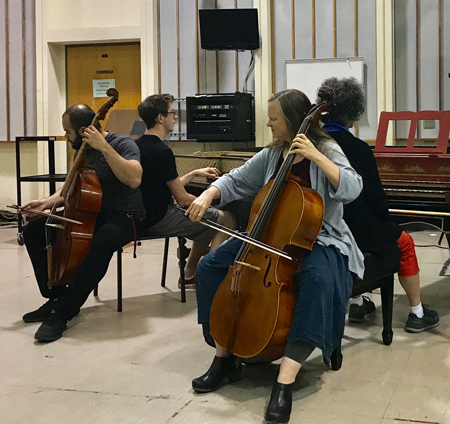
That’s an instrument that inspires ardent devotion among experienced historical string players and great curiosity in neophytes — some people who have never picked up a bow are giving the gamba a try this week. We’ll hear more from both types of gambists as the week continues.
Oberlin graduate and BPI alumnus Skip Sempé joined the faculty for week two, making his first official appearance in Tuesday morning’s harpsichord class. [Read more…]
by Daniel Hathaway

by Daniel Hathaway

The second week coincides with Oberlin’s Summer Trumpet and Percussion Institutes, so there are new groups on campus vying for rooms in an already tight situation because of construction. Harpsichordists showed up for their master class to watch a group of percussionists discussing the finer points of tambourines. Trumpeters are taking over the Methodist Church next door.
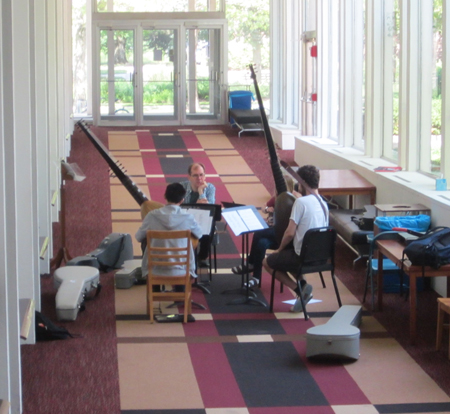
Since rooms are at a premium, you can encounter groups using every available space — like the gaggle of theorbos meeting with Lucas Harris in the lobby of Warner Concert Hall (above). [Read more…]
by Daniel Hathaway

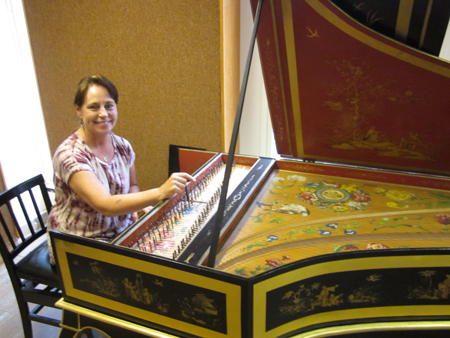
Few other institutions could provide multiple practice instruments for that many keyboardists. BPI students have access to 18 harpsichords of various configurations, and Stewart tunes them all every weekday beginning between 6:00 and 6:30 am. “In ten days, that comes out to 180 tunings, plus another 20 for concerts and faculty rehearsals,” she told me, taking a break from touching up one of Lisa Goode Crawford’s personal instruments. [Read more…]
by Daniel Hathaway

The new work will be performed in conjunction with a congress of the World Union of Jesuit Alumni at John Carroll University — held every four years but meeting in North America for the first time since its founding in 1956. [Read more…]