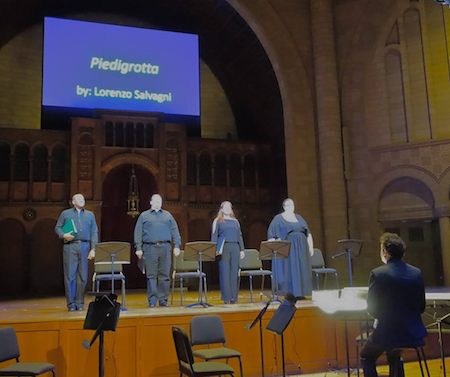
In an age when the word “opera,” to most, means the historical canon — that body of works that recirculate through the world’s houses each year — it bears repeating as often as possible that new efforts in the genre have flourished of late. Thanks to the combined efforts of the Cleveland Opera Theater, the Maltz Performing Arts Center at the Temple-Tifereth Israel, the Cleveland Composers’ Guild, and the Baldwin Wallace and Oberlin Conservatories of Music, Northeast Ohio audiences recently had a chance to hear scenes from three new works-in-progress by area composers and librettists.
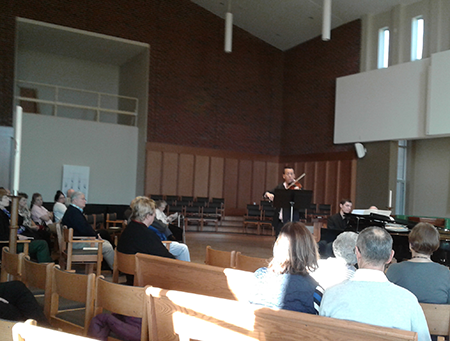
Since violinist Andrew Sords last played a recital at Lorain’s First Lutheran Church early in 2014, the building burned to the ground at the hands of an arsonist. Sords’ engaging recital last Sunday, January 28 took place in the nearly-complete sanctuary of a handsome new building complex, giving patrons of the FIRST•music series a preview of what they can look forward to in the future — especially when the new Paul Fritts organ arrives to fill the gap in the wall in the photo above. [Read more…]
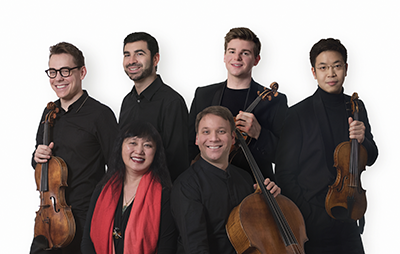
During Tuesday Musical’s pre-concert chat at E.J. Thomas Hall on January 23, one of the members of the Chamber Music Society of Lincoln Center referred to the touring ensemble who were appearing as part of the Clara I. Knight Young Artists Series as “Wu Han and the boys.” Afterwards, the seasoned chamber music pianist teamed up with her younger colleagues — pianist Michael Brown, violinists Chad Hoopes and Paul Huang, violist Matthew Lipman, and cellist Dmitri Atapine — for fresh, riveting performances of works by Johannes Brahms and Antonín Dvořák that melded experience with youthful exuberance. [Read more…]
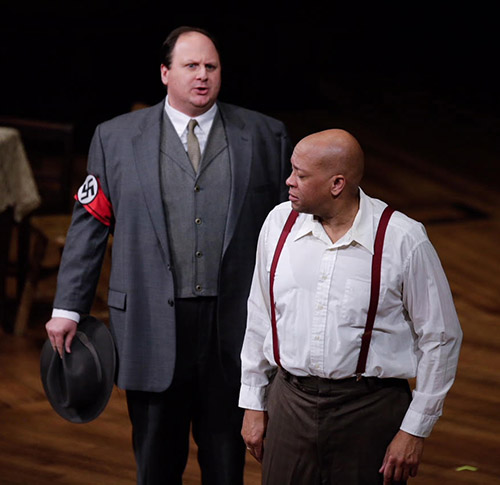
The question has long troubled poets, playwrights, musicians, and visual artists: how best to activate collective memory through art, especially when the events in question constitute the darkest hour in recorded history? As part of their New Opera Works {NOW} Festival, Cleveland Opera Theater and its collaborating partners recently ventured an answer in the form of a new opera: Verlorene Heimat (“Lost Homeland”) by composer Dawn Sonntag.
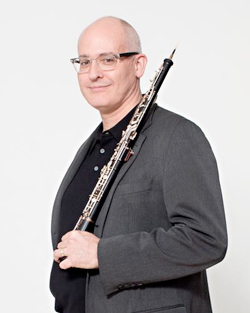
From its inception, Heights Arts Close Encounters Chamber Music series has presented interestingly curated programs in unique spaces. On Sunday, January 21 at the Bop Stop, the series just might have outdone itself with a program titled Rhythms, Rhymes, and the Kitchen Sink. “How many people have ever been to a concert that combines music for English horn, bassoon, and piano with poetry, performed in a jazz club,” English hornist and poet Robert Walters asked the large audience. Needless to say, nobody had. “This may be a first in Western Civilization,” Walters exclaimed. [Read more…]
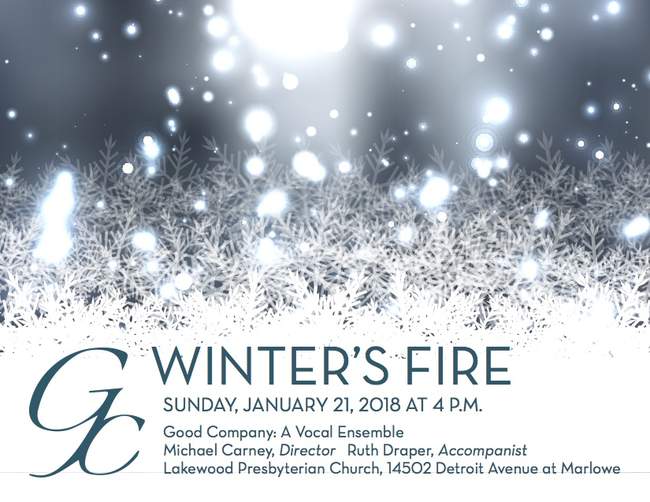
Leave it to Cleveland to produce spring-like weather in mid-January on a day when your chorus is singing a hibernal program about walking on crunchy snow, sitting in front of cozy fires, and driving the cold winter away. Never mind. The splendid repertory Michael Carney chose for Good Company’s “Winter Fire” concert on Sunday afternoon, January 21 at Lakewood Presbyterian Church perfectly evoked the season that wasn’t. [Read more…]
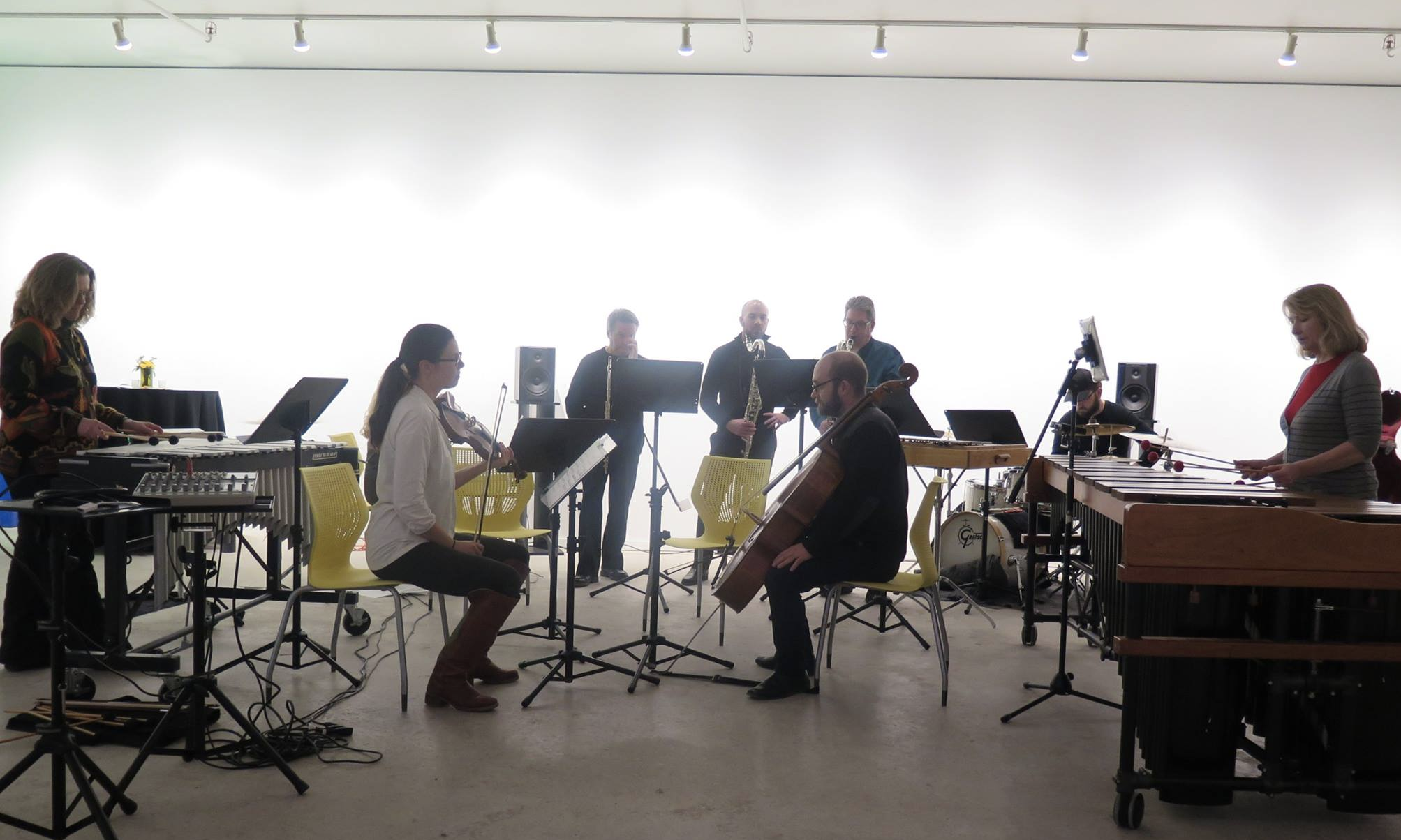
No Exit kicked off the new year with a series of concerts that also marked the contemporary music group’s third collaboration with the excellent St. Paul-based ensemble Zeitgeist. I attended the performance on Sunday, January 14 at SPACES. [Read more…]
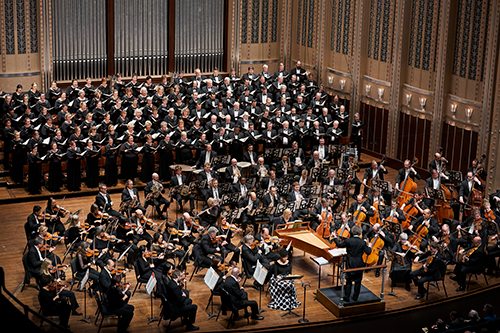
Joseph Haydn’s two great oratorios, The Creation and The Seasons, came along late in his life after the composer had visited London and was impressed by Handel’s large dramatic works for chorus and orchestra. After bravely performing a stripped-down version of The Seasons on Thursday — two of the soloists were ailing — Franz Welser-Möst led The Cleveland Orchestra and Chorus in an enthralling performance of the complete oratorio on Saturday evening. [Read more…]
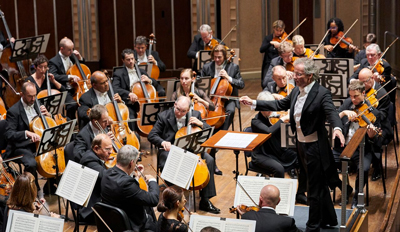
The Cleveland Orchestra has been tweaking the format for its Fridays@7 concerts. They were originally conceived as hour-long, straight-through performances preceded and followed by non-classical genres of music performed in the lobbies in a party ambiance with food and drink. On January 19, the concert — all-Beethoven — was nearly full-length and included an intermission, but as an innovation, it introduced informal conversations between orchestra musicians and Franz Welser-Möst. Severance Hall was packed with a multigenerational audience whose energy helped make the evening a celebration. [Read more…]
In a series of letters around the turn of the 20th century, playwright Anton Chekhov advised colleagues on a key dramatic principle of his: if one directs the audience’s attention toward a loaded gun on the stage in Act I, then the weapon should fire by the end of the play. A performance by Ars Futura last week recalled this rule. [Read more…]