

by Kevin McLaughlin
 On Friday, April 14, a packed LatinUs Theater audience in Cleveland’s Clark-Fulton neighborhood enthusiastically greeted Columbian cellist Santiago Cañón-Valencia. They in turn were treated to an unforgettable evening of music and art in a compelling black box venue.
The concert, titled “Ascenso,” is also the name of Cañón-Valencia’s latest recording — copies of which the cellist graciously signed in the lobby after the performance.
The experience of each of the five musical works was enhanced and enlarged by the projection of paintings onto a wall at the back of the stage. Each picture, rendered by the cellist himself, served as a kind of commentary on, or in some cases, visual representation of the music, done in the performer’s own abstract, mostly black and white style (“I’m not really a painter,” he declared, modestly). Musicians who paint may not be an unheard-of concept — composers Arnold Schoenberg and George Gershwin and cellist Aldo Parisot all painted, as does pianist Stephen Hough — but seeing the artwork on display while the music that inspired it is being performed makes for a special occasion indeed.
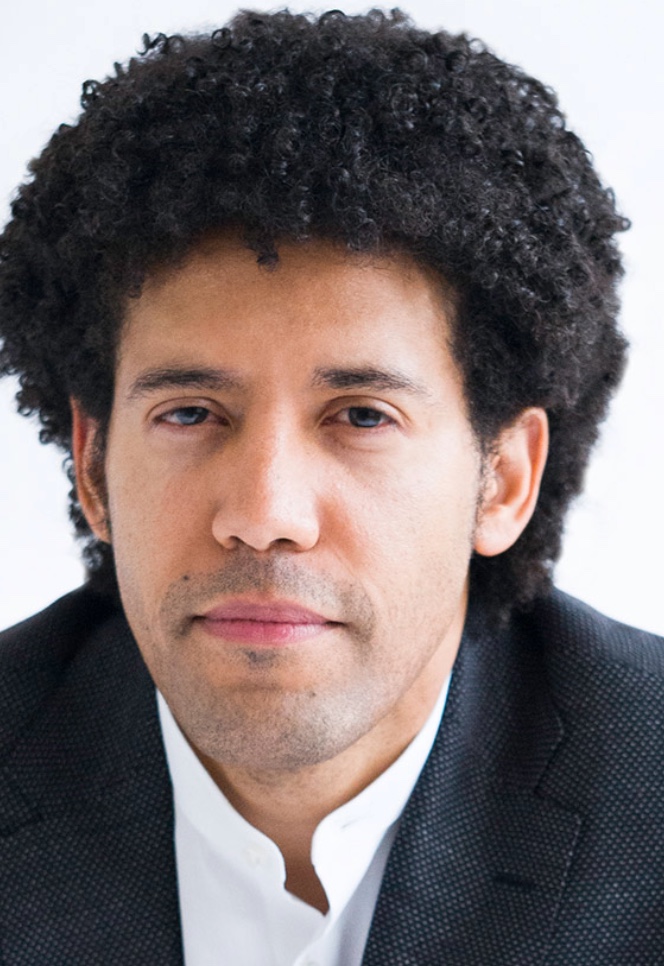


 Clarinetist Anthony McGill brought star power to the Cleveland Chamber Music Society on March 28. In a concert that was all about singing — that, in fact, included two pieces with soprano — McGill stood out as the most prominent voice.
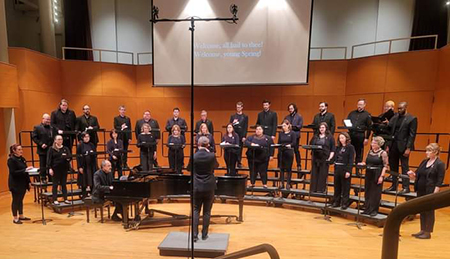 When the Cleveland Composers Guild added the requirement of writing a vocal piece to its collegiate composition contest in 2019 and generated only a single entry — impressive as that piece was — the idea was born for dedicating an entire year to vocal music.
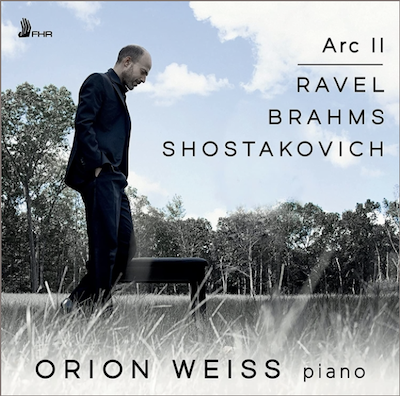 There may be nothing more unifying than humanity’s response to loss. Where words fail to describe feelings as complex as those associated with death and grief, music takes over — and it’s hard to imagine anything ringing more true in that regard than pianist Orion Weiss’ latest album,
  Most clarinetists are no strangers to playing on all the different varieties of their instrument. But using three of them over the course of just one piece? That’s a little more unusual.