by Daniel Hathaway
 Young Matthew Shepard’s iconic suffering and death in Wyoming in October of 1998 have inspired a number of social, political, and artistic initiatives, including Craig Hella Johnson’s “passion oratorio” Considering Matthew Shepard.
Johnson was deeply affected by the murder of the young University of Wyoming student, who was offered a ride from a gay bar by two young men who took him to a remote spot, bound him to a split-rail fence, beat him unmercifully, and left him to die on a freezing night on the prairie.
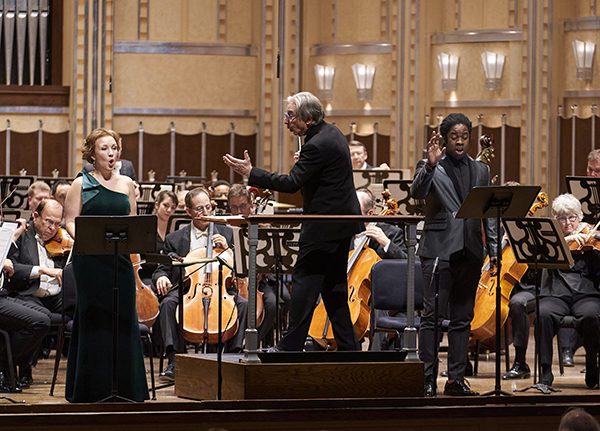
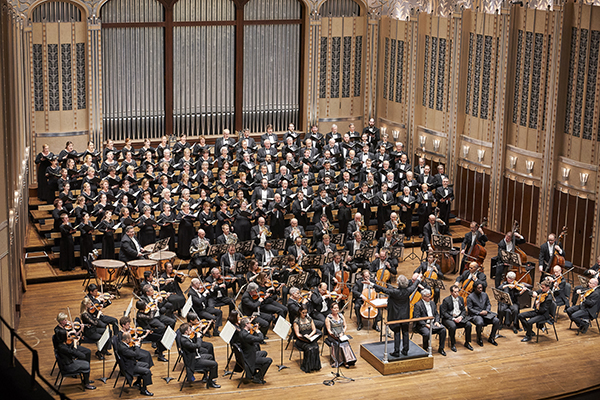
Members of the Cleveland Orchestra joined participants in the new Choral Institute in performing excerpts from the work led by Lisa Wong, the Orchestra’s Director of Choruses, on June 26 at Severance Music Center. Preparing and presenting a one-hour version of Johnson’s nearly two-hour work was the central agenda of the inaugural week-long Summer Choral Institute. Nothing essential to Matthew’s story was lost in the process.
Johann Sebastian Bach’s passion settings with their narration, reflective arias, and congregational hymns were an obvious model for Considering Matthew Shepard. But other influences include Broadway, Country & Western, Blues, Jazz, Appalachian hymnody, and Gospel.

 This article was originally published on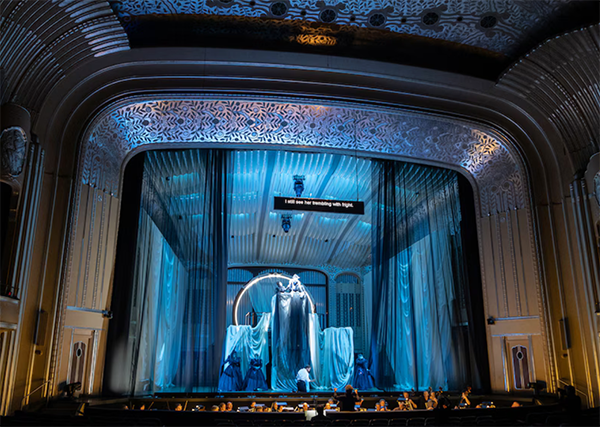
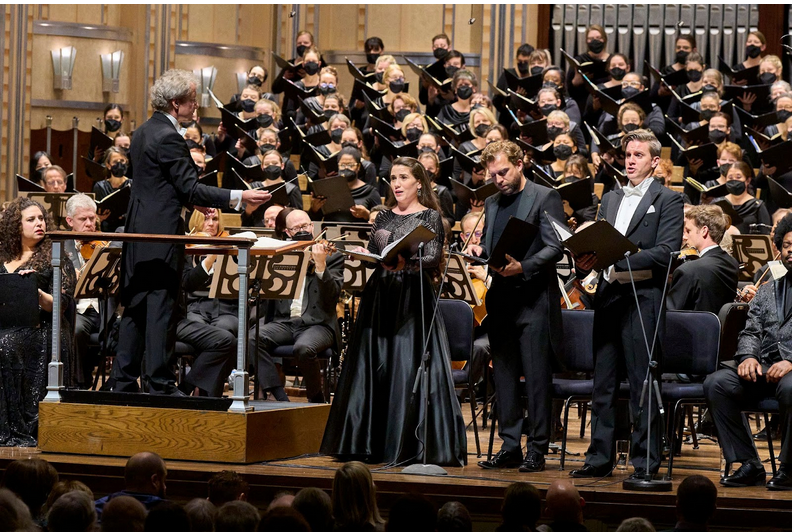 Perhaps Franz Schubert’s Symphony No. 8 is more complete than its “Unfinished” moniker implies. After all, the composer wrote and orchestrated two full movements, creating a kind of standalone half-symphony. But Severance Music Center audiences heard this work in a new way on January 13, when The Cleveland Orchestra and Franz Welser-Möst interlaced Schubert’s two memorable movements with an unexpected partner: Alban Berg’s Three Pieces from Lyric Suite.