by Jarrett Hoffman
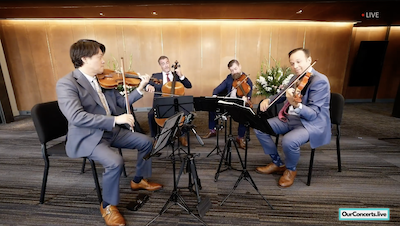 The famously wild Große Fuge seemed to break the internet on Thursday, August 6 during an exhilarating performance by the Miró Quartet, their tenth as part of the live-streamed Orcas Island Chamber Music Festival.


by Jarrett Hoffman
The famously wild Große Fuge seemed to break the internet on Thursday, August 6 during an exhilarating performance by the Miró Quartet, their tenth as part of the live-streamed Orcas Island Chamber Music Festival.
by Mike Telin
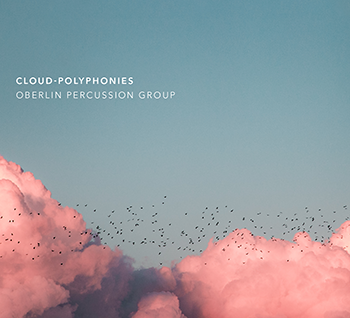 With the vast number of instruments at its disposal — guaranteeing a nearly limitless sound palette — the percussion ensemble might be the most musically versatile of all chamber music groups. Although percussion music has existed since the beginning of time, it was the premiere of Edgar Varèse’s Ionisation in 1933 that thrust the percussion ensemble into contemporary classical music. [Read more…]
by Mike Telin
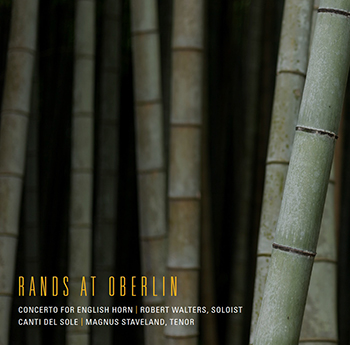 To say that the music of Bernard Rands is tinged with Ravel and Debussy doesn’t tell the whole story. In reality, his music extends beyond that into a post-modern, impressionistic world. On the recently-released CD, Rands at Oberlin, the composer’s engaging musical voice is brought to life in stellar performances by Robert Walters of the Concerto for English Horn and Orchestra (2015) and by tenor Magnus Staveland of the Pulitzer prize-winning Canti del Sole (1983). [Read more…]
by Nicholas Stevens
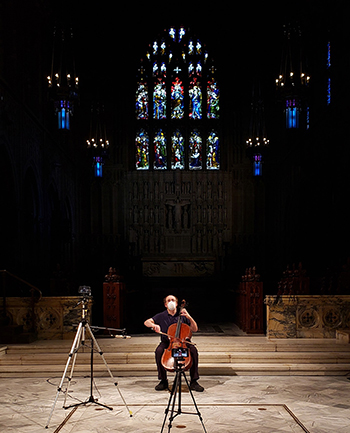 Would it matter if the best-ever performance of Bach’s Suites for solo cello took place in a cinder block closet with no one listening? The question, which one could safely and simply answer “no,” may seem like a dull retread of the classic “if a tree falls…” formula. However, it raises a question of its own: how much can the venue and framing of a performance do to elevate a musical experience?
Can we attribute some of the special glow of a concert to the room, spoken introductions, and circumstances without giving excellent musicianship short shrift? In the case of a live-streamed concert by cellist Mark Kosower this past weekend, this writer’s answer is yes — or ja, in Bach’s German.
by Jarrett Hoffman
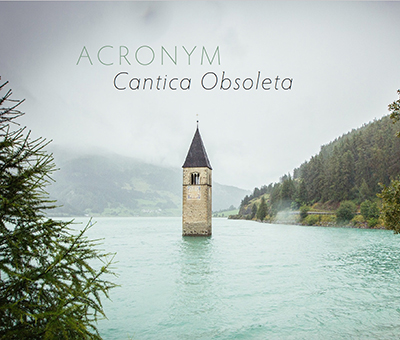 Today, July 24, ACRONYM releases one of the most impressive and enjoyable recordings in recent memory, one that can be appreciated by scholars, aficionados, and plain old music lovers alike.
by Jarrett Hoffman
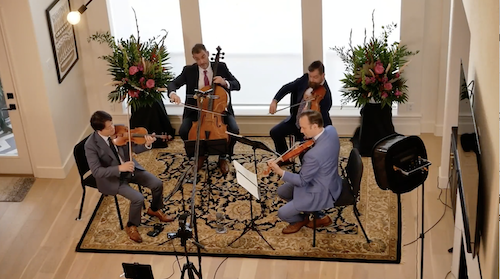 The 24 hours leading up to the opening concert of this year’s Orcas Island Chamber Music Festival were, as artistic director Aloysia Friedmann said during a post-recital Q&A, “harrowing.”
by Mike Telin
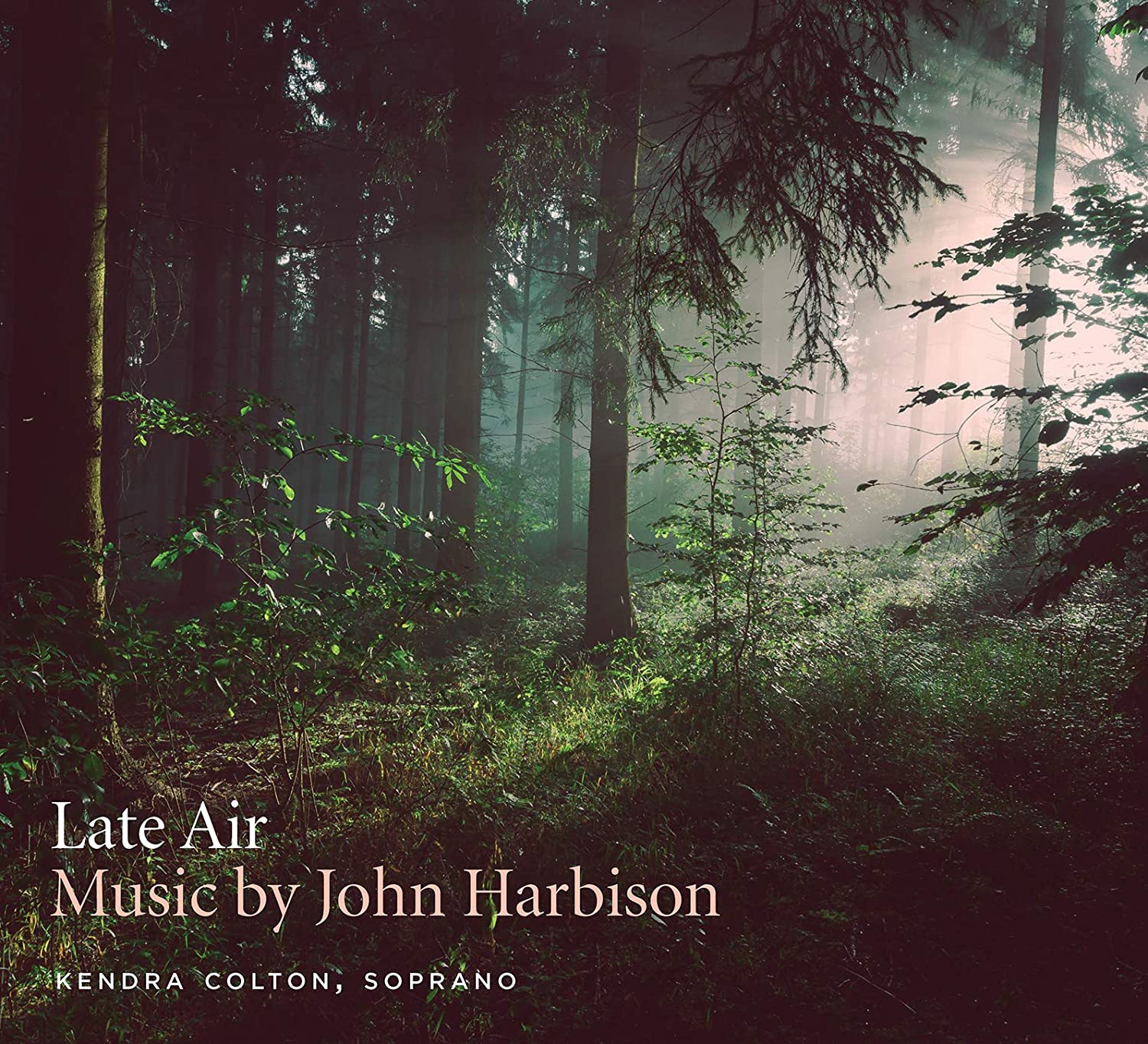 Composer John Harbison has done it all. His numerous awards include a MacArthur Fellowship and a Pulitzer Prize. He has written works for many of America’s leading musical organizations and has served as composer in residence with the Pittsburgh Symphony and the Los Angeles Philharmonic. His catalogue includes three operas, seven symphonies, twelve concerti, a ballet, six string quartets, numerous chamber works, and a large body of sacred music. On her latest CD, Late Air — Music by John Harbison, soprano and Oberlin voice professor Kendra Colton reminds us that the celebrated composer has a special talent for writing art songs — she also proves herself to be a sensitive interpreter of them. [Read more…]
by Jarrett Hoffman
 Occasionally, a performance or recording is so well-crafted that a critic feels compelled to put away their journalistic spectacles and their cool, distant approach and put on a giant foam hand. That was my experience with the Jupiter String Quartet’s new album, Metamorphosis, where the ensemble shows off all the special qualities that make their performances such a thrill to hear.
by Jarrett Hoffman
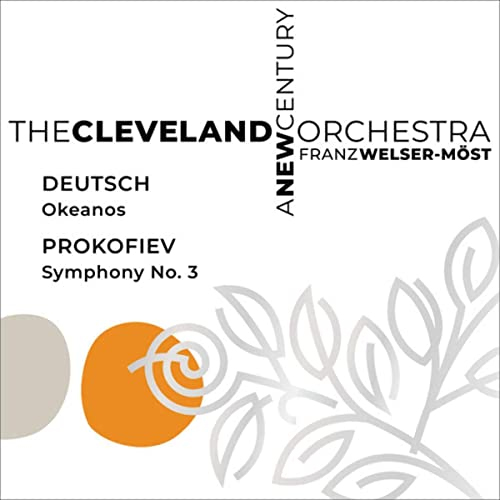 A shared sense of the epic ties together the final two works of A New Century, the three-part live album from Franz Welser-Möst and The Cleveland Orchestra that is also the ensemble’s inaugural release on its own record label.
We begin with the world premiere recording of Okeanos, Bernd Richard Deutsch’s concerto for organ and orchestra, featuring Paul Jacobs as soloist. The title refers not only to the Titan of Greek mythology, but also “to an idea of immense (and sometimes unfathomable) greatness and breadth, which conjures up in my mind the thought of the organ,” as Deutsch writes in his notes. [Read more…]
by Daniel Hathaway
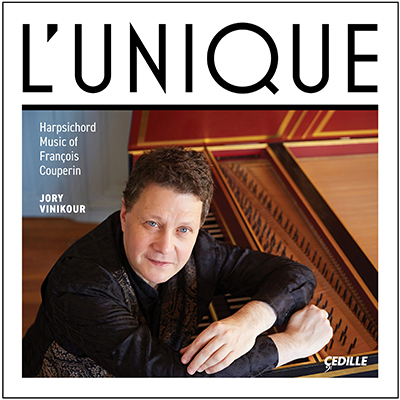 If you haven’t already warmed up to French Baroque clavecin music, Chicago-based keyboardist Jory Vinikour’s L’Unique: Harpsichord Music of François Couperin should make a strong impression on your musical tastes. The most prominent member of a musical dynasty second only to the German Bachs, François Couperin left a large treasure trove of keyboard works, 234 in all, arranged in 24 suites or Ordres. [Read more…]