


by Kevin McLaughlin
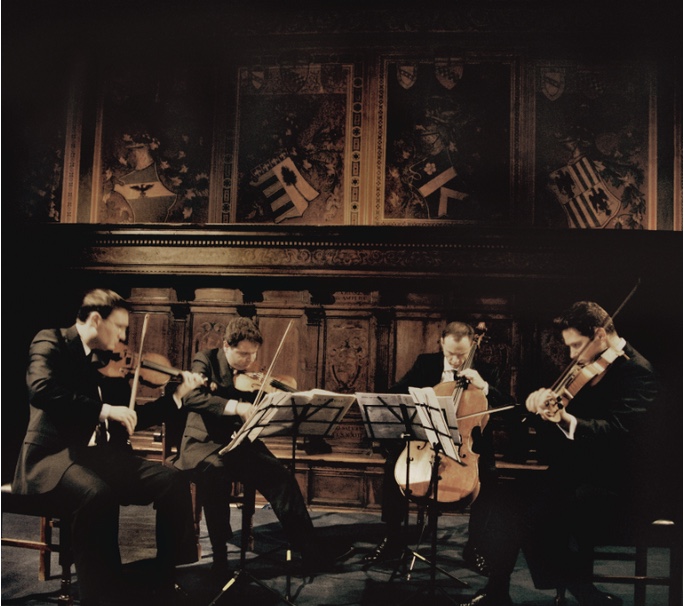 A great string quartet, it is said, plays as one: four players and sixteen strings channeled as a single instrument, even as each player worth his or her own salt retains something distinctive. Time and rehearsals, with luck and hard work, will result in a convincingly melded whole.
The Jerusalem Quartet plays with a remarkably blended, superbly unified voice. On Tuesday evening, May 2 at Disciples Christian Church, unity was in evidence in a splendid program of Prokofiev, Shostakovich, and Bartók — another gem in the Cleveland Chamber Music Society’s series.
Before composing his Second String Quartet in F major in 1941, Prokofiev felt some pressure by local arts officials to incorporate folk melodies — not his usual practice — drawn from the northern Caucasus region, a remote corner to which the composer had recently been relocated. Whether Prokofiev was being subversive or sincere, there is power in his unvarnished, almost raw representation. On Tuesday night the Jerusalem leaned into the rawness.
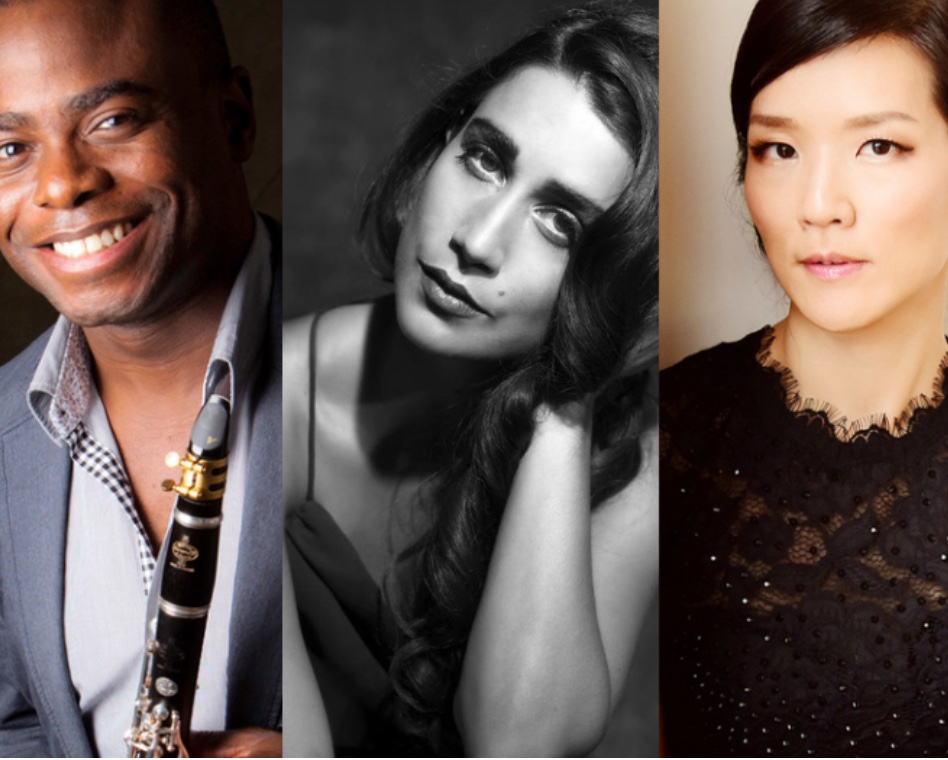 Clarinetist Anthony McGill brought star power to the Cleveland Chamber Music Society on March 28. In a concert that was all about singing — that, in fact, included two pieces with soprano — McGill stood out as the most prominent voice.
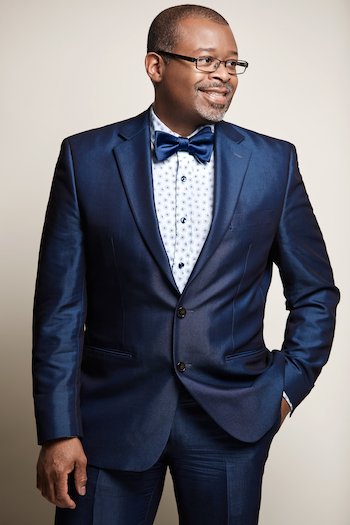 “First is the worst, second is the best…” It may not be the most profound of old sayings, but there might just be some slight bit of wisdom — I said
 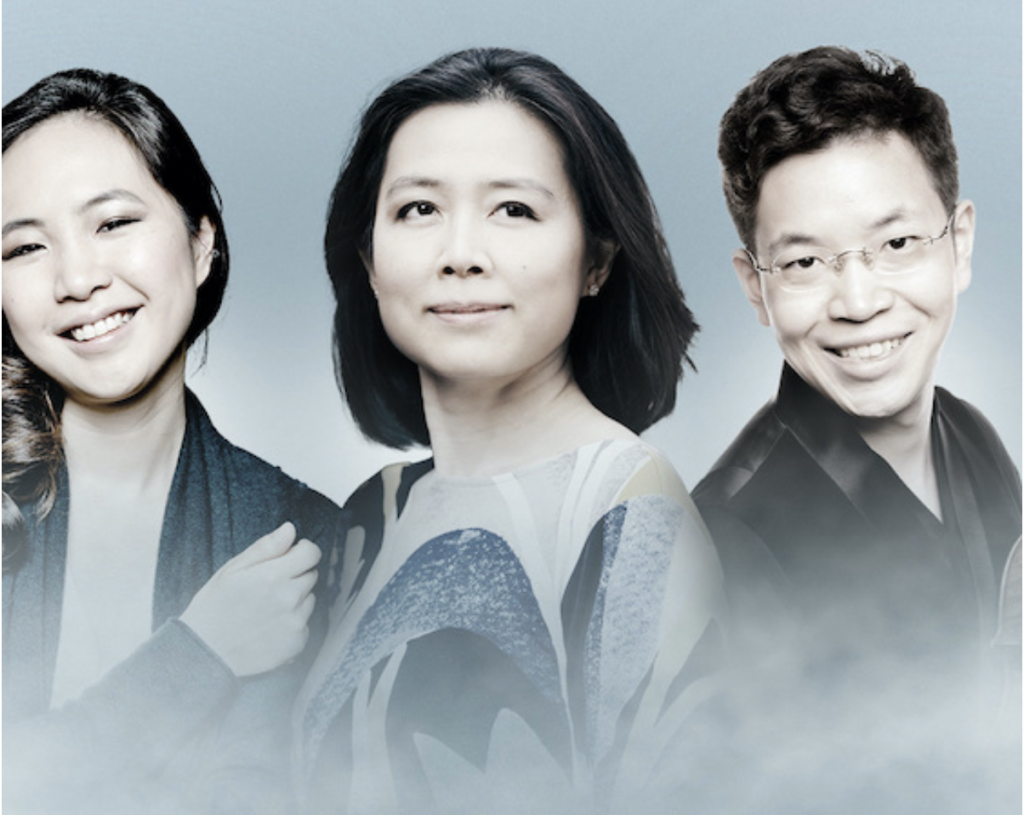 Every once in a while, a concertgoer is treated to an evening where all of the hoped-for elements are in place: the playing is first-rate, the performers exude warmth and ease, the audience is engaged, the program is a mix of familiar and unusual — in other words, a concert with Carnegie Hall electricity but summer festival
 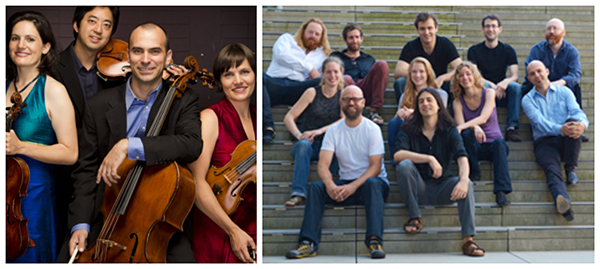 The Intergalactic Scheduling Office that normally takes care of bringing planets and other heavenly bodies into conjunction without causing head-on collisions has messed up big time.
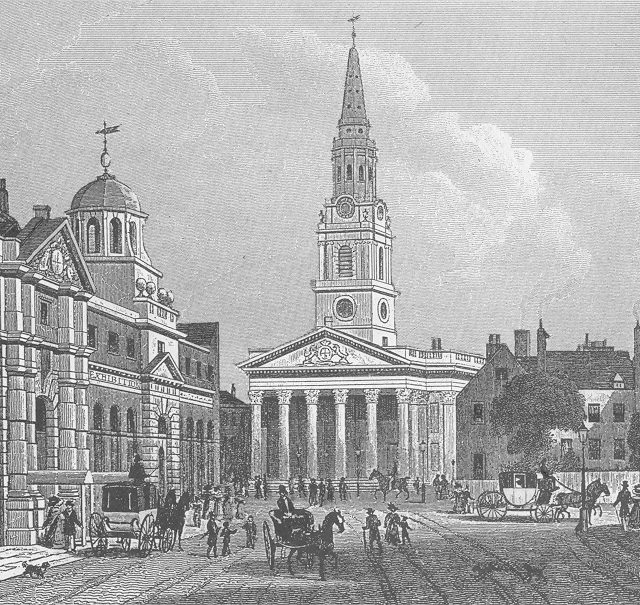 On Tuesday, October 18, London’s Academy of St. Martin in the Fields Chamber Ensemble will return to the Cleveland Chamber Music Series at Plymouth Church in Shaker Square to play works by Purcell, Brahms, and Enesco.
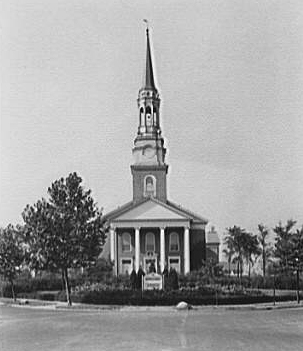 St. Martin’s has shared its real estate with the monument to Admiral Horatio Nelson after the Battle of Trafalgar in 1808, with the National Gallery of Art, completed in 1838, and until their eviction at the turn of the 21st century, with a flock of 35,000 feral pigeons, not to mention protesters demonstrating en masse for multiple causes (like the 100,000 Pakistanis who poured into Trafalgar Square one Sunday in the 1970s when I decided to visit St. Martin’s for the first time).
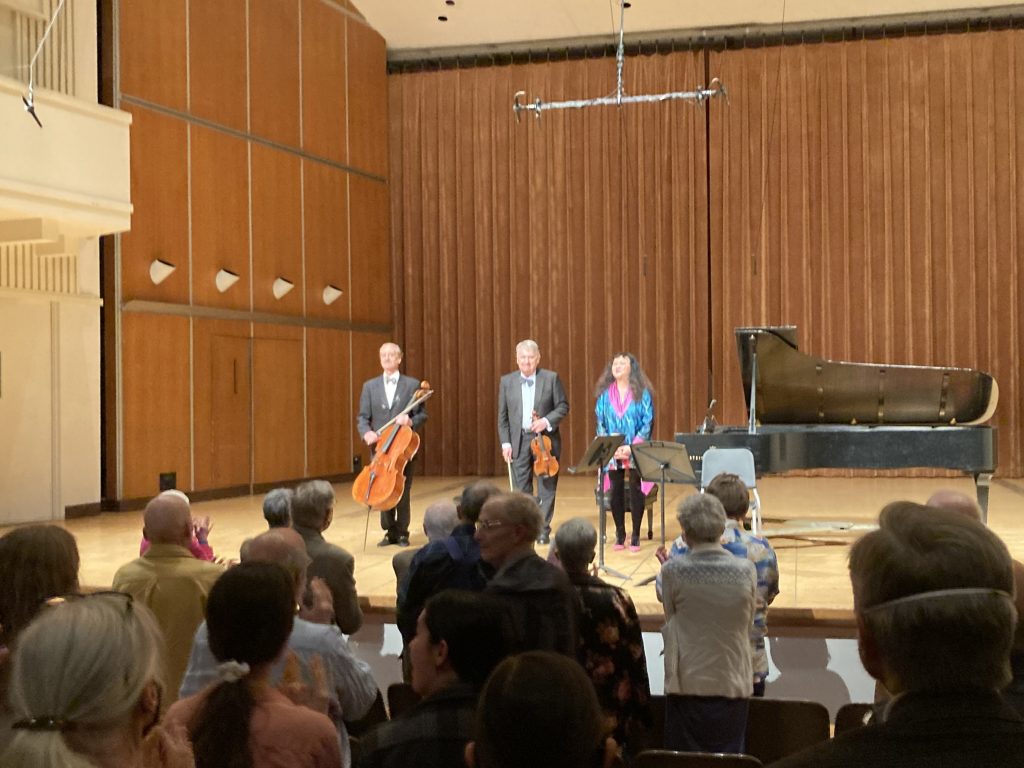 After more than a decade spent together as an ensemble, Wu Han, Philip Setzer, and David Finckel have become very familiar with certain pieces. And they’re determined to make sure those works only get better with age. On September 13, the pianist, violinist, and cellist opened the 73rd season of the Cleveland Chamber Music Society with a staple in their repertory — Franz Schubert’s two piano trios.
 When you’ve been booking visiting chamber ensembles for seven decades, you develop some special relationships that regularly bring audience favorites back to town.
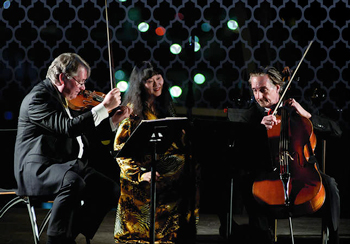 In March of 2010, we interviewed each of the musicians prior to their performance of Schubert trios on the CCMS series at Fairmount Temple Auditorium. We reached David Finckel in Vienna, Wu Han in New York between rehearsals, and spoke with Philip Setzer soon after he returned from Europe.
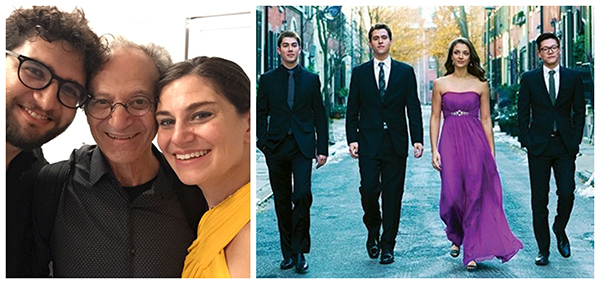 Having discovered surprisingly little overlap between their mailing lists, Cleveland’s two main purveyors of chamber music decided to bring their followers together on April 5 to enjoy a joint concert at the Maltz Performing Arts Center.
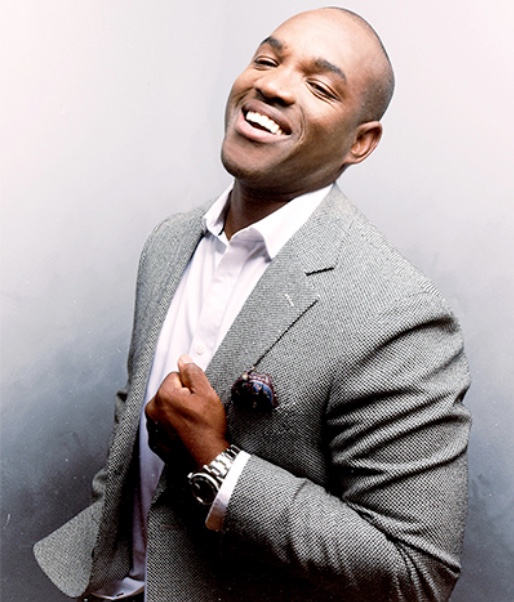 Lawrence Brownlee was still in master-class mode when he visited the Cleveland Chamber Music Society on April 26. The star tenor, born and raised in Youngstown, brought an educational element to his recital at the Maltz Performing Arts Center.