by Daniel Hathaway
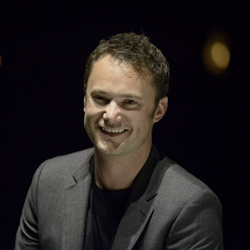 A full evening devoted to the music of Joseph Haydn is sure to be filled with sophisticated musical rhetoric, and at least a good handful of surprises. Last Thursday evening at Severance Hall, visiting British conductor Matthew Halls and The Cleveland Orchestra dug deeply into the fabric of an overture and a symphony, and with the help of the fastidiously exciting pianist Marc-André Hamelin, into one of the Austrian master’s piano concertos. Though the fourth work was obviously not by Haydn, its performance by duo hornists Richard King and Jesse McCormick would have deeply impressed whoever actually wrote it. [Read more…]
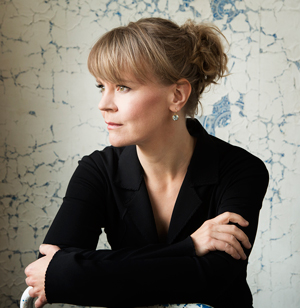 Finnish guest conductor Susanna Mälkki and American pianist Jeremy Denk both made their Cleveland Orchestra debuts on Thursday evening, April 23 at Severance Hall in an impressive program of works by Jean Sibelius, Béla Bartók and Igor Stravinsky. The chemistry between the two and the Orchestra produced a precise but risky journey through Bartók’s third piano concerto that was edge-of-your-seats thrilling.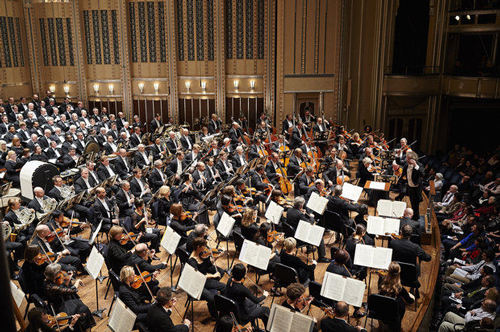
 Centaurs, dancing mushrooms, ballet hippos, and figure skating fairies accompanied The Cleveland Orchestra Thursday night at Severance Hall. Selections from the 1940 film classic Fantasia and its modern counterpart, Fantasia 2000, were projected over the orchestra for Disney Fantasia Live in Concert, part of the orchestra’s 2014 Holiday Festival series.
 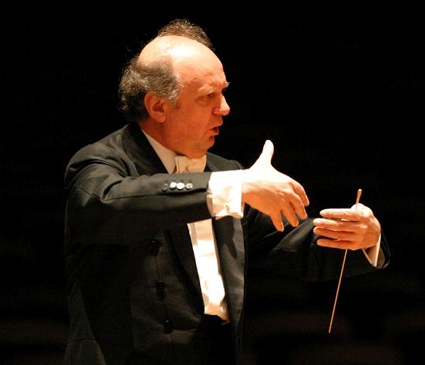 One size didn’t fit all the pieces on last Thursday evening’s program at Severance Hall. Guest conductor Marek Janowski ordered up a small Cleveland Orchestra for Beethoven’s Haydnesque first symphony, brought on a very large Cleveland Orchestra for Hindemith’s Symphonic Metamorphosis on Themes of Carl Maria von Weber, then sent most of those players home, leaving a medium-sized Cleveland Orchestra to end the evening with Beethoven’s second symphony.
  As a prelude to its three-week European tour, Franz Welser-Möst and the Cleveland Orchestra previewed some of their tour repertoire in the third of the 2014 Summers @ Severance concerts on Friday, August 29. This was no summertime “orchestra-lite” concert, but featured two demanding and arresting works by Jörg Widmann, the orchestra’s former Daniel R. Lewis Young Composer Fellow, as well as that monument of the orchestral repertoire, Johannes Brahms’s Symphony No. 1 in C minor, op. 68. Severance Hall was well filled with a very diverse audience of Cleveland Orchestra fans.
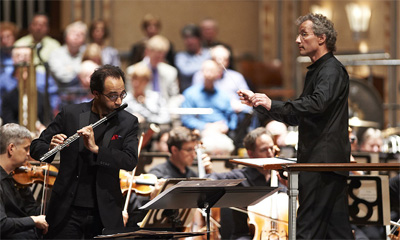 This Friday evening at Severance Hall and Sunday evening at Blossom, music director Franz Welser-Möst will give audiences a taste of the repertory The Cleveland Orchestra will play in thirteen concerts in seven European cities between September 7 and September 22.