
by Rory O’Donoghue
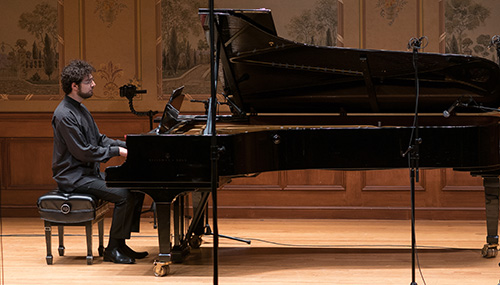
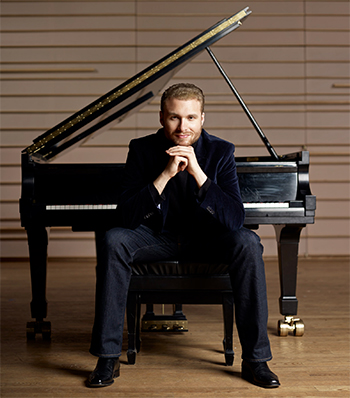 For pianist Adam Golka, arranging should be organic. Along with his good friend Roman Rabinovitch, he’ll perform his new arrangement of Debussy’s luminous La mer for two pianos on Saturday, June 15 at 6:45 pm in Mixon Hall as a prelude to ChamberFest’s Turning/Tipping Points.
“For many years I was in love with La mer and I yearned for a way to perform it,” Golka said by email, “and though I played around with the idea, it became clear that a two-hand solo version would have too many compromises. There is no way one pianist could bring out all the gorgeous textures and layers of the orchestral score, and each detail is so utterly exquisite.”
La mer premiered in Paris in 1905 to a middling reception, but gained traction over the next few years and secured an enduring place in the orchestral canon following its second Parisian outing in 1908. Its evocative movement titles — “De l’aube à midi sur la mer” (“From dawn to midday on the sea”), “Jeux de vagues” (“Play of the Waves”), and “Dialogue du vent et de la mer” (“Dialogue of the wind and the sea”) — offer ample room for interpretation, and Debussy’s deliberate avoidance of calling it a “symphony” in favor of “three symphonic sketches” all contribute to the work’s enigmatic beauty. [Read more…]
 Since bursting onto the scene in 2012 with its
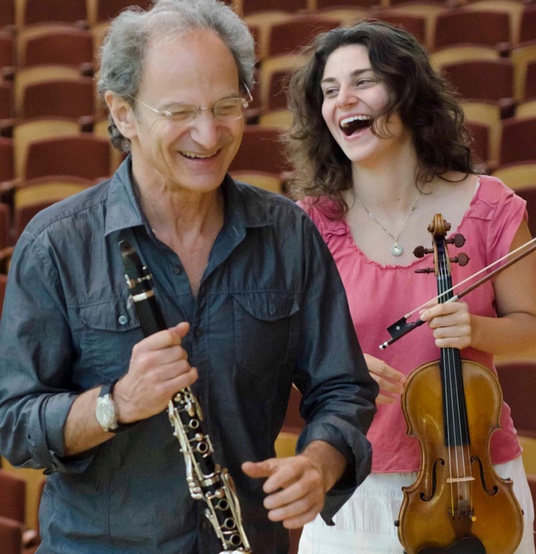
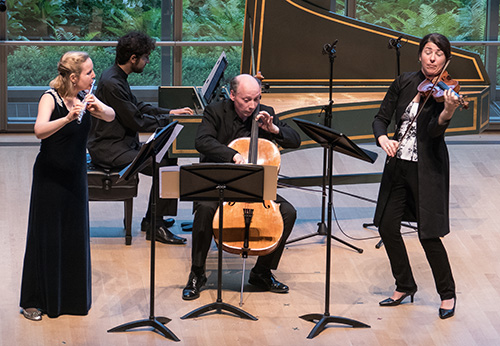
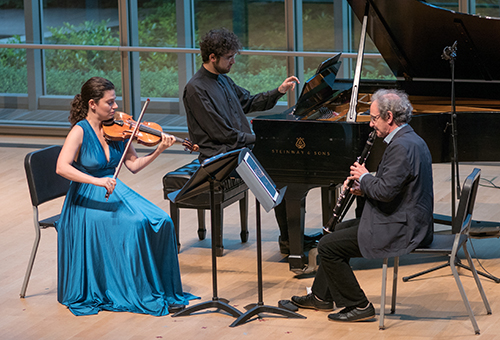
 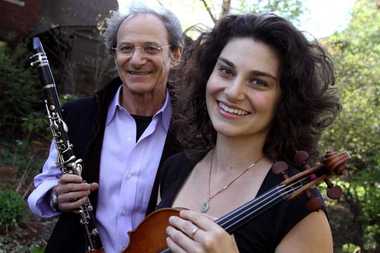 ChamberFest Cleveland, the celebrated summer music festival founded by Franklin Cohen, principal clarinet emeritus of The Cleveland Orchestra, and his daughter, Diana Cohen, concertmaster of The Calgary Philharmonic, returns to the Cleveland scene with Season 8, “Under the Influence.” The festival will take place from June 13 through June 29, 2019, at venues throughout Greater Cleveland, and will include nine concerts plus a special late-night electronic violin performance at The Wine Spot on Lee Road in Cleveland Heights.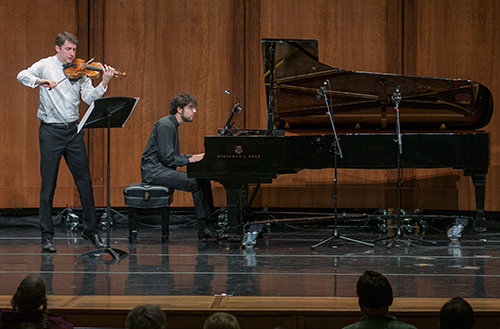
 Every composer has their own way of approaching their craft. “When I write a piece, whether it’s for orchestra or chamber ensemble, I want everybody to have a moment in the spotlight,”
 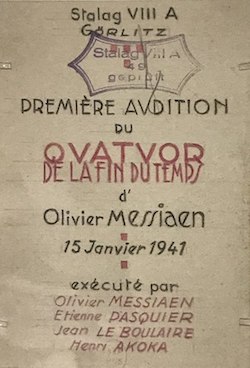 Drafted into the French army at the start of World War II, Olivier Messiaen soon found himself captured by the Germans and held at the prisoner-of-war camp known as Stalag VIII-A. There, a guard with a love of music provided the composer with the necessities of his craft —