
by Jarrett Hoffman
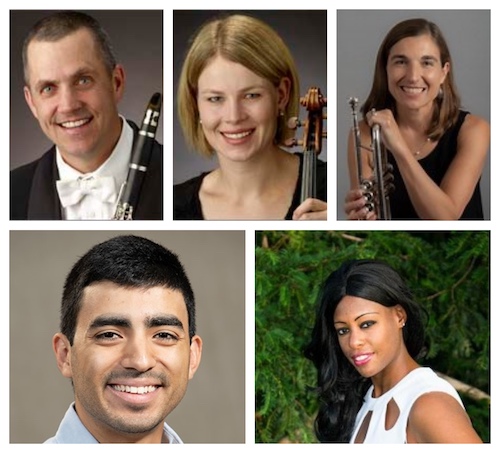 When live music as we know it came to a halt at the start of the pandemic, clarinetist and Rocky River Chamber Music Society board member Daniel McKelway knew he wanted to do something for concertgoers who live in retirement communities in the area.
“I immediately had a sense that these people are not going to have the connections that are so important to their lives and their happiness in their later years,” McKelway said during a recent telephone call. “These are people who have not been able to have contact with their children and their grandchildren, and who are at greater risk than younger people if they do get the virus.”
His idea was to put on a live concert of chamber music, with generous measures of social distancing to be followed by the performers, and without a live audience in attendance, to be viewed for free over the web. That’s exactly what the Rocky River Chamber Music Society will present on Monday, May 18 at 7:15 pm.
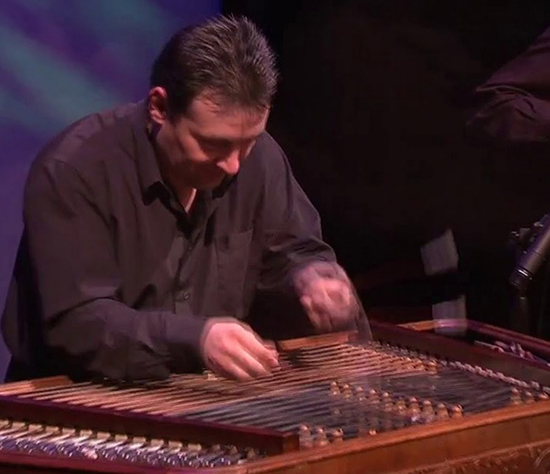 The music of Hungary occupies a unique place in the world of classical music. Musicians active between the mid-1800s and early 20th century understood the nation as either a land of best-kept secrets and hidden musical diversity, or as a foreign wonderland where exotic dance tunes and virtuosic fiddling occupied a lonely throne. In a recent concert, cimbalom soloist Alexander Fedoriouk and members of The Cleveland Orchestra explored both sides of the old divide: the Hungary that one expects and the richer, stranger version as well.
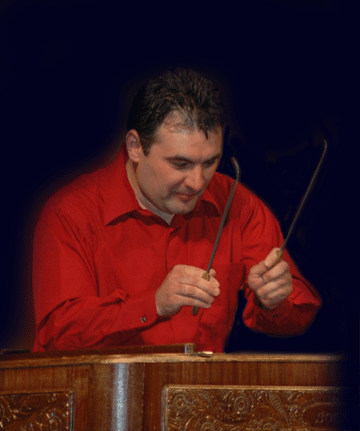 The Rocky River Chamber Music Society will explore “Chamber Music of Hungary” to begin its 61st season on Monday, October 14 at 7:30 pm at West Shore Unitarian Universalist Church.
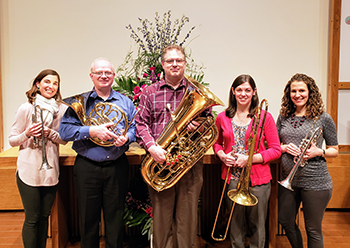 Utter the phrase “brass quintet” to the average listener, and expect a reply that references particular kinds of music, from Renaissance church polyphony and Bach fugues to modernist movements and jazz arrangements. The instrumentation remains common enough to come with such associations, but rare enough that many audiences only get to experience its core repertoire.
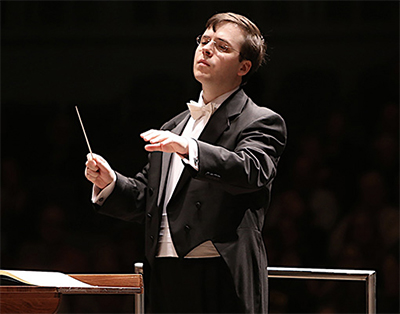 As any brass, woodwind, or low-string player in an orchestra may confess under mild pressure, it can feel profoundly liberating to play music that draws the spotlight away from their colleagues in the violin section, especially for extended periods. Rare though this repertoire may be — Stravinsky favored winds and percussion, and Glass wrote a whole opera without violins — pieces that foreground these parts of the classical instrumentarium do appear at the heart of the canon. Filling the stage for its 60th-Anniversary Gala concert, the Rocky River Chamber Music Society placed conductor James Feddeck at the helm for an event featuring 21 musicians — violists, cellists, bassists, and wind players.
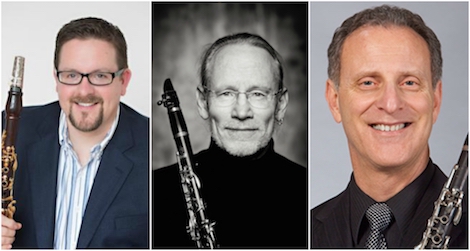 A return to a concerto that brought with it a solo debut. The celebration of a long chamber music partnership and friendship. And one final concerto in a 22-year orchestral tenure.
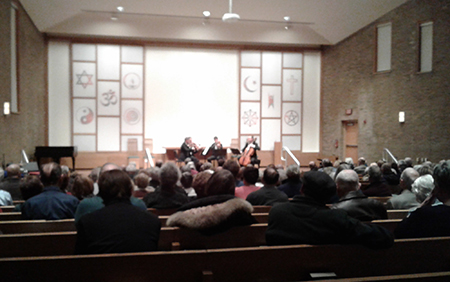 “We don’t often play all-Czech programs,” Bennewitz Quartet second violinist Štěpán Ježek said from the stage of West Shore Unitarian Universalist Church on Monday evening, February 12. But the Rocky River Chamber Music Society audience can be glad they did on that occasion. Ježek joined his colleagues Jakub Fišer, violin, Jiří Pinkas, viola, and Štěpán Doležal, cello, in white-hot performances of works by Leoš Janáček, Bedřich Smetana, and Antonín Dvořák, playing with the pure intensity that only native Czechs could have achieved.
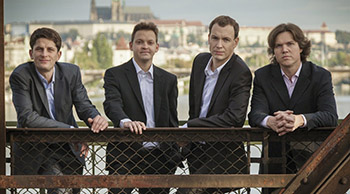 On Monday, February 12 at 7:30 pm, the