

by Mike Telin
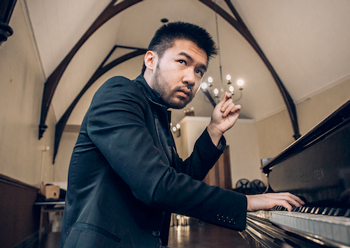 It’s difficult to know where to begin when talking about pianist-composer Conrad Tao. At age twenty-one, he has already amassed a list of accomplishments worthy of an artist three times his age. Called a musician of “probing intellect and open-hearted vision” by the New York Times, and a “thoughtful and mature composer” by NPR, Tao was named a Presidential Scholar in the Arts in 2011. In addition to a very busy concert schedule which includes serving as the Dallas Symphony Orchestra’s artist-in-residence, his new CD Pictures, on the Warner Classics label, was released in October.
Conrad Tao will make his Northeast Ohio debut on the Tuesday Musical series on Wednesday, November 18 at 7:30 in Akron’s E.J. Thomas Hall. Tao’s fascinating program, the 2015 Margaret Baxtresser Piano Recital, will include works by Lang, Bach, Carter, Wolfe, Rachmaninoff, and Mussorgsky.
During our extensive telephone interview, Tao revealed himself as thoughtful and down-to-earth, as well as a person who is acutely aware of the passage of time. The following is an edited transcript of that conversation. [Read more…]
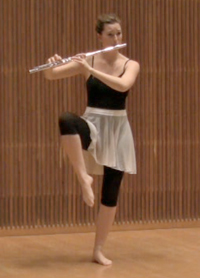 Committed to championing works by composers based in the Rust Belt, The Syndicate for the New Arts will celebrate the region’s creativity on Friday, November 20 at 9:00 pm at Survival Kit as part of 78th St. Studios’ Third Fridays events. “In keeping with the theme of Third Fridays, our performance will resemble an art gallery,” Syndicate founder Joshua Rosner said in an email. “Each piece will be performed in a different space of the room, allowing the audience to move around the room and experience the work from different perspectives.”
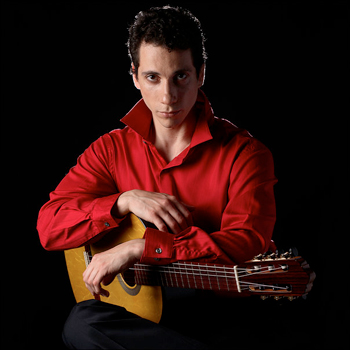 “Why did I choose Flamenco? It’s just like love — you can’t explain it, you just feel it in your heart,” Russian-born guitarist Grisha Goryachev told us by phone. “When I listen to Flamenco I feel that it is my music. I don’t know why I feel this way because I am in no way a Gypsy, and I’m not Spanish. But it boils my blood and I feel love for this music.”
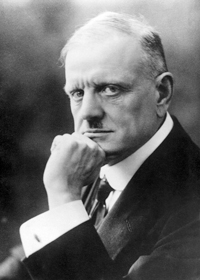 With December 8 marking the 150th anniversary of the birth of Finnish composer Jean Sibelius, many celebrations are being held in his honor. On Sunday, November 22 at 4:00 pm at St. Paul’s Episcopal Church, Cleveland Institute of Music faculty, alumni, and students will observe the occasion with a Jean Sibelius 150th Anniversary Concert.
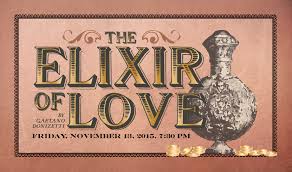 Last Friday evening, November 13, Opera Western Reserve presented as its 12th annual production Gaetano Donizetti’s The Elixir of Love (L’elisir d’amore), an opera buffa in two acts. For a dozen years the company has mounted excellent operas, shrewdly limiting itself to a single annual performance and consistently playing to full houses while maintaining high artistic standards. Friday night’s performance was no exception. First-rate lead singers, fine preparation of choral numbers and ensembles, excellent blocking onstage, and a wonderful orchestra all contributed to another resounding success.
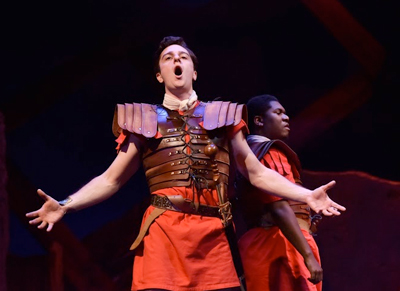 At once historical and metaphorical in its subject, Benjamin Britten’s The Rape of Lucretia delivers a lot in a compact package. The eight singers of Oberlin Opera Theater and fifteen instrumentalists of the Oberlin Contemporary Music Ensemble delivered an outstanding performance of the British composer’s 1946 chamber opera last Wednesday evening in Hall Auditorium — one that left the audience with a lot to think about.
 Making virtue out of necessity, CIM Opera Theater director David Bamberger introduced a new operatic technique in his production of Mozart’s The Marriage of Figaro on Thursday, November 5 in Kulas Hall: ventriloquism.
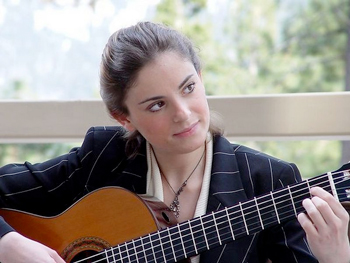 Have you ever heard a guitar tell a story? The thought may sound silly until you have heard the Croatian master Ana Vidović play. She is the rare musician who can make her instrument sound sublime, whether interpreting the Baroque works of Bach or performing arrangements of modern popular classics by Toru Takemitsu.
 Performing to a full house, the Masterworks Chorale of Summit Choral Society began its 26th season under the new leadership of artistic director Marie Bucoy-Calavan with warm, confident performances of Johannes Brahms’s Schicksalslied and Wolfgang Amadè Mozart’s Requiem on Sunday, November 1 in Akron’s Holy Trinity Lutheran Church.
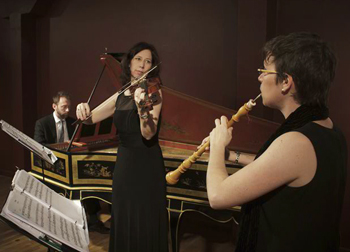 The truism holds that French aristocrats before the Revolution danced time away in utter complacency, refusing to change in the face of the inevitable. The image is probably true with respect to most things that would have mattered to those who stormed the Bastille. But in the world of music, things were changing decades before the Revolution. Writing within a framework of courtly elegance that would have pleased Marie Antoinette, composers were also pushing the boundaries of their music with wit, irony, turmoil, and glimmers of Romantic self-consciousness.