


Berea, May 18, 2015
Twelve young pianists will advance to the semifinal rounds in the Cleveland International Piano Competition’s Young Artist Competition. Sessions will take place on Monday afternoon and evening, May 18 (Junior Division) and Tuesday afternoon and evening, May 19 (Senior Division) in Gamble Auditorium at the Baldwin Wallace Conservatory. See our concert listings page for links to ticketing, biographies, repertoire and live streaming of the four sessions.

JUNIOR DIVISION SEMI-FINALISTS:
Xiaoxuan Li (13, China), Elliot Wuu (15, USA), Leonid Nediak (11, Canada), Maxim Lando (12, USA), Jae Hong Park (15, South Korea) & William Yang (13, USA).

SENIOR DIVISION SEMI-FINALISTS:
Jiacheng Xiong (18, China),Yuanfan Yang (18, U.K.), Chaeyoung Park (17, South Korea), Giorgio Trione Bartoli (18, Italy), Evren Ozel (15, USA) & Kyubin Chung (17, South Korea).
 May Wine is a delightful spring punch made out of a bit of everything — the fruitiness of Riesling, the bubbly of Prosecco, the tart bite of strawberries, and the sweet pungency of the flowers and leaves of woodruff (also wonderfully known as sweet-scented bedstraw), blooming now in northern Ohio. For their final concert of their fifth season, the BlueWater Chamber Orchestra served up a bowl of musical May wine, more than welcome on one of the first warm evenings of the season.
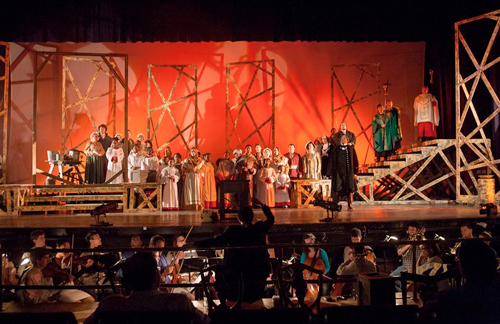
 On Tuesday, May 12, at 7:00 pm in Baldwin Wallace University’s Gamble Auditorium, 25 young pianists representing eight countries will compete for top prizes at the Cleveland International Piano Competition’s
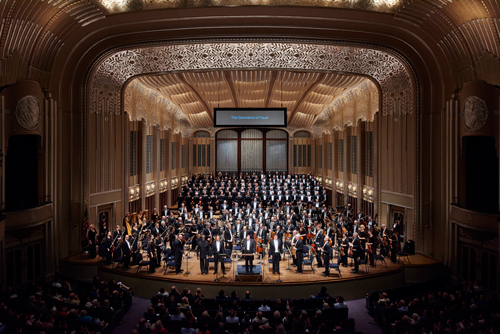
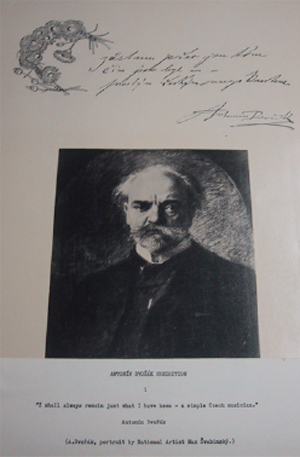 On Thursday, May 14, at 7:30 pm, Franz Welser-Möst returns to Severance Hall to lead The Cleveland Orchestra in three programs that will feature Hindemith’s Concert Music for Strings and Brass, Jörg Widmann’s Violin Concerto with Christian Tetzlaff as soloist, and Dvořák’s Symphony No. 9 (“From the New World”). The program will be repeated on Saturday at 8:00 pm.
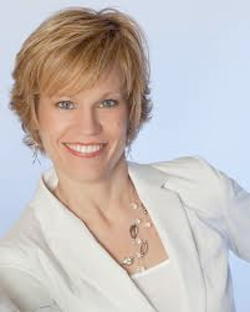 “Choosing a recital program can be so selfish,” pianist Lura Johnson quipped during a recent telephone conversation. “Of course you want to play pieces that you love but you also need to find a way to present them from a point of view is useful and relevant to the audience.” This weekend
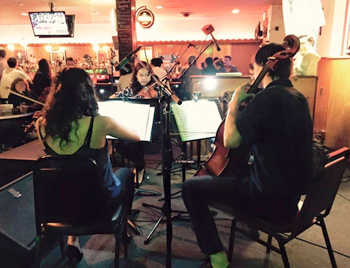 “People have come to know: every third Tuesday of the month, free classical music. And hotdogs! You can always find it,” Ariel Clayton Karas, Director of Classical Revolution Cleveland, said in a recent conversation. Classical Revolution Cleveland (CRC), self-defined as a “loosely bound group of classically-trained musicians who love sharing music with Cleveland in unusual and non-traditional formats,” has deservedly earned the recognition and enthusiasm of the Cleveland community.
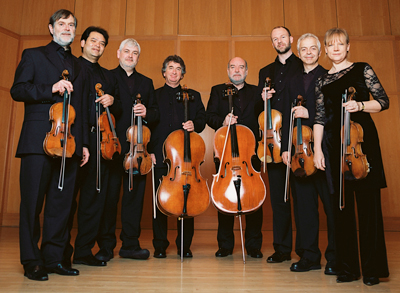 Ever since Haydn established the string quartet as the ensemble de rigueur, chamber music for strings has tended to operate in base four. There are many variants on the quartet (“4 ± n”, as a math teacher might write it), but even when you subtract a violin (Beethoven) or add a viola (Mozart), a cello (Schubert), or a double bass (Dvořák) — or, as in this concert, when you pump it up to a sextet (Brahms) or an octet (Mendelssohn, Shostakovich) — the quartet remains the norm.
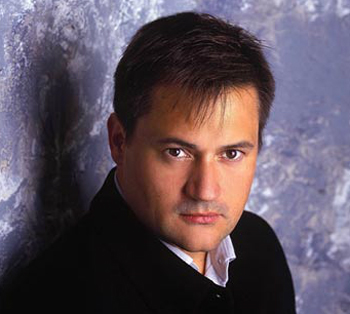 Since launching his career by winning the Metropolitan Opera’s National Council Auditions in 1991, tenor Paul Groves has sung in a dizzying number of operas and logged a long list of concert performances around the world.