by Nicholas Stevens
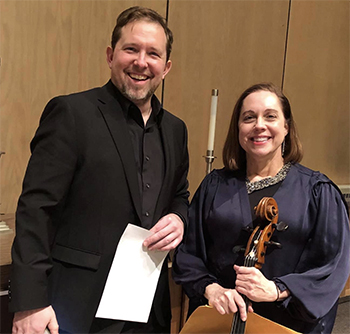 Variety can be the salvation or the undoing of a concert. A century and a half ago, most Americans would have heard what we now think of as the bedrock repertoire of the classical tradition in bewildering shows that often included comedy and drama as well. In recent decades, however, even diversity of historical period and musical style — let alone type of entertainment — has become optional, rather than expected. In a recent concert led by Daniel Meyer, BlueWater Chamber Orchestra successfully embraced stylistic pluralism, mixing new music and a rarity with standard audience favorites.
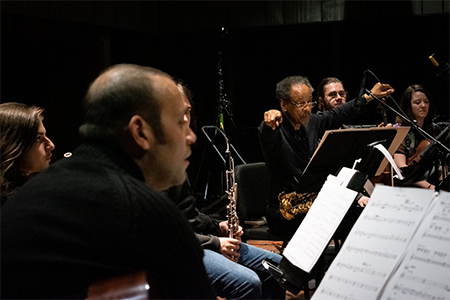 “The music as always speaks its own language.” In a program note for his new piece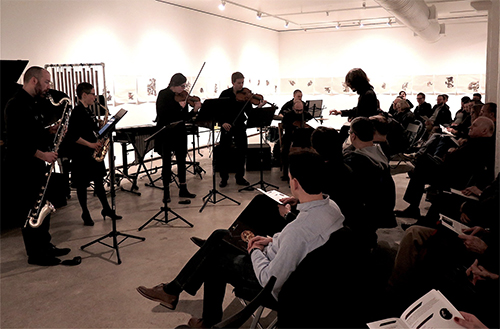
 Some concert themes restrict the number of compositions that would make sense on the program: opera duets about plant life, string quartets after short stories, art songs about fishing. Others leave the field of possibility wide open. When Urban Troubadour billed their December 1 event a “Concert of Creativity,” they thereby allowed for wide stylistic range while banishing only one kind of music: the dull kind. Even with a more practical concern — instrumentation — guiding the curation process, the organizers chose music that shed unusual light on the theme while offering music of contrasting tone, style, and mood.
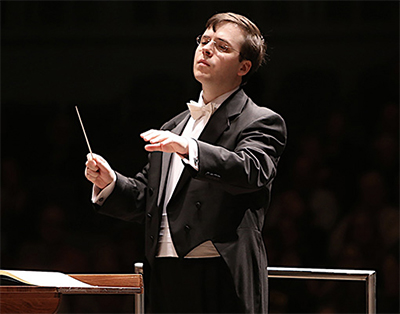 As any brass, woodwind, or low-string player in an orchestra may confess under mild pressure, it can feel profoundly liberating to play music that draws the spotlight away from their colleagues in the violin section, especially for extended periods. Rare though this repertoire may be — Stravinsky favored winds and percussion, and Glass wrote a whole opera without violins — pieces that foreground these parts of the classical instrumentarium do appear at the heart of the canon. Filling the stage for its 60th-Anniversary Gala concert, the Rocky River Chamber Music Society placed conductor James Feddeck at the helm for an event featuring 21 musicians — violists, cellists, bassists, and wind players.