


by Stephanie Manning
 This article was originally published on Cleveland.com
CLEVELAND, Ohio – Few melodies in the classical canon hold as much name recognition as Beethoven’s “Ode to Joy.” The beloved tune, set to the words of German poet Friedrich Schiller, comes from the composer’s Symphony No. 9 — a revolutionary piece both in its form and in its celebration of the indomitable human spirit.
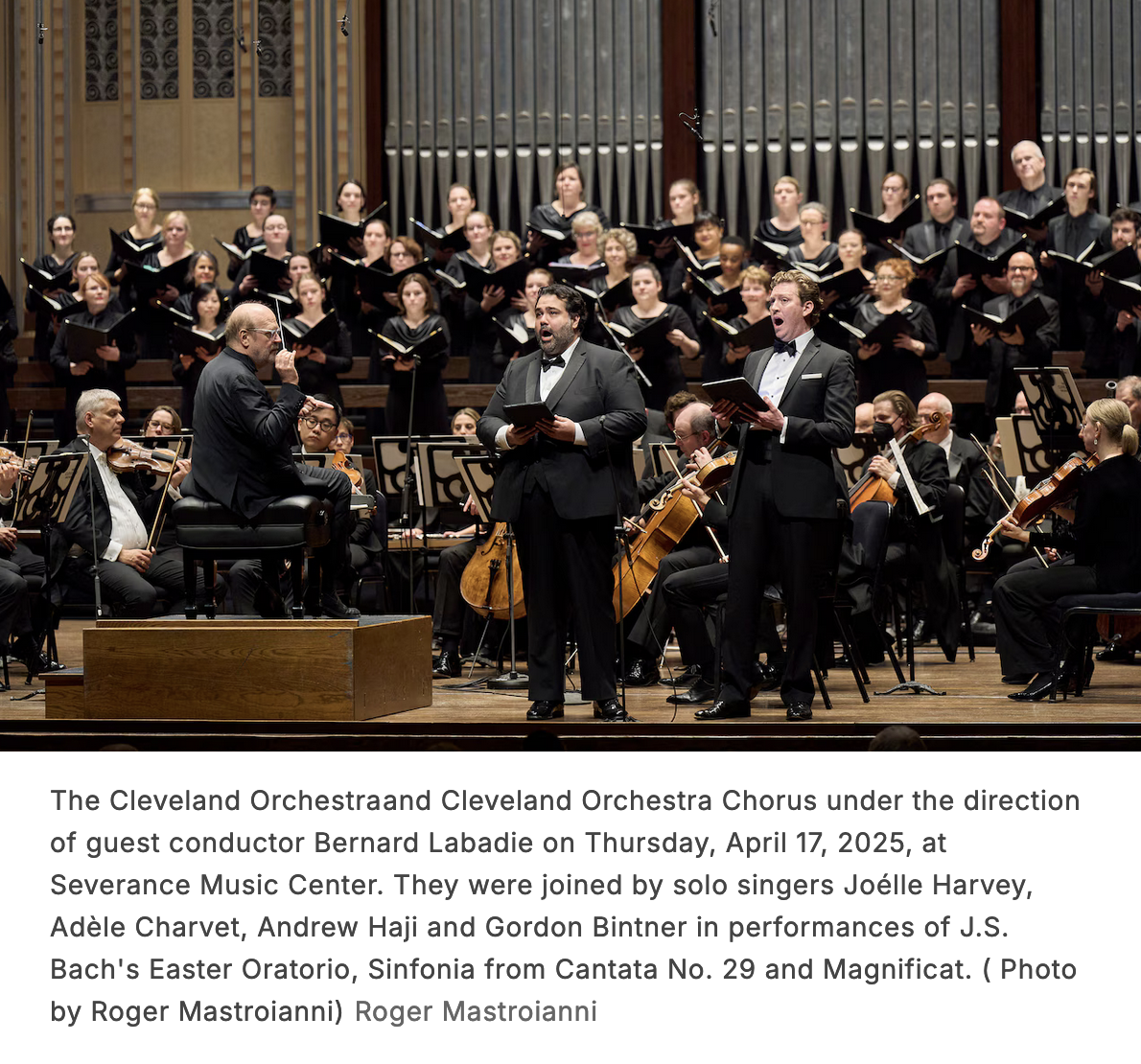
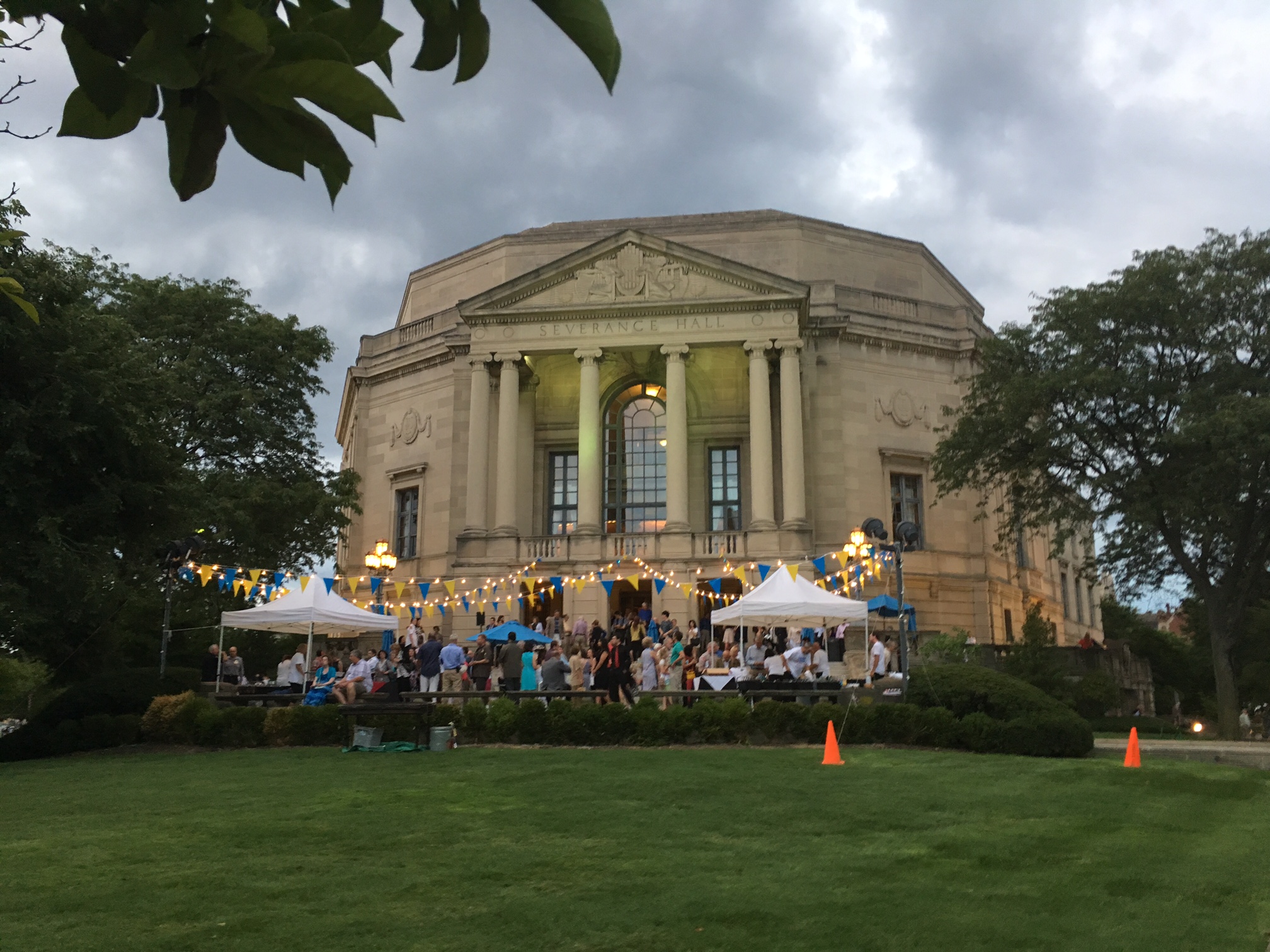
The desire to witness such joyful music making in person is undoubtedly what drove a large audience to Mandel Hall at Severance Music Center on Thursday, Oct. 23. And it’s safe to say that the Cleveland Orchestra, Chorus and soloists did not disappoint.
 This article was originally published on
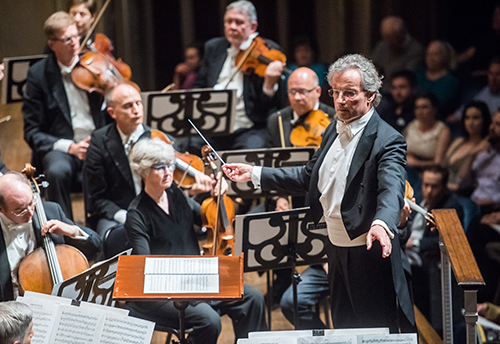
 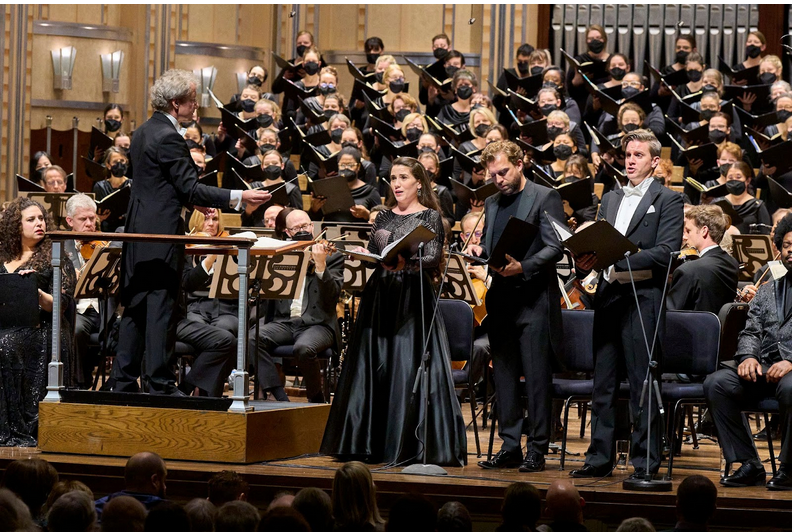 Perhaps Franz Schubert’s Symphony No. 8 is more complete than its “Unfinished” moniker implies. After all, the composer wrote and orchestrated two full movements, creating a kind of standalone half-symphony. But Severance Music Center audiences heard this work in a new way on January 13, when The Cleveland Orchestra and Franz Welser-Möst interlaced Schubert’s two memorable movements with an unexpected partner: Alban Berg’s Three Pieces from Lyric Suite.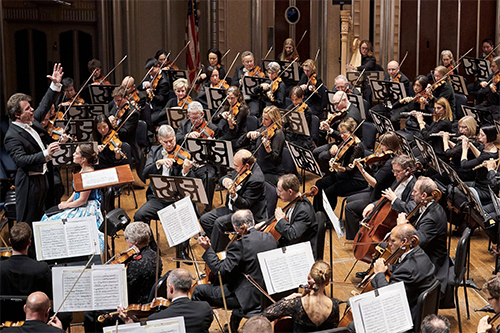
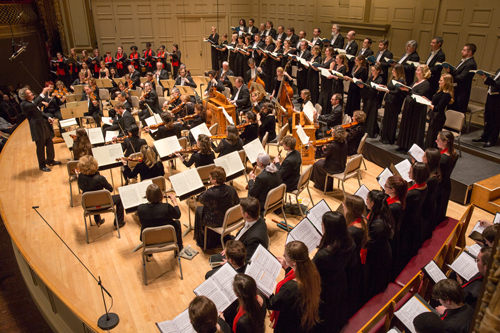 In 1815, Wellington and Blücher defeated Napoleon at Waterloo, John McAdam was building roads in Britain out of crushed stone, and the US launched its first steam warship, the U.S.S. Fulton. And on Christmas Day of that year, Boston’s Handel and Haydn Society gave its inaugural concert. Two hundred years later, after reinventing itself more than once, H+H (as it’s now known) has the honor of being the oldest continuously performing arts organization in the country. H+H is celebrating that milestone with a variety of activities, including a handsome exhibition of historical artifacts at the Boston Public Library in Copley Square, and two performances of J.S. Bach’s Matthew-Passion at Symphony Hall.