by Jarrett Hoffman

by Jarrett Hoffman

TODAY ONLINE:

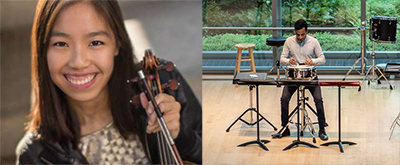
Both have impressive resumes — top prizes at the Sendai Competition and the Modern Snare Drum Competition — but they also seem like really interesting and nice people. CIM has shared a little bit about their stories and personalities with a profile of Lee (beginning with the time she helped fix the computer system at the Curtis Institute of Music) and a “Day in the Life” video with Sreejayan (including his warm-up with hip-hop music, and his home-cooked spinach and steak).
Also tonight: the Met begins “Politics in Opera” Week at 7:30 pm with a 1980 production of Verdi’s Don Carlo. More details in our Concert Listings.
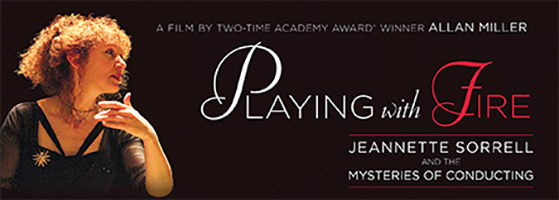
PLAYING WITH FIRE:

“Three or so years ago, we played at the Metropolitan Museum of Art, and a gentleman came backstage afterward and introduced himself as Allan Miller, a film director. ‘I’m retired,’ he said, “but I feel that I have one more film left in me, and I want to make it about you.’ I thought, this is so sweet, but it will never happen — and everybody I talked to told me the same thing,” Sorrell said.
Read the full interview here.
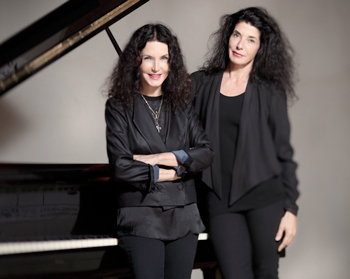
LABÈQUE SISTERS:

It’s also fun to look back on the Labèque sisters’ last visit to The Cleveland Orchestra, in May 2019, when they brought along Bruch’s Concerto for Two Pianos. In a preview conversation, Mike Telin spoke to Katia Labèque about the fascinating history of that concerto:
Interestingly enough, Bruch composed the concerto for the American duo-pianist sisters Rose and Ottilie Sutr in 1912. However, without the composer’s permission, the sisters rewrote the concerto to accommodate their technical abilities. “I think it was massacred by the sisters,” Labèque said. “Bruch was furious with them, and he forbade them to play the piece in Europe. So I think it is great to come back to America and present it the way that it was written.”
Read more of that interview here.
TODAY’S ALMANAC:

Two options at noon — catch either “Lunchtime with The Cleveland Orchestra,” or organist Michael Messina in a Virtual Brownbag Concert from Trinity Cathedral. Then take in a 2:30 symposium on the impact of dance on the suites, sonatas, and partitas of J.S. Bach, led by violinist and dancer Julie Andrijeski (with a second part beginning at 4:15). And cap off the day with Mozart’s Così fan tutte from the Met at 7:30. Details in our Concert Listings.
TODAY’S ALMANAC:
Today’s a happy day in our almanac: no deaths, all birthdays. We’re throwing a six-way party for — count ‘em — Henri Reber, Joseph Canteloube, Georg Solti, Malcolm Arnold, Shulamit Ran, and Lera Auerbach. And just like the real thing, none of them will get their deserved level of attention. A few might even leave bitterly because we won’t talk about them at all. (That would be a little sad at a real birthday party.)
We’ll focus just on the two living members of that group, both of whom have visited the Cleveland Institute of Music in recent years, and both of whom have been interviewed by ClevelandClassical.com’s Mike Telin.


Here’s Auerbach playing eight of those preludes as part of the Grand Piano Series in Naples, Florida, and here’s cellist Kellen Degnan and pianist April Sun at CIM playing selections from a different set of two-dozen preludes by Auerbach. (As she told Mike Telin in an interview, “I have always loved cycles of 24 preludes.”)
by Jarrett Hoffman

by Jarrett Hoffman

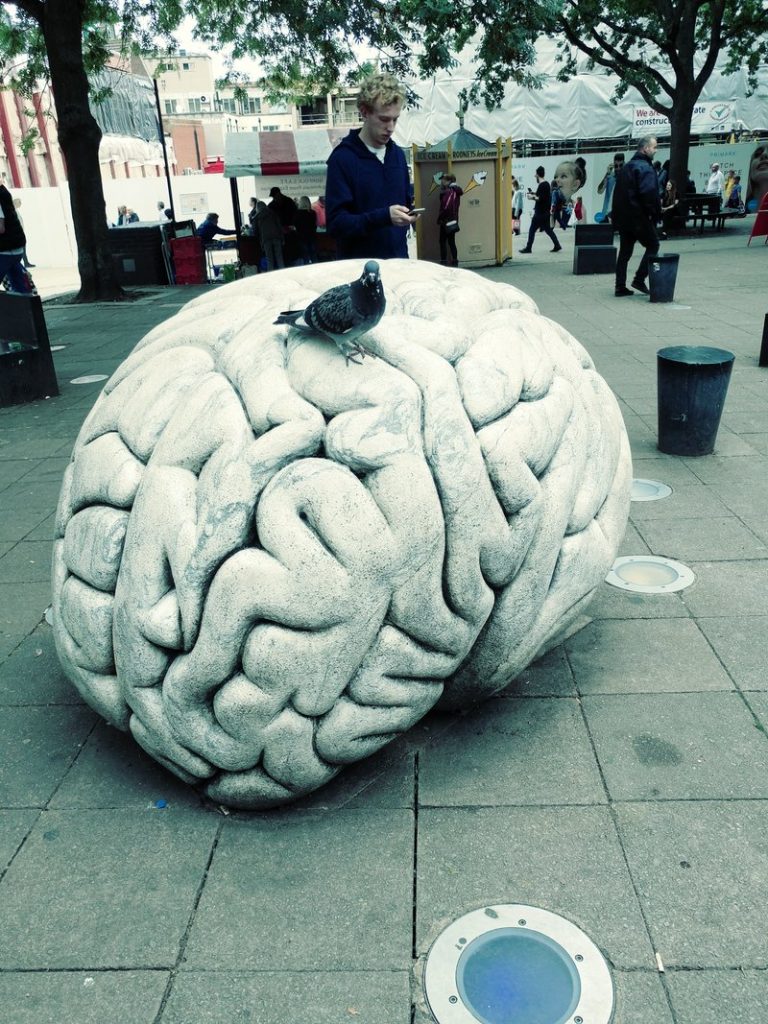
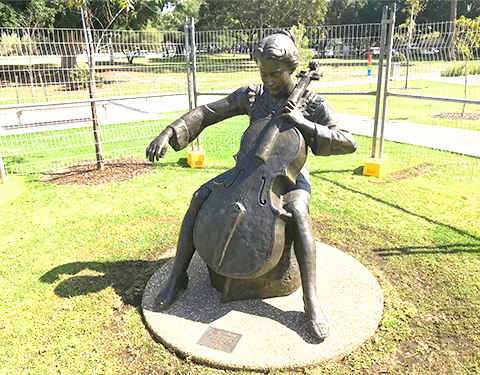
Four hundred years after his birth on this date in 1605, English polymath Thomas Browne was commemorated by his adopted home city of Norwich with a series of sculptures commissioned in his honor. One of those was a large, marble brain — perfect as a representation of that famous thinker, but also as a resting spot for pigeons, who apparently can be seen drinking rainwater from its folds.
That got me wondering about other fun sculptures — especially ones that are right out in the open, and that are related to music. Locally, among all the beautiful statues in the Cultural Gardens is Romanian composer George Enescu. Then there’s the ROCK BOX, a collection of loudspeakers along E. 9th St. that play music from Rock & Roll Hall of Fame inductees.
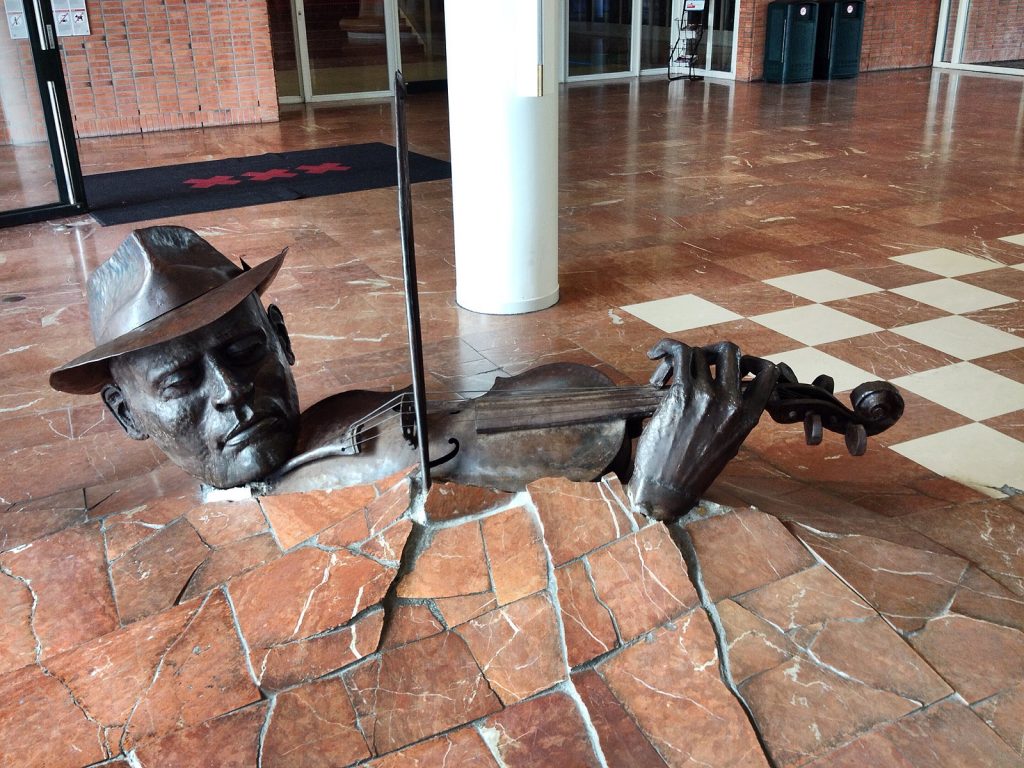
Expanding out on the map, there’s plenty of quirky, creative stuff that you could plan a trip around. In Houston there’s Virtuoso, the big, light-hearted, and invisible-bodied cellist that plays classical music through an integrated sound system. And right inside the Stopera in Amsterdam, there’s The Fiddler — a real break-out performer (kill me).
Here’s an article from Classic FM with more recommendations for musical sculptures, though the location for some of them may require some digging.
TODAY’S ALMANAC:
The most famous name to celebrate today is Jacqueline du Pré, who died on this date in 1987 at the age of 42, and who is considered one of the greatest cellists in history, despite her career being cut short by multiple sclerosis. Du Pré is often mentioned in the same breath as the Elgar Cello Concerto — check out one of her stunning performances of that work, like this one, where she plays the first movement with Daniel Barenboim and the London Philharmonic.

Other figures to celebrate today:
ONLINE TODAY:
Les Délices continues its SalonEra series with “Latin Baroque” at 7:30, the CIM Orchestra tackles Elgar, Mendelssohn, and Mozart at 7, and the Boston Early Music Festival presents French Baroque ensemble Nevermind at 8. Check our Concert Listings for details.
by Jarrett Hoffman

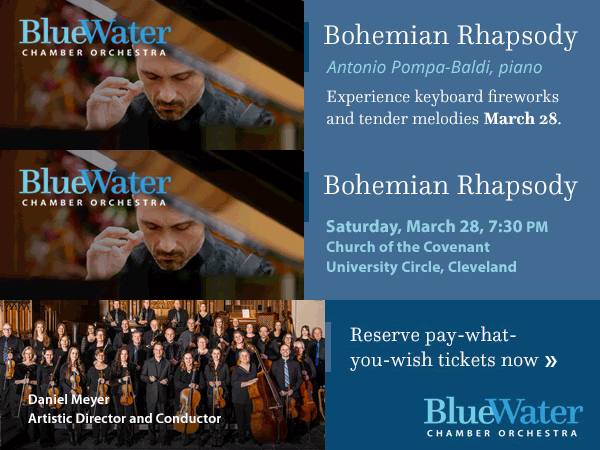
One current and one former CIM faculty pianist will offer live-streamed recitals tonight: Antonio Pompa-Baldi at 7, and Frank Huang at 8:30. Youngstown State’s Dana Piano Trio will also share a pre-recorded program at 7 — one that includes a certain Finn who is considered among the greatest living composers, and who happens to be featured in today’s almanac below. Links and details in our Concert Listings.
And Episode 6 of The Cleveland Orchestra’s podcast On A Personal Note is now available. “Color & Character” features bassoonist and contrabassoonist Jonathan Sherwin, who “contemplates the role of the lower voices of the woodwind section — and the meaning of life as portrayed in Mahler’s Second Symphony.” Listen here.
THIS WEEKEND FROM THE ASO & STAN HYWET:
The Akron Symphony continues with its Interlude Season on Saturday, October 17 from 11:30 am to 1:30 pm when violinists Sarah Husak and Steve Ostrow join cellist Jim Benson at Stan Hywet Hall & Gardens, providing a soundtrack while masked, socially-distanced guests take the self-guided tour of the Manor House. Click here for more information, including the estate’s admission fees.
(One other potentially fun discovery on the Stan Hywet website: the online version of their murder-mystery series, which coninues October 15, 16, 22, and 23. That may be entirely non-musical, but I’ll defend its inclusion here by pointing out that Arthur Conan Doyle published The Adventures of Sherlock Holmes on this date in 1892. And speaking of #OnThisDate…)
TODAY’S ALMANAC:
That mystery composer featured on the Dana Piano Trio’s program tonight is Kaija Saariaho, who was born in Helsinki on October 14, 1952 and has lived in Paris now for thirty-some years. Last year, the BBC Music Magazine polled 174 composers about the greatest names in the history of their field — the GOATs, we could say. Bach landed 1st, and Saariaho 17th, the highest ranking among living composers. (Here are the results of the top 50.)
Among local performances of her work, hear Oliver Herbert play the Sept Papillons (“Seven Butterflies”) for solo cello during the 2017 edition of ChamberFest Cleveland. And check out her recent interview with Tom Welsh as part of the “Behind the Beat” series from The Cleveland Museum of Art.
Maurice Martenot, the inventor of the electronic instrument known as the ondes Martenot, was born in Paris on this date in 1898. Cynthia Millar, described by The Guardian as the “unchallenged sovereign” of the instrument, describes its nature and its importance to Messiaen’s Turangalîla-Symphonie here. And moving to the world of popular music, listen to this collection of ondes Martenot-heavy excerpts from the band Radiohead, whose lead guitarist and keyboardist became a fan of the instrument after hearing Turangalîla as a teeanger.
One last big name for October 14: Leonard Bernstein, who died on this date in 1990. Read our August 25 Diary, where Daniel Hathaway celebrated that needs-no-introduction musical figure (another GOAT?) by going behind the scenes with videos of him in rehearsal.
by Jarrett Hoffman

by Jarrett Hoffman

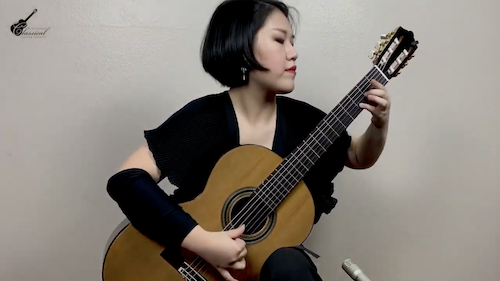
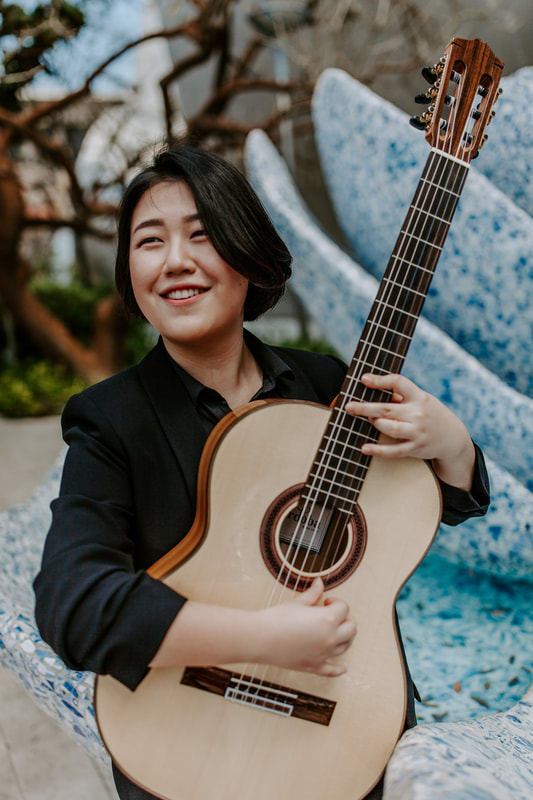
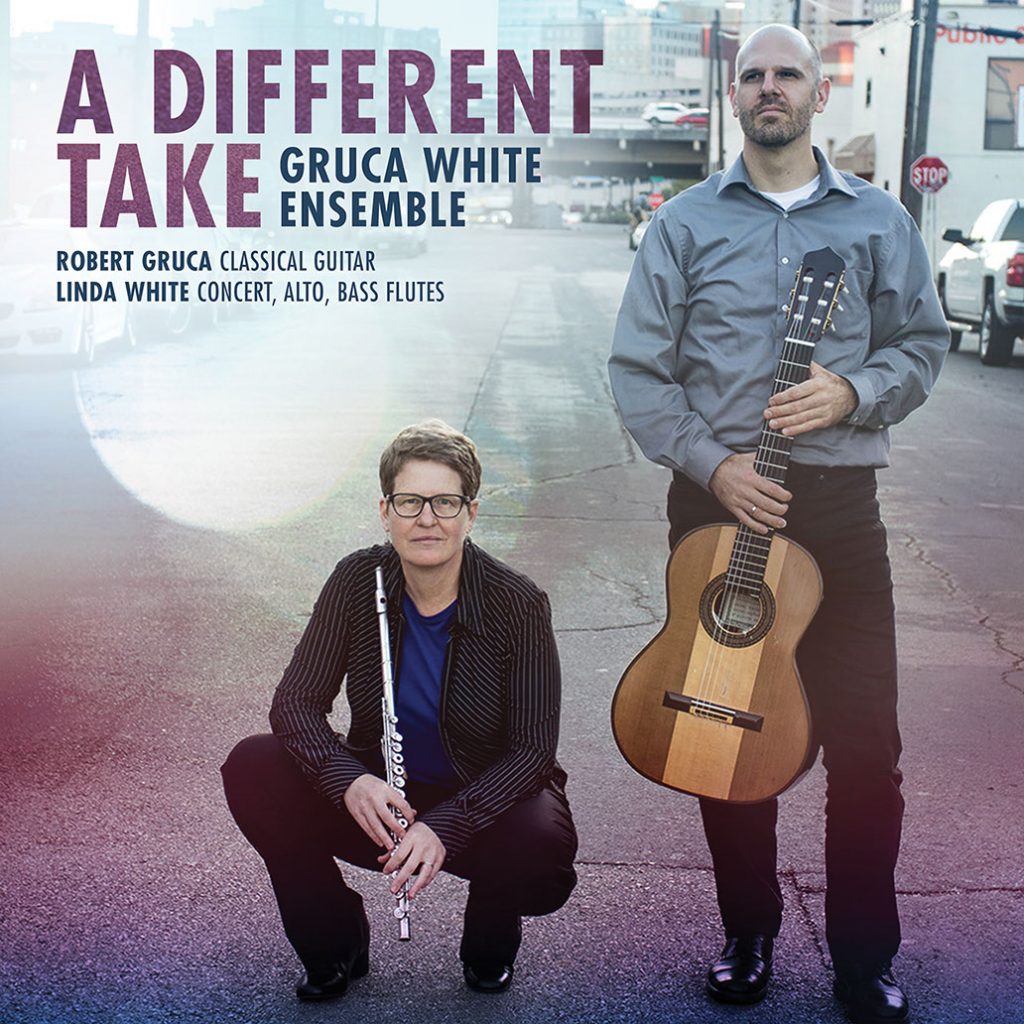
When the Cleveland Classical Guitar Society presents Bokyung Byun in just such a performance on Saturday, October 17 at 7:30 pm, can we call it her Cleveland debut, even though she’ll be at her home in Los Angeles? And when she brings Theo Chandler’s Six Melodies to listeners’ ears for the first time in the work’s history, can we call it the premiere, even though it won’t be live?
Maybe the particular words don’t matter so much. The fact is, there’s plenty that’s new in this concert.
by Jarrett Hoffman

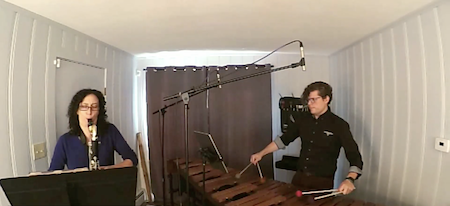
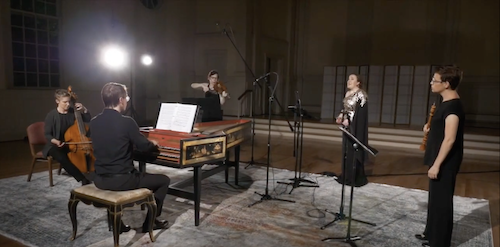
Not only is Halloween drawing near, and not only will Chicago-based soprano Hannah De Priest sing the roles of two witches in Colin de Blamont’s Circé and Louis-Nicolas Clérambault’s Medée, but in a way, the ensemble hopes to cast a spell with a reenvisioning of the traditional concert format, in particular with the creative use of video and lighting.
In a conference call, I spoke to De Priest and Les Délices director/oboist Debra Nagy about the experience of recording in person at Plymouth Church in Shaker Heights, stepping into the shoes and the vocal cords of those morally ambiguous witches, the role of gender in these stories, favorite Halloween costumes, and one or two possible signature cocktails for the concert.
by Jarrett Hoffman

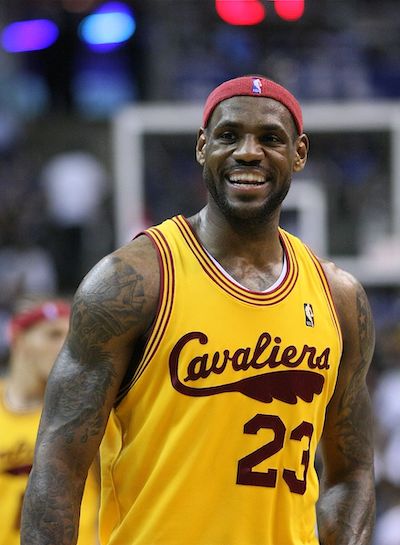
The morning after Akron native LeBron James won his fourth NBA championship, this one with the Los Angeles Lakers, a cascade of articles have already been written on the topic of whether he might now, just maybe, be the GOAT — the “Greatest Of All Time” among basketball players. James vs. Jordan: it’s an exhausting question that nevertheless generates plenty of opinions, and to be sure, plenty of clicks.
It’s also a question that’s based on the adversarial nature of sports — one person or team versus another. That’s not what classical music is about. To be sure, there is plenty of competition when it comes to forging a career, but most of all, discussions in the field are based on aesthetics.
Rivalries are compelling, and easy for casual fans to become wrapped up in. But even some basketball icons and journalists feel that those debates can dumb down the conversation around a sport, crowding out discussions of intricate tactics and, yes, also aesthetic beauty.
Still, it’s interesting to wonder how and if such debates could fit into classical music. We have big competitions that help launch careers, but what would it look like to have a “showdown” among the top, established names in composition or performance? Grammys are one thing, but let’s think more creatively.
Cleveland Chamber Choir offered one unique possibility with its “March Madrigal Madness” program in 2018, though the stakes would feel higher if the competing composers were still living, able to watch the results unfold. Another option: could a few orchestras pit their recordings of a single piece against each other, and have listeners vote online? (It would have to be friendly — at least on the surface.)
As the coronavirus crisis continues to challenge the music industry, maybe an effort like that to reach out to casual fans isn’t a bad idea — something fun and harmless, with an ounce of drama, yet still with a substantive and even beautiful artistic result.
TODAY ON THE WEB:
I’ll highlight two live streams and one re-broadcast on tonight’s local schedule. In the first category, hear the CIM Orchestra at 7, and the Diamond Brass Quintet at 7:30 (presented by Rocky River Chamber Music Society). Then at 8:00, in recognition of Indigenous Peoples’ Day, Early Music America joins Les Délices in replaying the ensemble’s recent “Recovering Roots” program. More info in our Concert Listings.
TODAY’S ALMANAC:
German composer and lutenist Sylvius Leopold Weiss, English composer Ralph Vaughan Williams, and Italian tenor Luciano Pavarotti were born on this date in 1687, 1872, and 1935, respectively.
We covered Vaughan Williams in our Diary on August 26, the anniversary of his passing, though it’s neat to celebrate him again today with his A Sea Symphony, which was also premiered on his 38th birthday. (Here’s a performance from the BBC Proms in 2013.)
As for Weiss, one recent performance of his music in Northeast Ohio came in the 2019 Cleveland International Classical Guitar Festival, when Petra Poláčková opened her recital with the Tombeau Sur La Mort de M. Comte de Logy. You can hear her play it on YouTube in a presentation by Cleveland’s own Guitars International.
There are so many possible recordings with which to remember Pavarotti — himself a GOAT contender among tenors — but how about his memorable final performance: Puccini’s “Nessun Dorma” at the opening ceremony of the 2006 Winter Olympics in Torino, Italy. (One note: it was later revealed to have been pre-recorded, though it’s unclear whether that was due to illness on the part of Pavarotti, or the cold temperature.)