

by Jarrett Hoffman
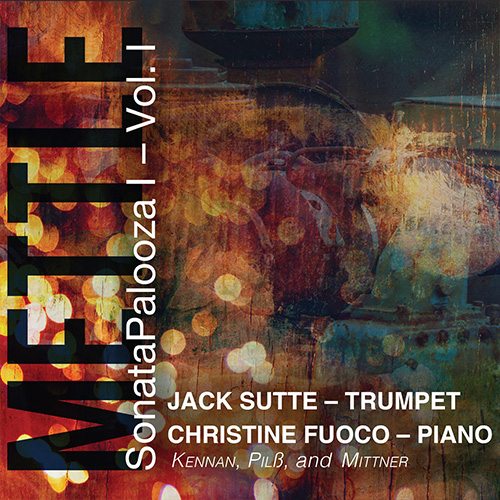 Trumpeter Jack Sutte and pianist Christine Fuoco are on a mission to bring trumpet sonatas into the mainstream classical music conversation, beyond just the dialogue of trumpet players. To that end, they’ve embarked on a long-term collaboration, both onstage and in the recording studio. Mettle: SonataPalooza I – Vol. I is the first disc to come of this project, and represents quite the convincing opening argument.
 Musicians are not necessarily known for their acrobatic abilities, but jumping through one or two hoops has become an important part of their job description.
 A virtuoso is a highly skilled performer, and a virtuoso performance is one that astonishes the audience by its feats. In ancient Greece the cities would hold male competitions in acrobatics, conjuring, public reciting, blowing the trumpet, and acting out scenes from Homer’s epics, the winners of which would have been praised as virtuous, or “full of manly virtues.” —
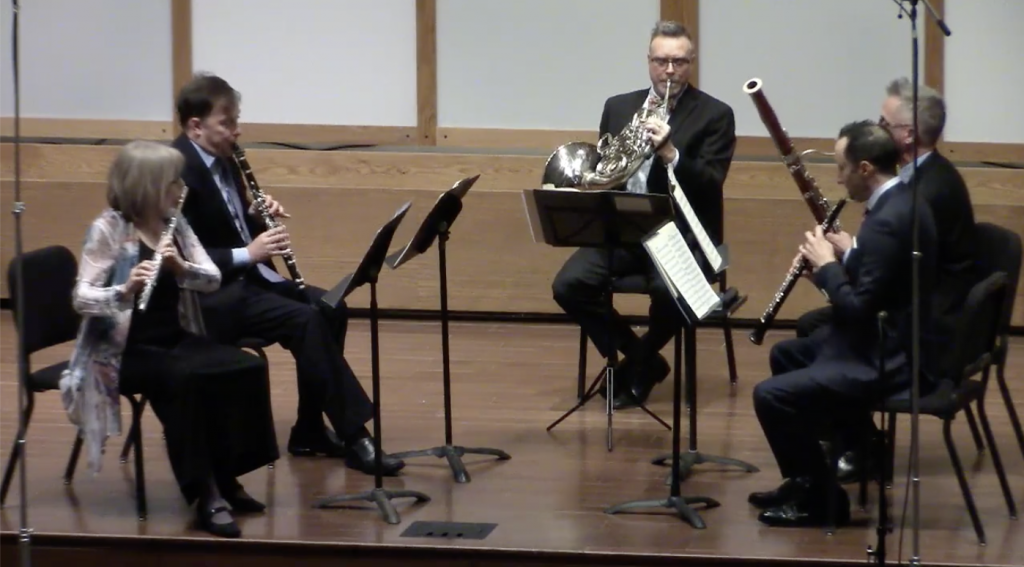 The Rocky River Chamber Music Society’s live-streamed 62nd season came to a rousing conclusion on Monday, May 17, when five wind players and a pianist came together around quintets by masters of old and new.
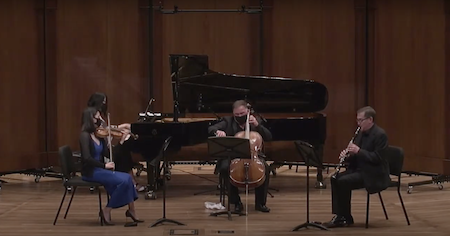 After greeting an in-person audience the night before at Shrine Church of St. Stanislaus, a mixed quartet from CityMusic Cleveland performed for an audience unseen on Saturday, May 15, thanks to the live-streaming capabilities of the Maltz Performing Arts Center.
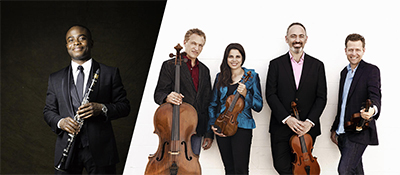 “We are so happy to be performing in front of a live audience again. Just saying the words gives me shivers.” These were the words of Mark Holloway, violist in the Pacifica Quartet, at their splendid performance with clarinetist Anthony McGill, presented by Tuesday Musical on May 4 at E.J. Thomas Hall.
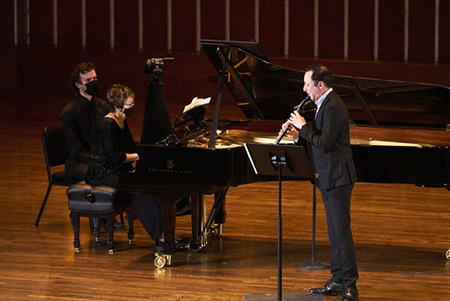 Before orchestras settled on the time-honored program formula of overture, concerto, and symphony — which many still observe — musical evenings were more varied and could include solo songs, piano pieces, and chamber music, in addition to orchestral works.
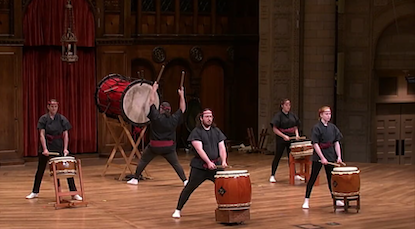 Percussion music is full of nuance, but you can also boil it down to the single, simple action of striking something. And whether you’re the one doing that, or you’re watching it happen, it can be cathartic, which is one reason why that genre might feel particularly welcome during a time that still has its share of anxiety.
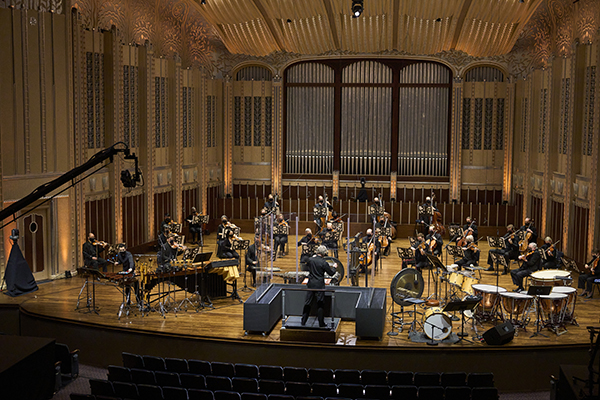 Marc Damoulakis’ performance of Conjurer, John Corigliano’s percussion concerto, may well go down as one of the most spectacular events of the COVID-19 era.
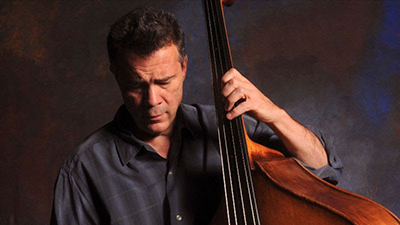 Located on the campus of the University of Akron, the concrete structure that is E.J. Thomas Hall is a formidable space. With a seating capacity of 2,955, it is not the first venue that comes to mind when you think of enjoying an intimate musical experience. But in a concert presented by Tuesday Musical on April 20, Edgar Meyer proved that a great musician is capable of making a large hall feel small.