

by Kevin McLaughlin
This article was originally published on Cleveland.com
Photo by Roger Mastroianni
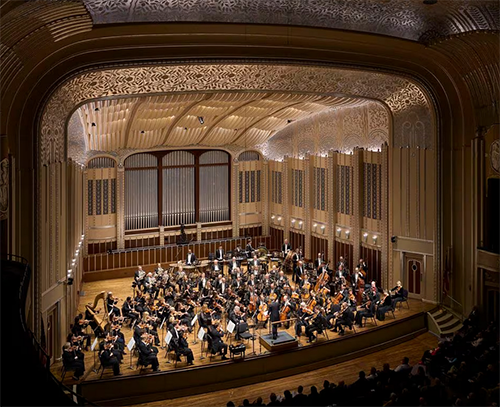 CLEVELAND, Ohio — The Cleveland Orchestra’s pairing of Mahler’s Fourth Symphony with the U.S. premiere of Betsy Jolas’ “Ces belles années…” at Severance Music Center on Thursday night had you scratching your head at first. But the minute soprano Lauren Snouffer began to sing Jolas’ words, it started to make sense.
Snouffer walked onto the stage cautiously — as if unsure she should be there at all — at about the three-quarter mark to deliver a series of musically angular but disarming lines about celebrating the joy of one’s experiences.
A Cleveland Orchestra co-commission, “Ces belles années…” also contains hidden allusions to the classic “Happy Birthday” tune as a nod to Jolas’s beloved Aix-en-Provence Festival, which celebrated its 75th anniversary in 2022. [Read more…]
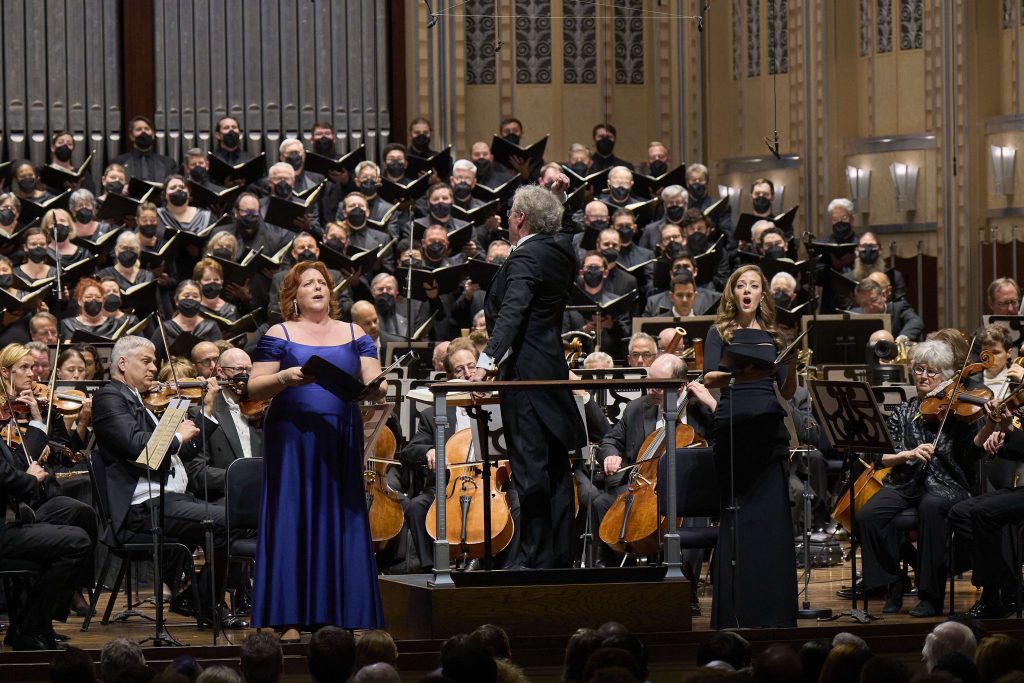
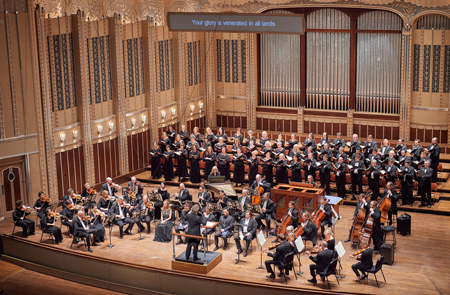
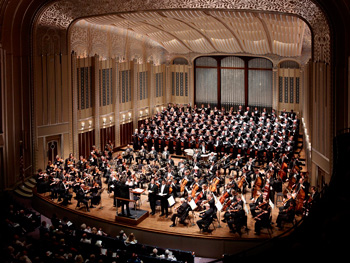 Two Romantic meditations on death comprised the first of this year’s Cleveland Orchestra Summers @Severance programs last Friday evening — Richard Strauss’s Death and Transfiguration and Johannes Brahms’s A German Requiem — both works of ambitious scope and seriousness, led by music director Franz Welser-Möst.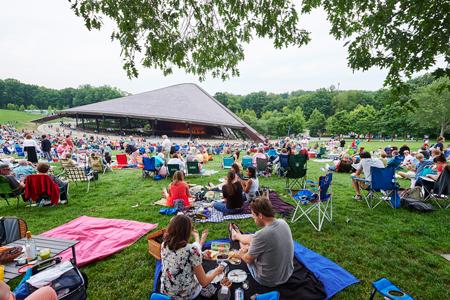
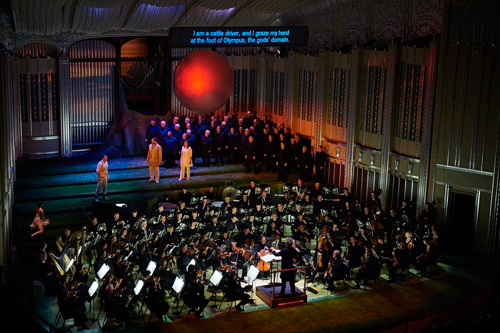 “Daphne” means “Laurel” in Greek, and Ovid’s tale in Metamorphoses of how a river nymph came to be transmogrified into a sacred tree has all the elements that an opera composer could wish for: a sylvan setting, gods meddling in human affairs, passion versus purity, jealousy that leads to murder, a drunken orgy, and an ennobling ending. Jacopo Peri took on the story in 1597 (one of several operas he wrote, now mostly lost), as did Marco da Gagliano (1608), Heinrich Schütz (1627, his only opera, entirely lost), Alessandro Scarlatti (1700) and, most recently, Richard Strauss (1938).