by Daniel Hathaway
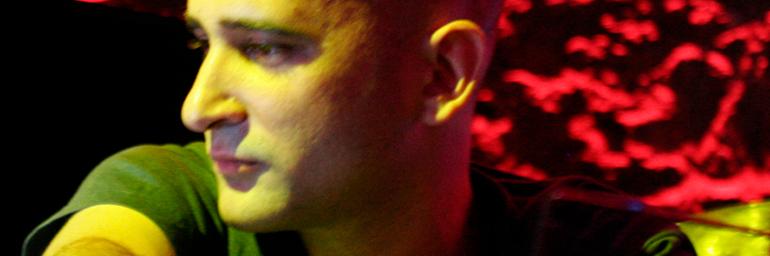
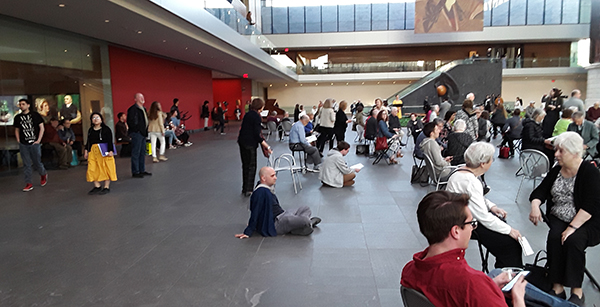 Cleveland audiences had their first live encounters with the music of Turkish-born composer Cenk Ergün in March of 2016, when the JACK Quartet premiered his commissioned works Sonare and Celare in Gartner Auditorium at the Cleveland Museum of Art. Ergün’s second appearance at the Museum earlier this month came in the form of a Cleveland Foundation Creative Fusion project. On Wednesday evening, May 8, the composer (seated on the pavement above) unveiled his hour-long Formare, turning the Ames Family Atrium into a vast sound installation. [Read more…]

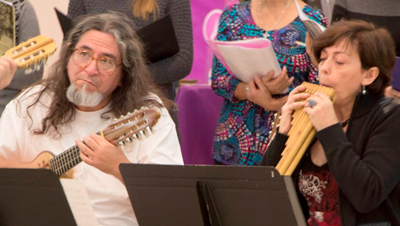 CityMusic Cleveland continued to move into new territory with the first of its five “Holiday Concerts” on Wednesday evening, December 3. Led by Peter Bennett and collaborating with members of the choirs of Sagrada Familia Parish on their home turf on Cleveland’s West Side, CityMusic ventured into Latino repertoire with a performance of Ariel Ramirez’s forkloric Missa Criolla. The curtain-raiser was a Sinfonia by Antonio Sarrier, a Spanish-born composer and trumpeter who emigrated to Mexico in the mid-eighteenth century. In between, Laura Koepke was the featured soloist in Mozart’s Bassoon Concerto.
 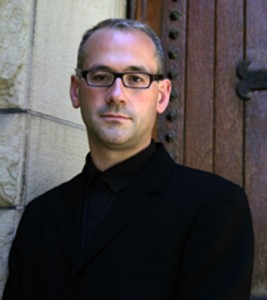 “I’m very excited to be conducting CityMusic’s Holiday Concerts this year,” Peter Bennett said during a telephone conversation. “And I am particularly pleased to be able to work with the La Sagrada Familia Choir to bring Ariel Ramírez’s Misa Criolla to Cleveland audiences for the first time.” On Wednesday, December 3 at 7:30 at La Sagrada Familia Church, CityMusic will present the first of five free performances featuring Ramírez’s Misa Criolla. (See our concert listings for times and locations.) The concert also includes Antonio Sarrier’s Overture in D, and Mozart’s Bassoon Concerto with CityMusic principal bassoon Laura Koepke as soloist.
 CityMusic Cleveland will present four programs during 2014-2015 in multiple venues around metropolitan Cleveland, three of them conducted by the chamber orchestra’s artistic director and composer Avner Dorman, one by CWRU’s Peter Bennett.