

by Daniel Hathaway
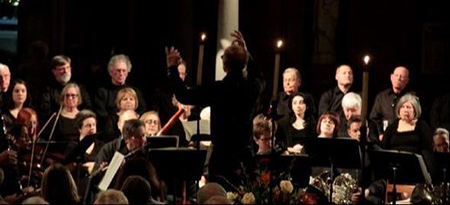 For four decades, Trinity Cathedral has presented an evening concert on Good Friday, often dedicated to a setting of the Passion of Jesus drawn from one of the four Gospels.
On Friday, March 30 at 7:30 pm, music director Todd Wilson will lead the Cathedral Choir, soloists, and members of Trinity Chamber Orchestra in a particularly striking setting of the Passion according to John by Estonian composer Arvo Pärt. Completed in Austria in 1982, Passio was the culmination of Pärt’s tintinnabuli style, and in many ways harks back to the liturgical passion settings of the middle ages.
In one of several near-mystical statements explaining that style of composition, Pärt wrote on his website,
Tintinnabulation is an area I sometimes wander into when I am searching for answers — in my life, my music, my work. In my dark hours, I have the certain feeling that everything outside this one thing has no meaning. The complex and many-faceted only confuses me, and I must search for unity. What is it, this one thing, and how do I find my way to it?
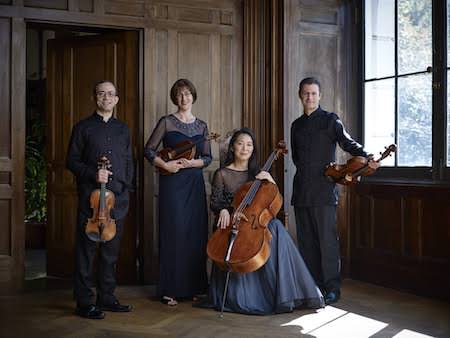 The Brentano String Quartet has an affinity for both the standard repertoire and music very old and very new. Their program on the Oberlin Artist Recital Series at Finney Chapel on Friday, March 30 at 8:00 pm covers all those bases. Beginning with arrangements of madrigals by Monteverdi and Gesualdo, they’ll jump 400 years to the music of Oberlin Conservatory composition chair Stephen Hartke, then close with Shostakovich’s
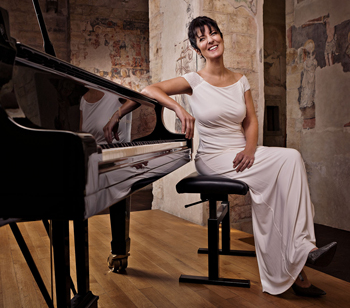 Like many first-generation Americans whose families had been forced to leave their homes because of Nazi atrocities during World War II, pianist Sandra Shapiro grew up not fully understanding the circumstances that led to her father’s arrival in the United States.
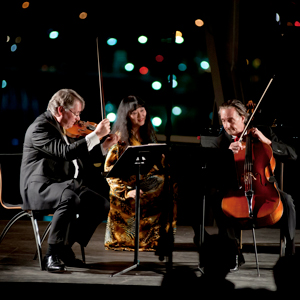 “Beethoven’s six piano trios are important touch points in his development as a composer,” pianist Wu Han said during a telephone conversation. “Hearing all of them is the equivalent of hearing all of the string quartets — not only is it a rich and unusual experience, but you become a different listener.”
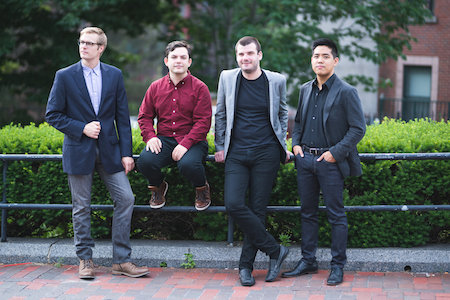 Next week, Boston-based quartet Hub New Music will make their Cleveland debut in two free concerts, highlighted by the premiere of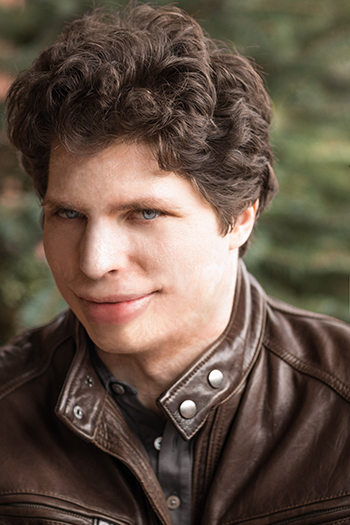
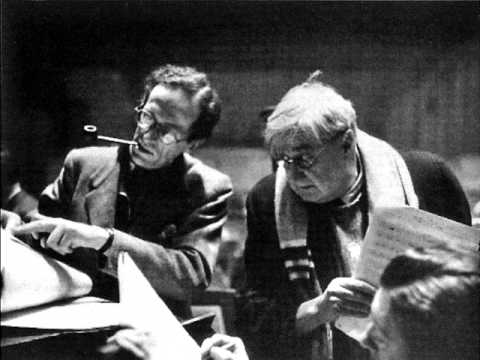 A cave on the Scottish island of Staffa, the city of Rome, birdsong from Finnish bogs, and the vast landscapes of Antarctica provided key inspiration for four works — two of them among classical music’s Top 40, the other two rarely performed.
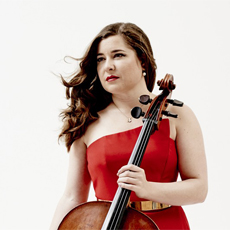 “I look forward to being back in town,” cellist