


by Daniel Hathaway
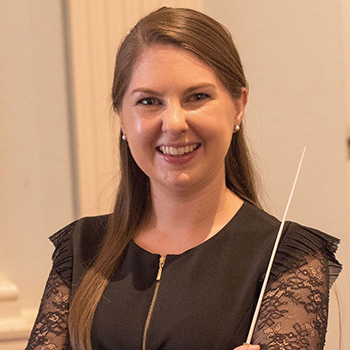 Through a lucky series of encounters, Irish conductor Karen Ni Bhroin (pronounced Knee VRIN) found her way first to graduate studies at Kent State University, then to the assistant conductor’s position with the Akron Symphony Chorus, and most recently — the news came down just this morning — to her appointment as assistant conductor with the Winston-Salem Symphony.
In that second capacity, the 29-year-old conductor is preparing the Akron Symphony Chorus for its performance of the Mozart Requiem under Christopher Wilkins on Saturday evening, February 22 at E.J. Thomas Hall.
I reached Ni Bhroin by telephone to ask how that chain of events got started. “I had been freelancing in Dublin for five years after my undergraduate degree at Trinity College, and in 2013 I met Jungho Kim, who was finishing his doctorate at Eastman,” she said. “We were Facebook friends, and he posted in 2018 that he was looking for an assistant at Kent State, and that’s how it all started. I applied and I won the position. [Read more…]

 Internet memes as musical inspiration? Composer Daniel Ruffing has written musical theater songs based on viral videos like Kylie Jenner’s singsong greeting to her young daughter (“Rise and Shine”), a driver’s surprising reaction to a construction sign (“Road Work Ahead”), and one woman’s first impression of a new drink (“Kombucha Girl”).
 If you’re looking for something special to share with your significant other for Valentine’s Day, why not take in a classical guitar concert? On Saturday, February 15 at 7:30 pm at Plymouth Church, the


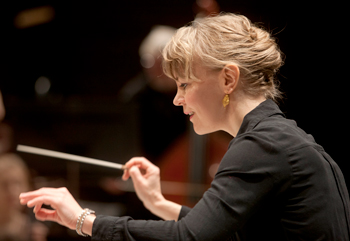 When Susanna Mälkki made her Cleveland Orchestra debut in April of 2015, the Finnish conductor was well on her way to becoming a star in the international conducting firmament. Since that time Mälkki has clearly established herself as one of the leading conductors of our time.
 If you heard about someone sneaking